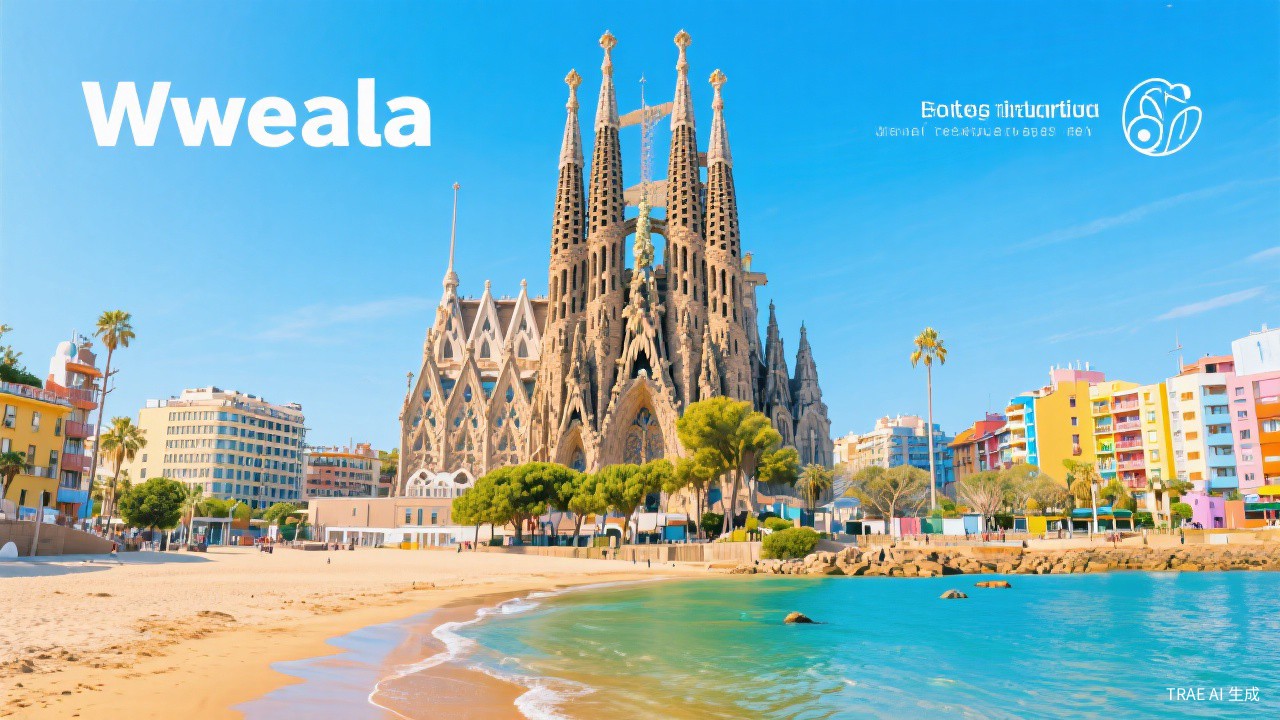
I spent my first hours in Barcelona walking, I felt like I had entered a city designed by an artist—which, in many ways, it was. Antoni Gaudí's organic, almost alien architecture defines the city: the still-unfinished Sagrada Família, the whimsical Park Güell, the wave-like Casa Batlló. But I found that Barcelona offers more than Gaudí. It has a Gothic Quarter with Roman foundations, beaches created for the 1992 Olympics, and a food scene that ranges from traditional tapas to world-renowned molecular gastronomy.
What defines Barcelona special is its Mediterranean character. I found the city moves to a different rhythm—late dinners (10 PM is normal), afternoon siestas (some shops still close), and weekends that stretch into the early hours. The weather encourages outdoor living, from beach days to terrace dining to strolling La Rambla. Barcelona feels more relaxed than Madrid, more creative than other European cities.
The Catalan identity adds another layer. My first impression was noticing signs are in Catalan first, Spanish second. The region has its own language, culture, and independence movement. This distinctiveness makes Barcelona feel like a country within a country, with traditions and festivals you won't find elsewhere in Spain.
When to Visit Barcelona
Visit during Barcelona is spring (May to June) or autumn (September to October). The weather is warm but not hot (18-25°C), and crowds are manageable. Beaches are pleasant without being packed. These shoulder seasons offer the best balance of good weather and reasonable prices.
Summer (July to August) brings heat (28-32°C), humidity, and peak crowds. Hotel prices are highest, and popular attractions have long lines. The beaches are packed. That said, summer also brings festivals and outdoor events. If visiting in summer, book accommodations and Sagrada Família tickets months in advance.
Winter (November to March) is mild (10-15°C) and quieter. Some attractions have shorter hours, but you'll have museums nearly to yourself. Christmas markets and Three Kings Day (January 6) add seasonal charm. Rain is more common in autumn and spring.
Metro, Bus & Walking
Barcelona-El Prat Airport (BCN) is 12km from the city center. The Aerobús connects to Plaça de Catalunya in 35 minutes (€5.90). The train (R2 line) is cheaper (€4.60) but less frequent. Taxis cost €25-35 to the center.
The metro and bus system is efficient and covers the entire city. A T-10 card (€11.35) gives 10 rides on any public transport. Single tickets cost €2.40. The metro runs until midnight on weekdays, 2 AM on Fridays, and all night on Saturdays.
The city center is walkable, especially the Gothic Quarter and Eixample. Many attractions are within 30 minutes on foot. For longer distances, the metro is fastest. Buses are scenic but slower in traffic. Taxis are affordable (most rides €8-15) and can be hailed on the street.
Gothic Quarter vs Eixample
Gothic Quarter (Barri Gòtic) puts you in the medieval heart of the city, near La Rambla and the cathedral. Hotels cost €100-300/night. The narrow streets are atmospheric but can be noisy. El Born is a trendy area with boutiques, tapas bars, and the Picasso Museum.
Eixample is the modernist district with grid streets and Gaudí buildings. It's more spacious and residential, with excellent restaurants. Hotels cost €120-350/night. Gràcia is a former village absorbed by the city, with a local feel and charming squares.
Barceloneta is the beach neighborhood with seafood restaurants and sea views. It's touristy but fun. Poble Sec is an up-and-coming area with tapas bars and the MNAC museum nearby. For budget travelers, hostels throughout the city cost €20-50/night.
Gaudi & Beyond
Sagrada Família
Gaudí's unfinished masterpiece has been under construction since 1882. The Nativity Façade shows his organic style; the Passion Façade (added later) is stark and modernist. Book tickets online weeks in advance. The view from the towers (extra €5) is spectacular. Estimated completion: 2026.
Entry: €26-36 | Open: 9 AM-6 PM (varies by season)
Park Güell
This whimsical park was designed by Gaudí as a garden city. The famous mosaic bench and salamander are in the Monumental Zone (requires timed ticket). The rest of the park is free. Go early to avoid crowds. The view over Barcelona is excellent.
Admission: €10 (Monumental Zone) | Times: 8 AM-9 PM (varies by season)
Gothic Quarter
The medieval center contains Roman ruins, a 14th-century cathedral, and narrow streets that invite wandering. The Plaça Reial is a beautiful square with palm trees and restaurants. Free walking tours cover the highlights. Best explored without a map.
Entry: Free | Open: Always open
La Rambla
This famous pedestrian street runs from Plaça de Catalunya to the waterfront. It's touristy but essential. Street performers, flower stalls, and the Boqueria Market line the route. Watch for pickpockets. Side streets offer better restaurants.
Admission: Free | Open: Always open
Casa Batlló
Gaudí renovated this building with a wave-like facade and skeletal balconies. The roof resembles a dragon's back. The interior shows his attention to detail—no straight lines anywhere. Book timed tickets online. Allow 1-2 hours.
Tickets: €35 | Hours: 9 AM-8 PM (varies by season)
La Boqueria Market
This famous market off La Rambla has stalls selling everything from fresh seafood to exotic fruits. It's crowded with tourists but still authentic. Try fresh juices (€2-3), jamón ibérico, or a sit-down meal at one of the counter restaurants. Best in the morning.
Entry: Free to browse | Times: 8 AM-8:30 PM (closed Sundays)
Tapas & Markets
Tapas — Small plates meant for sharing. Try patatas bravas (spicy potatoes), pan con tomate (bread with tomato), and croquetas. Cervecería Catalana and La Cervecería del Poble Sec are excellent. Budget €15-25 per person.
Paella — Originally from Valencia, but Barcelona has its own seafood version. Avoid places with pictures outside—look for locals. Can Majó in Barceloneta is reliable. A paella for two costs €25-40.
Jamón Ibérico — Cured ham from black Iberian pigs. The best is "bellota" (acorn-fed). Buy it sliced thin at markets or order at tapas bars. A sandwich costs €5-10; a plate €12-25.
Cava — Spanish sparkling wine from Catalonia, similar to champagne but less expensive. Visit a cava bar or take a day trip to the Penedès region. A glass costs €4-8.
Crema Catalana — Catalonia's version of crème brûlée, with a caramelized sugar top. It's traditionally served on Saint Joseph's Day (March 19) but available year-round. A portion costs €5-8.
Pickpockets & Tourist Traps
Book Sagrada Família and Park Güell tickets online weeks in advance. They sell out.
• Watch for pickpockets, especially on La Rambla and in crowds. Use a money belt or front pocket.
• Dinner starts late. Restaurants fill up after 9 PM; many don't open until 8 PM.
• Learn a few Catalan words. Locals appreciate "hola" and "gràcies" in their language.
Avoid restaurants on La Rambla. Walk a few blocks away for better food at lower prices.
Traveler's Tip
Book Sagrada Familia tickets weeks in advance. They sell out, especially the tower access. It is worth the planning — Gaudi's masterpiece is unlike any other church.