What You Will Find in Bavaria
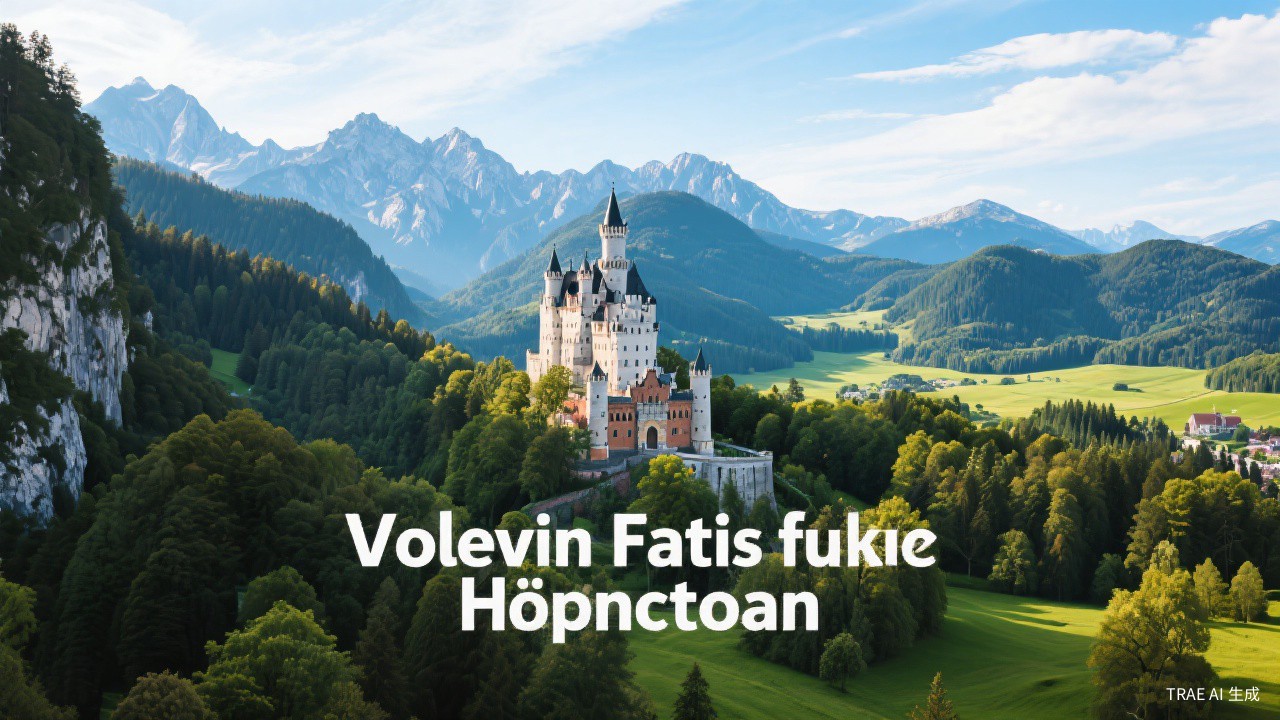
I spent my first hours in Bavaria walking, I felt like I had stepped into a fairy tale. Germany's largest state is its most visually distinct region, where castles perch above alpine meadows and onion-domed churches punctuate the skyline of medieval towns. Neuschwanstein Castle, King Ludwig II's 19th-century fantasy, is the most visited castle in Europe and draws 1.4 million visitors annually. I found that the Bavarian Alps stretch along the Austrian border, with the Zugspitze—Germany's highest peak at 2,962 meters—offering views across four countries.
Bavarian culture runs deep and proudly distinct from the rest of Germany. My first impression was seeing dirndls and lederhosen worn not as costumes but as everyday attire—to weddings, beer festivals, and Sunday mass. The beer culture is serious: Bavaria has over 600 breweries, many brewing according to the Reinheitsgebot (purity law) of 1516. I recommend experiencing a typical Sunday with a walk in the forest followed by a stop at a beer garden, where a Mass (one-liter glass) of helles lager costs under €5.
Munich makes the best base, with day trips possible to Neuschwanstein (two hours by train), Salzburg (90 minutes), and the Alps. I suggest spending at least five days: two in Munich, one for Neuschwanstein and Hohenschwangau, one for Garmisch-Partenkirchen and the Zugspitze, and one for a smaller town like Bamberg or Regensburg. The Bavaria Ticket (€25 for one person, €5 per additional person) covers regional trains for a day and is excellent value.
Best Time to Go
June through September offers the best weather, with temperatures between 18 and 28 degrees Celsius. The alpine wildflowers bloom in July, and the beer gardens are in full swing. September brings Oktoberfest in Munich (actually starting in mid-September and running through the first weekend of October), the world's largest beer festival. Book accommodation six months ahead if visiting during Oktoberfest.
December is magical for Christmas markets—the Christkindlmarkt in Munich's Marienplatz dates to the 14th century and features glühwein, lebkuchen, and handmade ornaments. Winter sports season runs from December to March in Garmisch-Partenkirchen and Berchtesgaden. Spring (April to May) is pleasant and uncrowded, with temperatures around 12 to 20 degrees.
Getting There and Around
Munich Airport (MUC) is 28 kilometers northeast of the city. The S-Bahn S1 and S8 lines connect the airport to Munich Hauptbahnhof in about 40 minutes for €9.60. The Lufthansa Express Bus runs every 20 minutes to the central station for €10.50. For Bavaria's smaller towns, Deutsche Bahn regional trains connect Munich to most destinations within two hours.
The Bayern Ticket covers unlimited regional train travel for one day: €25 for a single traveler, €31 for two, up to €49 for five. It is valid from 9 AM on weekdays and all day on weekends. Within Munich, the U-Bahn, S-Bahn, trams, and buses use the MVV network. A day pass is €8.80. Renting a car makes sense for reaching remote alpine villages, but parking in Munich is expensive (€15 to €25 per day).
Where to Stay
Munich's Altstadt (Old Town) around Marienplatz is the most convenient base. Hotels start at €100 to €250 per night. Stay near Viktualienmarkt for easy access to the food market and beer gardens. The area is walkable and well-connected by public transit.
Garmisch-Partenkirchen is the best base for alpine activities. This twin town sits at the foot of the Zugspitze and offers skiing in winter and hiking in summer. Hotels and guesthouses start at €70 to €180 per night. The pedestrian zone has excellent restaurants and a relaxed mountain-town feel.
For a fairy-tale experience, stay in Füssen or Schwangau near Neuschwanstein. Rooms cost €80 to €200 per night, and many hotels have direct views of the castle. The town is small and walkable, with the Forggensee lake nearby for swimming and boating in summer.
Must-See Attractions
Neuschwanstein Castle
King Ludwig II's 19th-century Romanesque Revival castle sits on a rugged hill above the village of Hohenschwangau. The interior features Byzantine-style throne rooms, Wagner-inspired murals, and an artificial grotto. The Marienbrücke (Mary's Bridge) provides the classic postcard view. Book tickets online in advance—same-day tickets often sell out by noon.
Cost: €15 including Hohenschwangau | Times: 9 AM to 6 PM, April to October; 10 AM to 4 PM, November to March
Zugspitze
Germany's highest mountain at 2,962 meters. The cogwheel train from Garmisch-Partenkirchen climbs to the Schneeferner station, then a cable car continues to the summit. On clear days, you can see Germany, Austria, Switzerland, and Italy from the observation deck. The glacier platform and research station are also open to visitors.
Cost: €52 round trip from Garmisch | Open: Trains start at 8:15 AM, last descent 4:15 PM
Marienplatz and Glockenspiel
Munich's central square since 1158. The Neues Rathaus (New Town Hall) dominates the north side with its elaborate Gothic facade. The Glockenspiel chimes at 11 AM and 5 PM (also noon in summer), with 32 life-sized figures reenacting two stories from Munich's history. The Viktualienmarkt, a daily food market with 140 stalls, is one block south.
Cost: Free | Hours: Square always open; market Monday to Saturday 10 AM to 6 PM
Eagle's Nest (Kehlsteinhaus)
Hitler's former mountain retreat, perched at 1,834 meters on the Obersalzberg near Berchtesgaden. Reached by a brass elevator bored through the rock, the building now operates as a restaurant with panoramic views of the Bavarian Alps and Salzburg. The mountain road and bus access are seasonal, running from mid-May to October.
Tickets: €30.30 including bus and elevator | Open: Mid-May to October, buses from 7:40 AM
Dachau Concentration Camp Memorial
The first Nazi concentration camp, opened in 1933, now serves as a memorial and education center. The preserved grounds include barracks, the crematorium, and a museum documenting the camp's history. It is a sobering but essential visit. Allow at least three hours. Guided tours are available in English.
Cost: Free | Times: 9 AM to 5 PM, closed Mondays
Food and Drink
Weisswurst with Sweet Mustard and Pretzel — Bavaria's signature breakfast sausage, made from veal and pork back bacon, simmered in water and eaten without the skin. Traditionally consumed before noon. Try it at the Augustiner-Keller beer garden, where the sausages are served with Brezen (pretzels) and Weisswurstsenf (sweet mustard).
Schweinshaxe — A roasted pork knuckle with crackling skin, served with potato dumplings and red cabbage. The crispy exterior and tender interior make it Bavaria's most satisfying dish. Augustiner am Dom in Munich serves one of the best versions in the city.
Hofbräuhaus Beer — Munich's most famous beer hall, dating to 1589, serves its own helles (lager), dunkel (dark), and weissbier (wheat beer). A Mass (one liter) costs €9.80. The hall seats 1,300 people under vaulted ceilings decorated with Bavarian motifs. An oompah band plays daily.
Käsespätzle — Soft egg noodles layered with strong mountain cheese and topped with crispy fried onions. It is Bavaria's answer to mac and cheese, and far more flavorful. Try it at Alte Stadtmetzg in Munich, a butcher-turned-restaurant that uses local Allgäu cheese.
Practical Tips
• The Bavaria Ticket is the cheapest way to explore the region by train. It covers regional trains, buses, and trams for up to five people.
• Oktoberfest accommodation books out months in advance. Expect to pay three to four times normal rates.
• Beer gardens allow you to bring your own food. Buy bread, cheese, and cold cuts from a supermarket and just order beer.
• Cash is still king in Bavaria, especially in smaller towns and beer gardens. Always carry euros.
• Many attractions close on Mondays. Plan museum visits for Tuesday through Sunday.
Traveler's Tip
Visit Neuschwanstein on a weekday in the off-season (November to March). The crowds thin dramatically, the surrounding mountains may have snow, and the castle looks more romantic against a winter sky. The interior tour is the same year-round.