What You Will Find in Busan
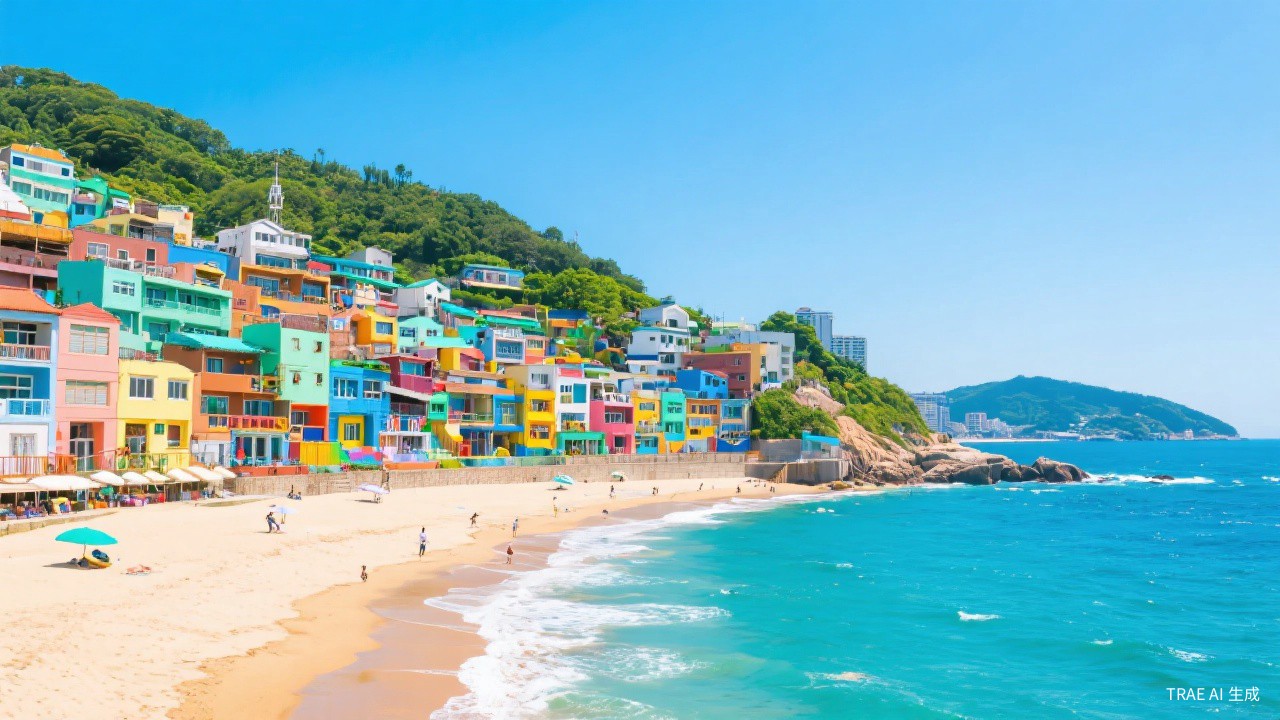
I spent my first hours in Busan walking, I discovered South Korea's second city and its most appealing coastal destination. The city curves around mountainous peninsulas and sandy bays, creating dramatic views at nearly every turn. Haeundae Beach draws millions each summer, but I found the real character of Busan emerges in places like Gamcheon Culture Village—a hillside maze of painted houses built by Korean War refugees—and the Jagalchi Fish Market, where ajummas (middle-aged women) sell live seafood straight from the boat.
Busan's residents carry a distinct identity separate from Seoul. My first impression was hearing the local dialect, Busan satoori, which is fast and expressive, and noticing how the city's food culture leans heavily toward raw fish and spicy stews. At the millak-dong waterfront, couples walk the suspension bridge at night while fishing boats rock in the harbor. The student neighborhood around Pusan National University buzzes with cheap bars, fried chicken joints, and late-night pojangmacha (street food tents).
I recommend giving Busan at least three days. Spend one day on the beaches—Haeundae in the morning, then Gwangalli at dusk when the Diamond Bridge lights up. Dedicate a second day to Gamcheon Village and the Jagalchi Market area, finishing with a seafood dinner at the millak-dong raw fish center. On day three, take the cable car up Geumjeong Mountain to explore the fortress walls, then visit Beomeosa Temple.
Best Time to Go
April to June and September to November offer the most pleasant conditions. Spring brings cherry blossoms to the riverside paths along Oncheoncheon Stream, while autumn paints the mountains around Beomeosa in red and gold. October's Busan International Film Festival is Asia's largest, drawing cinema crowds to Haeundae and the Centum City area. Temperatures during these months start at 15 to 25 degrees Celsius.
July and August are hot, humid, and crowded—Haeundae Beach can feel packed, but it is also the liveliest time with night swimming and beach events. January and February are cold (0 to 10 degrees) but ideal for indoor attractions like the Spa Land sauna at Shinsegae Centum City, the world's largest department store.
Getting There and Around
Gimhae International Airport (PUS) is 20 kilometers west of the city center, with direct flights from Seoul (1 hour), Tokyo, Osaka, Shanghai, Beijing, and Bangkok. The Airport Light Rail connects to the metro system in 20 minutes for KRW 1,300 (about USD 1). A taxi costs KRW 15,000 to 20,000. The KTX high-speed train from Seoul takes 2.5 hours and arrives at Busan Station, a short walk from the harbor.
The Busan Metro has four lines covering major attractions, with single rides costing KRW 1,300 to 1,800. A day pass is KRW 4,500. Taxis start at KRW 3,800 and are plentiful. The Haeundae Beach Train, a beachside tourist shuttle, runs between Mipo and Cheongsapo for KRW 3,000. City tour buses cover major sights in a loop for KRW 15,000 per day.
Where to Stay
Haeundae is the most popular area, with direct beach access and a concentration of hotels from the Paradise Hotel (KRW 250,000 per night) to mid-range options like the Haeundae Centum Hotel (KRW 100,000 to 150,000). The beachfront fills quickly in summer, so book two months ahead. Nearby Gwangalli offers a slightly quieter alternative with the same beach quality and lower prices.
Seomyeon is the city's main commercial district, packed with department stores, restaurants, and nightlife. It is not on the coast but offers the best transport connections and hotel values—expect KRW 60,000 to 100,000 for a decent business hotel. The area around Nampo-dong and Jagalchi Market puts you in the heart of the old city, with guesthouses from KRW 40,000 per night.
Must-See Attractions
Gamcheon Culture Village
Perched on a steep hillside in the Saha-gu district, this former refugee settlement was transformed into an open-air art gallery in 2009. Narrow alleys wind past brightly painted houses, murals, and small galleries. The "Little Prince" statue at the hilltop viewing platform has become the village's most photographed spot. Wear comfortable shoes—the paths are steep.
Tickets: Free (map KRW 2,000) | Times: Daily 9 AM-6 PM
Jagalchi Fish Market
Korea's largest seafood market occupies a multi-story building near Busan Harbor. The ground floor is a chaotic, sensory experience with tanks of live flounder, abalone, and octopus. Select your seafood and take it to a second-floor restaurant where they will cook it for a small fee. The adjacent Jagalchi Market outdoor stalls sell dried fish and seaweed.
Tickets: Free entry; meals KRW 15,000-40,000 | Hours: Daily 7 AM-7 PM (some stalls close earlier)
Beomeosa Temple
Founded in 678 AD during the Silla Dynasty, Beomeosa is one of Korea's most important Buddhist temples. The main hall (Daeungjeon) dates from 1614 and features elaborate wood carvings. The templestay program allows visitors to join monks for meditation, tea ceremony, and chanting. The surrounding Geumjeongsan mountain trails are popular with hikers.
Entry: Free (templestay from KRW 50,000) | Times: Daily 8:30 AM-6 PM
Haeundae Beach
A 1.5-kilometer stretch of white sand backed by high-rise hotels and the Dongbaekseom Island park. The beach is the centerpiece of Busan's summer scene, with lifeguards, volleyball nets, and evening fireworks displays. The Dongbaekseom Island walking trail at the east end offers quiet coastal views away from the crowds.
Admission: Free | Hours: Always open; lifeguards July-August 9 AM-6 PM
Shinsegae Centum City
Certified by Guinness World Records as the world's largest department store, Shinsegae Centum City contains over 1,000 brands, an ice rink, a cinema, a rooftop garden, and the spectacular Spa Land sauna complex. Spa Land alone is worth the visit, with 22 themed sauna rooms, hot pools, and a traditional Korean bathhouse experience.
Admission: Free entry; Spa Land KRW 20,000 | Hours: Store 10:30 AM-8 PM; Spa Land 6 AM-midnight
Food and Drink
Sannakji (live octopus) and hoe (raw fish) — Jagalchi Fish Market, second-floor restaurants. KRW 15,000-40,000.
Dwaeji gukbap (pork rice soup) — Gaya Millak-dong area, near Gwangalli Beach. KRW 8,000-12,000.
Eomuk (fish cake) skewers — Haeundae Market and Nampo-dong street stalls. KRW 2,000-3,000 per skewer.
Milmyeon (Busan cold wheat noodles) — Gaya Milmyeon, Seomyeon district. KRW 8,000-15,000.
Practical Tips
• The Busan Metro card (Hanaro) works on all subways and buses; purchase at any station.
• Korean BBQ restaurants in Busan often specialize in pork rather than beef—try the dwaeji galbi (grilled pork ribs).
• The Haeundae Beach area is extremely crowded in late July and early August—consider September for warm water and fewer people.
• Spa Land at Shinsegae requires a reservation on weekends; book online a few days ahead.
• Most restaurants in Busan do not split bills—order for the table and pay together.
Traveler's Tip
Take the Haeundae Blue Line Park beach train from Mipo to Cheongsapo at sunset. The 4.8-kilometer coastal ride passes over trestle bridges with unobstructed views of the ocean and the city skyline. Buy tickets at the booth near Mipo Station—KRW 3,000 one way, and the last train leaves at 7 PM.