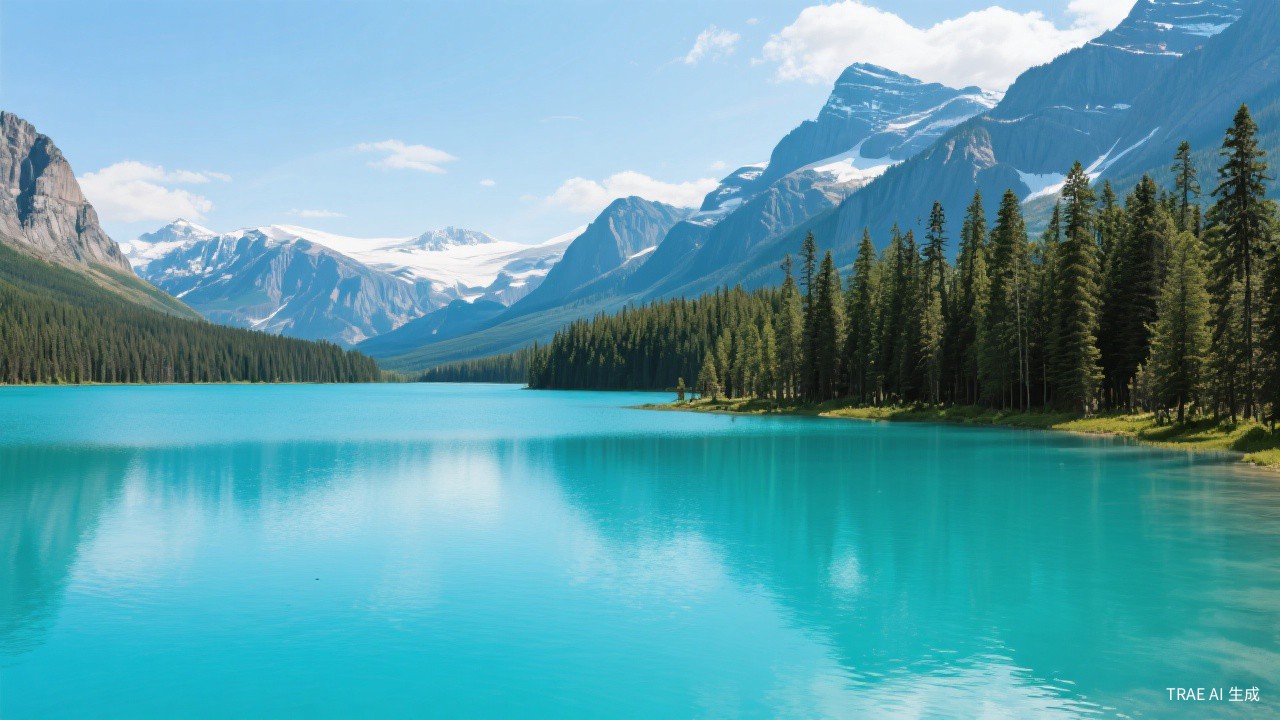
The Real Canada Rockies
My first impression I noticed about the Canadian Rockies, I was overwhelmed by the continuous chain of rugged peaks stretching 1,600 kilometers along the border of British Columbia and Alberta. Unlike the American Rockies, which are scattered across several states, the Canadian Rockies are concentrated and dramatic—glaciers carve valleys thousands of feet deep, turquoise lakes fill basins scoured by ice, and wildlife including grizzly bears, elk, and mountain goats roam valleys and alpine meadows.
Banff and Jasper are the two main national parks, connected by the Icefields Parkway, a 232-kilometer road that National Geographic calls one of the most scenic drives in the world. I found that along this route, you pass more than 100 glaciers, dozens of waterfalls, and lakes so vividly colored they look digitally enhanced. Lake Louise and Moraine Lake are the most photographed, but I found that lesser-known gems like Peyto Lake and Herbert Lake are equally striking.
The towns of Banff and Jasper serve as bases, with Banff being more developed and Jasper more laid-back. Both offer access to world-class hiking, skiing, and wildlife viewing. I recommend visiting in different seasons—wildflower meadows in summer, golden larches in autumn, deep snow for skiing in winter, and quiet solitude in spring before the crowds arrive.
Best Time to Go
Summer (June to September) is the main season. July and August bring the warmest weather (18-25°C in the valleys), wildflowers, and all facilities open. This is also when the lakes are thawed and at their most vivid color. That said, it is also the most crowded—Banff can feel overwhelmed, and parking at popular trailheads fills by 8 AM.
September and October offer fall colors, fewer visitors, and active wildlife (elk rutting season). The larch trees turn gold in late September, creating striking contrasts with snow-capped peaks and blue lakes. Temperatures drop to 5-15°C. Some facilities begin closing in October.
Winter (November to April) transforms the region into a ski destination. Banff-Lake Louise, Sunshine Village, and Marmot Basin offer downhill skiing. Cross-country skiing, snowshoeing, and ice skating on frozen lakes are popular. The Icefields Parkway remains open but requires winter driving skills. Temperatures drop to -20°C or lower.
Getting There and Around
Calgary International Airport (YYC) is the primary gateway, 90 minutes from Banff by car. Direct flights connect Calgary to major cities across North America and Europe. Edmonton (YEG) is 3.5 hours from Jasper and is an alternative for the northern Rockies.
Renting a car is strongly recommended. The Icefields Parkway between Banff and Jasper is the main scenic route, and having your own vehicle allows you to stop at viewpoints and trailheads. All major rental companies operate at Calgary airport. Fuel costs about C$1.60-1.80 per liter.
ROAM transit serves the Banff townsite (C$2.50 per ride), and Parks Canada shuttles run to Lake Louise and Moraine Lake in summer (reservations required). The Brewster Express connects Calgary airport to Banff and Jasper. In winter, some roads and trailheads require vehicles with snow tires.
Where to Stay
Banff townsite has the most options, from hostels to luxury hotels. The Fairmont Banff Springs is a historic castle-like hotel with prices from C$300-600 per night. Mid-range hotels and motels run C$150-250. Banff is convenient but can be crowded in summer.
Lake Louise has the Fairmont Chateau Lake Louise (C$400-800), a grand hotel right on the lake. Less expensive options exist in the village of Lake Louise, 4 kilometers from the lake itself. The hostel at Lake Louise stands out as affordable options in the parks (C$40-60 per bed).
Jasper is quieter and slightly less expensive than Banff. Hotels start at C$120-300 per night. Jasper offers better access to the Icefields Parkway's northern section and Maligne Lake. For a unique experience, consider the Alpine Club of Canada's wilderness huts—basic but spectacularly located (C$30-50 per night, must be booked well in advance).
Must-See Attractions
Lake Louise and Moraine Lake
Lake Louise's turquoise water reflects the Victoria Glacier in a scene that appears on countless postcards. The 5-kilometer shoreline trail is easy and rewarding. Moraine Lake, 14 kilometers away, sits in the Valley of the Ten Peaks and may be even more photogenic. The Rockpile Trail at Moraine Lake is a short climb to the classic viewpoint. Parks Canada requires shuttle reservations for both lakes in summer—private vehicles are restricted. Arrive early for the calmest water and fewest crowds.
Admission: Free (Parks Canada pass C$10.50/day) | Times: June to October (shuttles from 6 AM)
Icefields Parkway
This 232-kilometer highway connects Lake Louise to Jasper and passes some of the most dramatic mountain scenery on the continent. Key stops include Bow Lake, Peyto Lake (viewed from an elevated overlook), the Weeping Wall, and Athabasca Falls. The Columbia Icefield, straddling the Continental Divide, is the highway's centerpiece. The Glacier Skywalk, a glass-floored platform extending over a cliff, offers dizzying views. Allow a full day to travel the parkway with stops.
Tickets: Free (Glacier Skywalk C$35, Ice Explorer C$105) | Times: Year-round (services May-October)
Johnston Canyon
This popular trail follows a suspended walkway through a narrow limestone canyon to two waterfalls. The Lower Falls are 1.1 kilometers from the trailhead, and the Upper Falls add another 1.3 kilometers. In winter, the frozen falls attract ice climbers. The trail is paved and suitable for most fitness levels, though it can be crowded in summer. Start early or visit in the evening for fewer people.
Cost: Free | Times: Year-round (trailhead 8 AM-8 PM parking)
Maligne Lake
Located 48 kilometers from Jasper, this is the largest natural lake in the Canadian Rockies. The 14-kilometer boat cruise takes you to Spirit Island, a tiny islet with trees and mountains reflected in the clear water—it stands out as photographed spots in the parks. Canoe and kayak rentals are available for independent exploration. The Maligne Valley road also offers wildlife viewing; elk, bears, and moose are commonly spotted.
Entry: Cruise C$75, canoe rental C$55/hour | Hours: May to October
Sulphur Mountain (Banff Gondola)
The eight-minute gondola ride ascends 698 meters to a summit with panoramic views of six mountain ranges. At the top, a boardwalk trail leads to Sanson Peak and a historic meteorological station. Interpretive exhibits explain the mountain environment. In summer, you can hike up (about 5.5 kilometers) and ride down. The summit restaurant serves meals with a view. It is one of the few major attractions accessible year-round.
Tickets: C$62 adult | Times: 9 AM-9 PM summer, 10 AM-4 PM winter
Food and Drink
Alberta Beef — Alberta is Canada's beef heartland, and the steaks here are excellent. The Keg Steakhouse in Banff serves prime rib and filet mignon in a setting overlooking the Bow River. A steak dinner costs C$40-60. For a more casual option, try a bison burger at any of Banff's pubs for C$18-22.
Poutine — French fries topped with cheese curds and gravy—this Québécois dish is found everywhere in Canada. In the Rockies, some restaurants add local twists like elk gravy or smoked meat. A standard poutine costs C$12-16. Try it at The Old Spaghetti Factory in Banff or any local pub.
BeaverTails — A flat, fried dough pastry stretched to resemble a beaver's tail, topped with cinnamon sugar, chocolate, or maple butter. The original BeaverTails stand is in Ottawa, but you will find them in Banff and at ski resorts. One costs about C$6-8. Best eaten hot and fresh outdoors in cold weather.
Maple Syrup Products — Canada produces 80% of the world's maple syrup. In the Rockies, you will find maple taffy (hot syrup poured on snow and rolled onto a stick), maple cookies, and maple butter. The Banff Sweet Shoppe carries a wide selection. A small jar of maple syrup costs C$10-15.
Practical Tips
• Buy a Parks Canada Discovery Pass if visiting more than one park. It costs C$151.40 for a full year and covers entry to all national parks.
• Make reservations for Lake Louise and Moraine Lake shuttles well in advance. They sell out quickly in summer and are the only way to access these lakes by car.
• Carry bear spray when hiking. Grizzly bears are common in the parks, and encounters are possible on any trail. Rent or buy spray in Banff or Jasper.
• Fill your gas tank before entering the parks. Fuel is available but expensive—up to 30 cents per liter more than in Calgary.
• Download the Parks Canada app for trail maps, shuttle reservations, and real-time information on trail conditions and wildlife sightings.
Traveler's Tip
travel the Icefields Parkway at dawn. The early light on the peaks and glaciers is extraordinary, you will have viewpoints to yourself, and wildlife is most active in the cool morning hours.