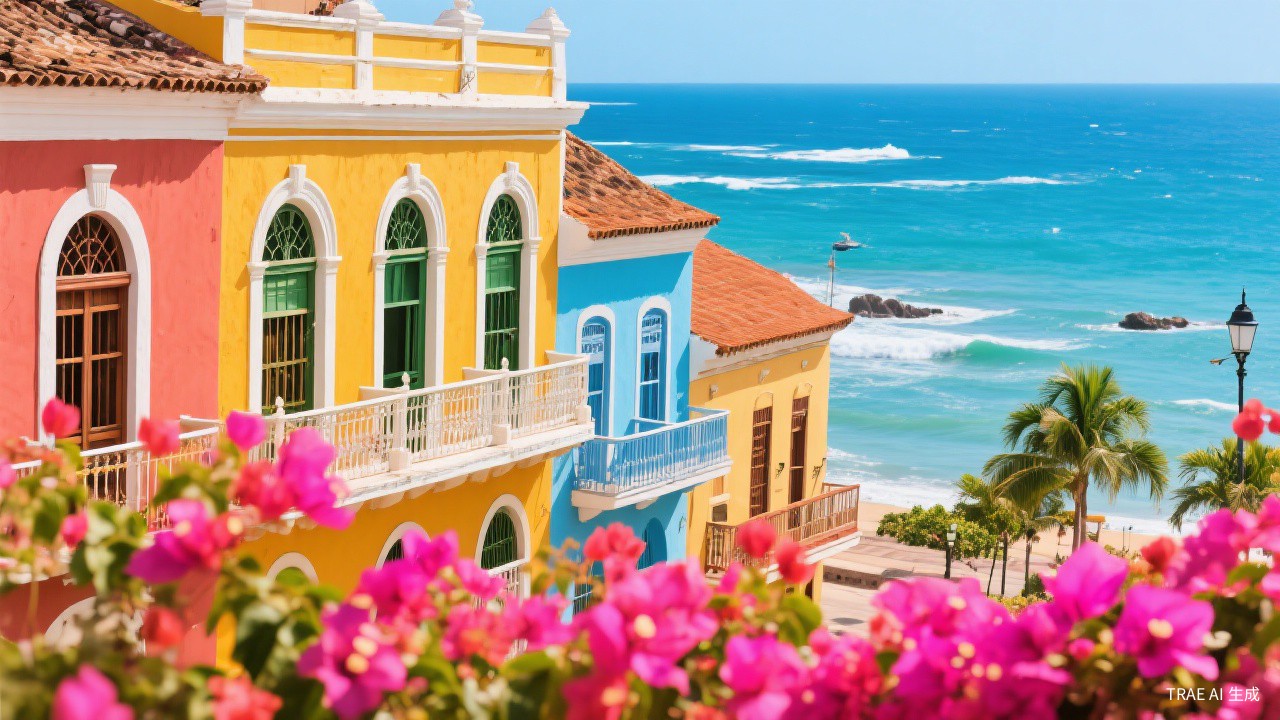
What Makes Cartagena Worth Visiting
Cartagena de Indias, on Colombia's Caribbean coast, is one of the best-preserved colonial cities in the Americas. Founded in 1533, the old walled city—known as the Ciudad Amurallada—is a maze of narrow streets lined with buildings painted in bold colors: mustard yellow, terracotta, deep blue, and coral pink. Bougainvillea cascades from wrought-iron balconies, and plazas shaded by large trees anchor neighborhoods that have changed little in centuries.
The city's history is layered. The massive stone walls and fortresses, built by the Spanish to protect against pirates and rival powers, are among the most extensive in the Americas. San Felipe de Barajas Castle, a fortress on a hill overlooking the city, took more than 150 years to build and was never conquered. Inside the walls, churches like San Pedro Claver and the Cathedral face plazas where vendors sell fresh fruit and arepas.
Cartagena is also a gateway to the Rosario Islands, an archipelago of 27 coral islands about 35 kilometers offshore. The islands offer white sand beaches, clear water, and coral reefs. On the mainland, the neighborhood of Getsemaní, just outside the old walls, has become the city's creative center, with street art, live music, and a more local atmosphere than the tourist-heavy old city.
Best Time to Go
The dry season, December to April, is the best time to visit. Temperatures are consistently 28-32°C year-round, but humidity is lower and rainfall is minimal during these months. This is peak season, with higher hotel prices and more visitors, especially around Christmas, New Year, and the Hay Festival (a literature festival in late January).
The rainy seasons are May to June and September to November. Rain usually comes in brief, heavy afternoon downpours rather than all-day drizzle. Hotel prices drop 20-40% during these periods, and the city is less crowded. The sea is calmest from December to April for island trips.
Cartagena is hot year-round—the heat is relentless during midday. Plan outdoor activities for early morning or late afternoon, and spend the hottest hours in museums, cafes, or shaded plazas. The evening sea breeze makes the old city pleasant after sunset.
Getting There and Around
Rafael Núñez International Airport (CTG) is 15 minutes from the old city. Direct flights connect Cartagena to Miami, Fort Lauderdale, New York, Panama City, and several Colombian cities. From Bogotá, the flight takes 1 hour 20 minutes. International arrivals from the US take 3-5 hours.
Taxis from the airport to the old city or Getsemaní cost COP 10,000-15,000 ($2.50-4). The ride takes 15-20 minutes. Always agree on the fare before getting in, or use an app like Cabify or inDriver for transparent pricing.
Within the old city, walking is the best way to explore—the area is compact and most streets are pedestrian-friendly. For trips to Bocagrande (the modern beach district), Castillo San Felipe, or the bus terminal, taxis cost COP 7,000-12,000. Boats to the Rosario Islands depart from the Muelle de los Pegasos dock near the old city.
Where to Stay
Inside the Walled City is the most atmospheric place to stay. Boutique hotels in restored colonial buildings line the narrow streets. Expect to pay $80-250 per night. Hotels with rooftop pools and terrace views are in high demand. The neighborhoods of San Diego and Santo Domingo are particularly charming.
Getsemaní, just outside the walls, offers a more local and bohemian vibe. Hostels and small hotels here cost $20-80 per night. The area has excellent street food, live music venues, and is within walking distance of the old city. It has gentrified rapidly but retains more character than the walled city.
Bocagrande is the modern beach district, with high-rise hotels and apartment buildings along a long beach. It is less atmospheric but offers air conditioning, pools, and ocean views at lower prices than the old city ($50-150 per night). It is a 10-minute taxi ride from the old city.
Must-See Attractions
Castillo San Felipe de Barajas
This 17th-century fortress sits on San Lázaro hill, 40 meters above the city. The Spanish built it in stages over 150 years to defend against pirate attacks. The fortress contains a network of underground tunnels, some wide enough for soldiers to march through and others barely shoulder-width. The view from the top encompasses the entire city, the harbor, and the Caribbean. Allow 1.5-2 hours to explore. A guide (COP 20,000) adds context about the military engineering.
Admission: COP 25,000 ($6) | Hours: 8 AM-6 PM daily
Walled City (Ciudad Amurallada)
The old city is contained within 11 kilometers of stone walls built by the Spanish in the 16th-18th centuries. Walking the walls, especially at sunset, is one of the best experiences in Cartagena. Key plazas include Plaza de los Coches (the old slave market), Plaza de la Aduana (customs plaza), and Plaza de Bolívar (with a statue of Simón Bolívar). The walls themselves have wide parapets you can walk along, with views of the old city on one side and the sea on the other.
Admission: Free to walk | Open: Always open
Rosario Islands
This archipelago of 27 coral islands is a national park 35 kilometers from Cartagena. Day trips by boat take 45-60 minutes. Isla Grande and Isla del Rosario are the most visited, with beaches, snorkeling, and small hotels. The Oceanario aquarium on Isla San Martín has dolphin and shark exhibits. For a quieter experience, visit Isla Barú or the private island clubs. Snorkeling reveals coral formations and tropical fish. Full-day tours including lunch cost $40-80.
Cost: Tours $40-80 | Times: Day trips depart 8-9 AM, return 4-5 PM
Museo del Oro Zenú
This museum, part of the Bank of the Republic's gold museum network, displays pre-Columbian gold artifacts from the Zenú indigenous culture. The collection includes delicate gold filigree jewelry, ceramics, and ceremonial objects. It is smaller than the main Gold Museum in Bogotá but well-curated and free to enter. The building itself is a restored colonial mansion on Plaza de Bolívar. Allow 45 minutes to 1 hour.
Entry: Free | Hours: 9 AM-5 PM, closed Mondays
Getsemaní Neighborhood
Once a working-class district outside the city walls, Getsemaní has transformed into Cartagena's creative hub. The streets are covered in murals and street art depicting local history and culture. Plaza de la Santísima Trinidad is the heart of the neighborhood, where locals gather in the evening and street musicians play. The area has some of the city's best hostels, affordable restaurants, and live music venues. It is safe to walk during the day and evening, though quieter streets should be approached with normal caution at night.
Cost: Free | Times: Always open
Food and Drink
Arepa de Huevo — A deep-fried corn dough patty filled with egg and sometimes ground meat. This is a Cartagena street food staple, sold from stalls and carts throughout the city, especially in the morning. It is crispy on the outside and soft inside. One costs COP 2,000-4,000 ($0.50-1). Try it at the stalls near the Portal de los Dulces.
Ceviche Cartagenero — Cartagena's version of ceviche uses local fish marinated in lime juice with coconut milk, giving it a creamier texture than Peruvian ceviche. It is served with plantain chips or saltines. Every restaurant in the old city has its own version. Budget COP 15,000-25,000 ($4-6) per portion.
Postre de Coco — A coconut-based dessert made with grated coconut, condensed milk, and lime zest. Variations include cocadas (coconut balls) and enyucado (coconut and yucca cake). You will find these at the Portal de los Dulces, a row of stalls on the side of the Clock Tower in the old city. Each sweet costs COP 2,000-5,000 ($0.50-1.25).
Sancocho — A hearty soup made with chicken or beef, plantains, yucca, corn on the cob, and cilantro. It is a traditional Colombian comfort food, often eaten for lunch. A bowl is a full meal. Try it at La Mulata or any traditional restaurant. Budget COP 15,000-25,000 ($4-6).
Practical Tips
• Stay hydrated. Cartagena's heat and humidity are intense, especially from 11 AM to 3 PM. Carry water and take breaks in air-conditioned spaces.
• Ignore aggressive street vendors who approach you in the old city. A polite "no, gracias" and keep walking is the standard approach.
• Use pesos for everything. Prices in dollars are typically rounded up. ATMs are available throughout the old city.
• Take a free walking tour on your first day to orient yourself. Tours depart from Plaza de los Coches and operate on tips ($5-10 is standard).
• Be cautious with your phone and belongings in crowded areas, especially around the Clock Tower and the waterfront.
Traveler's Tip
Walk the city walls at sunset. Start near the Clock Tower and walk east toward the sea. The light turns the old buildings golden, the Caribbean breeze picks up, and you will likely have long stretches of the wall to yourself.