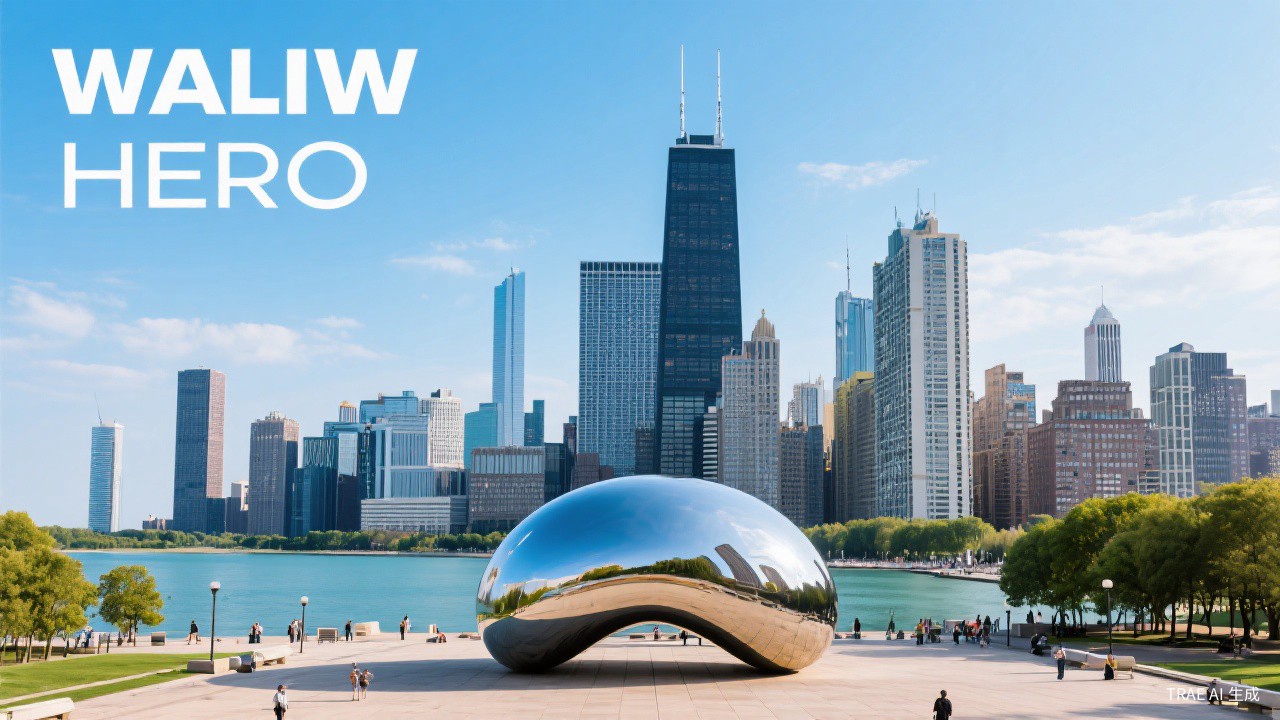
First Impressions of Chicago
Chicago is the third-largest city in the United States, but it often feels more approachable than New York or Los Angeles. The downtown area, called the Loop, is compact and walkable, and the city's grid system makes navigation straightforward. The lakefront—17 miles of parkland along Lake Michigan—stands out as extensive urban shorelines in the world and is free and open to everyone.
Architecture is Chicago's defining art form. The city invented the skyscraper in the 1880s, and its skyline remains one of the most distinctive in the world. The Willis Tower (formerly Sears Tower), the John Hancock Center, the Tribune Tower, and the Aqua Building represent over a century of architectural innovation. The Chicago Architecture Center's river cruise, aboard Chicago's First Lady, is widely considered the best architecture tour in the country.
Chicago's food culture runs deep. Deep-dish pizza, Chicago-style hot dogs (never with ketchup), Italian beef sandwiches, and Garrett's caramel and cheese popcorn are local institutions. Beyond the classics, the city has a serious dining scene with more Michelin-starred restaurants than any US city outside New York. The West Loop and Logan Square neighborhoods are the current centers of culinary innovation.
Best Time to Go
Spring (April to June) and fall (September to November) offer the best weather and the most comfortable conditions for walking and outdoor activities. Temperatures start at 10-25°C, and the lakefront is particularly pleasant. Fall brings foliage color along the lakefront parks.
Summer (July and August) is warm (25-32°C) and packed with events: the Taste of Chicago food festival, Lollapalooza music festival, outdoor movies, and neighborhood street fairs nearly every weekend. It is the most crowded and expensive season. Lake Michigan water temperatures reach 20-22°C, warm enough for swimming.
Winter (December to March) is harsh. Temperatures regularly drop below -10°C, and wind chill makes it feel much colder. Snow is common. That said, winter has its advantages: museum crowds thin out, hotel rates drop, and the city's indoor attractions—including the Art Institute and the Field Museum—are at their best. The Magnificent Mile holiday lights are worth seeing in December.
Getting There and Around
O'Hare International Airport (ORD) is 17 miles northwest of downtown and is one of the busiest airports in the world, with direct flights from virtually everywhere. Midway Airport (MDW) is 10 miles southwest and serves primarily Southwest Airlines and other domestic carriers. Both connect to downtown via the CTA train system.
The CTA Blue Line runs from O'Hare to downtown in about 45 minutes for $2.50. The Orange Line connects Midway to downtown in about 30 minutes for the same fare. Both are reliable and far cheaper than taxis ($40-60 from O'Hare, $30-45 from Midway).
Chicago's public transit system (CTA) includes eight train lines and extensive bus routes. A 1-day CTA pass costs $20, a 3-day pass is $35, and a 7-day pass is $28. The trains are called the "L" (for "elevated") and are color-coded. The Red and Blue lines run 24 hours. Walking is practical in the Loop, River North, and Lincoln Park. Divvy bike-share stations are throughout the city.
Where to Stay
The Loop and River North put you in the center of the action. Hotels start at $120-350 per night. The Loop is convenient for museums and theater. River North is better for restaurants and nightlife. Both are walkable to major attractions.
Lincoln Park and Wicker Park are residential neighborhoods with tree-lined streets, local restaurants, and a more relaxed atmosphere. Hotels and B&Bs here cost $100-250 per night. Both are well-connected by the CTA Red and Blue lines.
Streeterville (near Navy Pier) and Millennium Park area hotels put you within walking distance of the lakefront, the Art Institute, and Michigan Avenue shopping. Expect $150-400 per night. For budget travelers, hostels in the Loop and Wicker Park cost $30-60 per bed.
Must-See Attractions
Millennium Park and "The Bean"
The 24.5-acre park is Chicago's most visited attraction. Cloud Gate, the mirrored sculpture known as "The Bean," reflects the skyline and the faces of visitors. The Jay Pritzker Pavilion, designed by Frank Gehry, hosts free concerts in summer. The Crown Fountain projects video faces onto glass towers with water cascading from their mouths. Lurie Garden offers a quiet respite. The park connects to the Art Institute via the Nichols Bridgeway. It is free and open year-round.
Tickets: Free | Times: 6 AM-11 PM daily
Art Institute of Chicago
One of the oldest and largest art museums in the United States, with a collection spanning 5,000 years. Highlights include Georges Seurat's "A Sunday on La Grande Jatte," Grant Wood's "American Gothic," Edward Hopper's "Nighthawks," and an impressive Impressionist collection. The Modern Wing, designed by Renzo Piano, added 264,000 square feet of gallery space. Allow at least 3-4 hours. The museum is free to Illinois residents on certain weekdays.
Entry: $25 adult | Hours: 11 AM-5 PM (Thu-Mon), 11 AM-8 PM (Tue-Wed)
Chicago Architecture River Cruise
The 90-minute cruise on the Chicago River, operated by the Chicago Architecture Center, passes more than 40 landmark buildings. Docents explain the history and design of each structure, from the ornate Wrigley Building to the modern Aqua Tower. The cruise goes through the Chicago River's main branch, the south branch, and back, offering perspectives impossible from the street. It operates April through November and departs from the Michigan Avenue bridge.
Tickets: $57 adult | Open: Multiple departures daily, 9 AM-7 PM
Navy Pier
This 3,300-foot pier extends into Lake Michigan and contains restaurants, shops, the Chicago Children's Museum, a Ferris wheel, and an IMAX theater. The Centennial Wheel offers 360-degree views of the lake and skyline from 200 feet. Summer brings free outdoor concerts and movie screenings. The pier is accessible by bus or a pleasant walk along the lakefront from downtown. It can feel touristy, but the lake views from the end of the pier are worth the visit.
Tickets: Free to walk (Centennial Wheel $18) | Hours: 10 AM-10 PM (summer), 10 AM-8 PM (winter)
Willis Tower Skydeck
The 103rd-floor observation deck of the Willis Tower (formerly Sears Tower) sits 412 meters above the street. The Ledge, a glass box extending 1.3 meters from the building, lets you look straight down to the street below. On clear days, views extend to four states. The experience includes interactive exhibits about the building's history and Chicago. Allow 1-2 hours including security and waiting. The 360 CHICAGO observation deck at John Hancock Center is an alternative with TILT, a glass window that tilts outward.
Cost: $30-35 | Hours: 9 AM-10 PM (Apr-Sep), 10 AM-8 PM (Oct-Mar)
Food and Drink
Deep-Dish Pizza — A thick, buttery crust filled with layers of cheese, toppings, and chunky tomato sauce. The pie takes 30-45 minutes to bake. Lou Malnati's and Giordano's are the two most famous chains. A medium pizza feeds 2-3 people and costs $20-30. Pequod's, a local favorite, has a caramelized crust edge that is distinctive.
Chicago-Style Hot Dog — An all-beef frankfurter on a poppy seed bun, topped with yellow mustard, relish, chopped onions, tomato slices, pickle spear, sport peppers, and celery salt—never ketchup. Portillo's and Superdawg are classic spots. A dog costs $4-7. Order two and a chocolate shake for the full experience.
Italian Beef Sandwich — Thinly sliced roast beef on an Italian roll, dipped in au jus, topped with giardiniera (pickled vegetables) or sweet peppers. Al's Beef and Johnnie's are the two legendary spots. A sandwich costs $10-13. Order it "dipped" for the authentic experience, and use both hands.
Garrett's Popcorn — A Chicago institution since 1949. The signature blend, "Garrett Mix," combines caramel and cheese popcorn. The contrast of sweet and salty is addictive. Stores throughout the city have lines out the door. A small bag costs $7-10. It makes an excellent edible souvenir.
Practical Tips
• Get a 7-day CTA pass ($28) if you are staying more than two days. It pays for itself quickly and covers both trains and buses.
• Make restaurant reservations in advance for dinner. Popular spots in the West Loop and River North book out days or weeks ahead, especially on weekends.
• Dress in layers. Chicago weather can change quickly, and the wind off Lake Michigan makes it feel colder than the thermometer reads.
Visit museums on free days. The Art Institute offers free evenings for Illinois residents, and the Field Museum has discounted days.
• Explore neighborhoods beyond downtown. Logan Square, Pilsen, Chinatown, and Hyde Park each have distinct character, food, and culture.
Traveler's Tip
Take the architecture river cruise on your first day. It gives you an understanding of the city that will improve everything else you do. And time it for late afternoon—the golden light on the buildings from the water is remarkable.