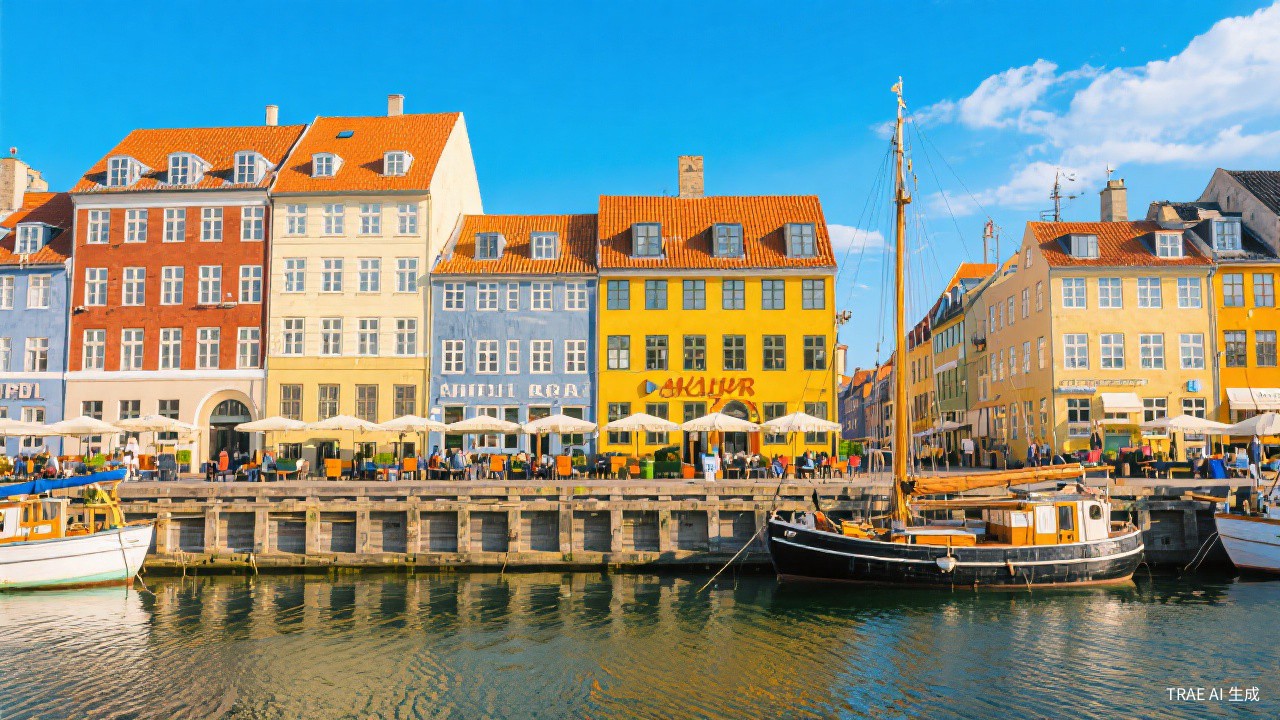
Discovering Copenhagen
Copenhagen consistently ranks among the world's most livable cities, and it shows in every detail: the cycling infrastructure, the clean harbor water you can swim in, the carefully designed public spaces. Nyhavn's colorful 17th-century townhouses along the canal are Denmark's most photographed scene, but the city extends far beyond the postcard. The Louisiana Museum of Modern Art, 35 kilometers north, sits on a coastal cliff and is worth the trip alone. The Cisternerne, an underground water reservoir turned art space in Frederiksberg, is unlike any museum you have visited. Copenhagen's New Nordic cuisine—pioneered by Rene Redzepi at Noma—has changed how the world thinks about food.
Copenhagen runs on bicycles. Over 60 percent of residents commute by bike, and the city's cycling infrastructure is the best in the world. The culture is egalitarian and relaxed—Danes value hygge (coziness), which means candles in winter, picnics in summer, and long meals with friends. The city has a strong design tradition, from Arne Jacobsen furniture to modern architecture like BLOX and the Copenhagen Opera House. Tivoli Gardens, the second-oldest amusement park in the world, feels both historic and timeless.
Three to four days is sufficient. Spend day one in the city center (Nyhavn, Amalienborg, Strøget), day two at the Louisiana Museum and Hellerup, day three exploring Vesterbro and Nørrebro's food and design scene, and day four at Tivoli or the harbor baths. Copenhagen is compact and best explored by bike—rent one at your hotel or through the Donkey Republic app.
Best Time to Go
May to August offers the best weather, with long daylight hours (sunset after 9 PM in June) and temperatures from 15 to 25 degrees. June is the most beautiful month, with blooming gardens and outdoor events. The Copenhagen Jazz Festival in July brings 1,000 concerts to the city. Distortion, a street festival in early June, turns Nørrebro into a massive party.
Winter (November to February) is dark and cold (0 to 5 degrees), but Copenhagen handles it well with candles, warm interiors, and gløgg (mulled wine). The Tivoli Christmas market is elaborate. Hotel prices drop 20 to 30 percent in winter. Spring (March to April) is cool but brightening, with cherry blossoms in Langelinie Park.
Getting There and Around
Copenhagen Airport (CPH) is 8 kilometers south of the city center and is Scandinavia's largest airport. The Metro M2 connects the airport to the city in 15 minutes for DKK 36 (€4.80). Trains to Sweden depart from the airport station. Taxis cost about DKK 250 to 300 (€33 to €40).
Copenhagen's Metro, S-trains, and buses are integrated into the Rejsekort system. A single ticket is DKK 24 (€3.20), and a 24-hour pass is DKK 80 (€10.70). The city is small and very bike-friendly—Donkey Republic rents bikes for DKK 49 (€6.50) per day. The harbor bus (Havnebussen) is a public boat that connects stops along the harbor for the price of a bus ticket.
Where to Stay
Indre By (the Old Town) around Nyhavn and Strøget is the most convenient area. Hotels start at DKK 1,200 to 3,000 (€160 to €400) per night. You are within walking distance of most major attractions. The area around Kongens Nytorv is particularly central.
Vesterbro, west of the center, is Copenhagen's trendiest neighborhood. Hotels and design hostels start at DKK 800 to 2,000 (€107 to €267) per night. The area has excellent restaurants, vintage shops, and the Meatpacking District for nightlife. It is a 15-minute walk or a short bike ride to the center.
Nørrebro is more diverse and affordable, with rooms from DKK 600 to 1,500 (€80 to €200) per night. The neighborhood has a large immigrant community, excellent Middle Eastern food, and Superkilen Park. It is a 10-minute bike ride from the center.
Must-See Attractions
Tivoli Gardens
Opened in 1843, Tivoli is the second-oldest amusement park in the world and the inspiration for Disneyland. The park contains gardens, restaurants, theaters, and rides ranging from vintage carousels to modern roller coasters. In the evening, 120,000 lights illuminate the park. The Nimb Hotel, a Moorish-style palace at the entrance, houses one of Copenhagen's best restaurants.
Admission: DKK 145 (€19) | Times: April to September, 11 AM to 11 PM; November to December for Christmas
Louisiana Museum of Modern Art
Located 35 kilometers north of Copenhagen in Humlebæk, this museum has one of the finest collections of modern and contemporary art in Europe. Works by Giacometti, Warhol, and Basquiat share space with a sculpture park overlooking the Øresund strait. The building itself, a series of pavilions connected by glass corridors, is beautiful. Allow at least four hours.
Cost: DKK 165 (€22) | Open: 11 AM to 10 PM Tuesday to Friday, 11 AM to 6 PM weekends
The Round Tower (Rundetårn)
Built in 1642 by King Christian IV, this 17th-century observatory has a spiral ramp instead of stairs—the 209-meter walk to the top is gentle enough for a horse carriage. The observation platform offers views over the old city's copper roofs and church spires. The tower also hosts art exhibitions and a small concert hall.
Cost: DKK 25 (€3.30) | Times: 10 AM to 8 PM daily, until 6 PM in winter
Amalienborg Palace
The winter residence of the Danish royal family, consisting of four identical rococo palaces surrounding an octagonal courtyard. The changing of the guard takes place daily at noon. The Amalienborg Museum in one of the palaces displays royal interiors from 1863 to the present. The square is one of Copenhagen's most elegant spaces.
Admission: DKK 110 (€15) | Hours: 10 AM to 4 PM, closed Mondays
Cisternerne
An underground water reservoir in Frederiksberg Gardens, converted into an art space. The dripstone caverns hold temporary installations that interact with the raw brick columns and water. Past exhibitions have included floating light sculptures and immersive sound pieces. The space is dark, damp, and otherworldly. Bring a jacket.
Entry: DKK 80 (€11) | Times: 11 AM to 5 PM, Tuesday to Sunday
Food and Drink
Smørrebrød at Schønnemann — Danish open-faced sandwiches on dense rye bread, topped with herring, egg, shrimp, or roast beef. Schønnemann, open since 1877, is Copenhagen's most famous smørrebrød restaurant. Order a selection of three to five pieces for a full meal. The pickled herring with curry is a classic.
Hot Dog at Den Økologiske Pølsemand — Copenhagen's organic hot dog stand on The Lakes serves sausages made from organic pork, topped with remoulade, crispy onions, and pickled cucumber. It is the city's best street food and costs under €5. The stand has been operating since 2008 and has a loyal following.
New Nordic Tasting Menu at Høst — For a more accessible introduction to New Nordic cuisine than Noma, Høst in Vesterbro offers a seasonal tasting menu with dishes like pickled vegetables, fermented grains, and local fish. The interior, with raw stone walls and hundreds of hanging candles, is one of Copenhagen's most photographed restaurant spaces.
Danish Pastry at Lagkagehuset — Despite the name, the Danish pastry is called wienerbrød in Denmark. Lagkagehuset, a local bakery chain, makes excellent versions—try the spandauer (custard-filled) or the tebirkes (poppy seed). The bread is also outstanding. Multiple locations across the city.
Practical Tips
• Copenhagen is extremely expensive. Budget at least €80 to €120 per day for food and drink.
• Rent a bike. It is the fastest way to get around and costs a fraction of public transit.
• Many restaurants close on Mondays. Book ahead for dinner, especially on weekends.
• The Copenhagen Card (€45 for 24 hours) includes transit and 80+ attractions. It pays for itself if you visit Tivoli, Louisiana, and a few museums.
• Supermarkets like Irma and Føtex are cheaper than eating out. Pick up supplies for picnics.
Traveler's Tip
Take the harbor ferry (Havnebussen) from Nyhavn to the Opera House for the price of a bus ticket. The 15-minute ride gives you a water-level view of the harbor, the Black Diamond library, and the new waterfront architecture. From the Opera House, walk to Amalienborg through the new residential areas.