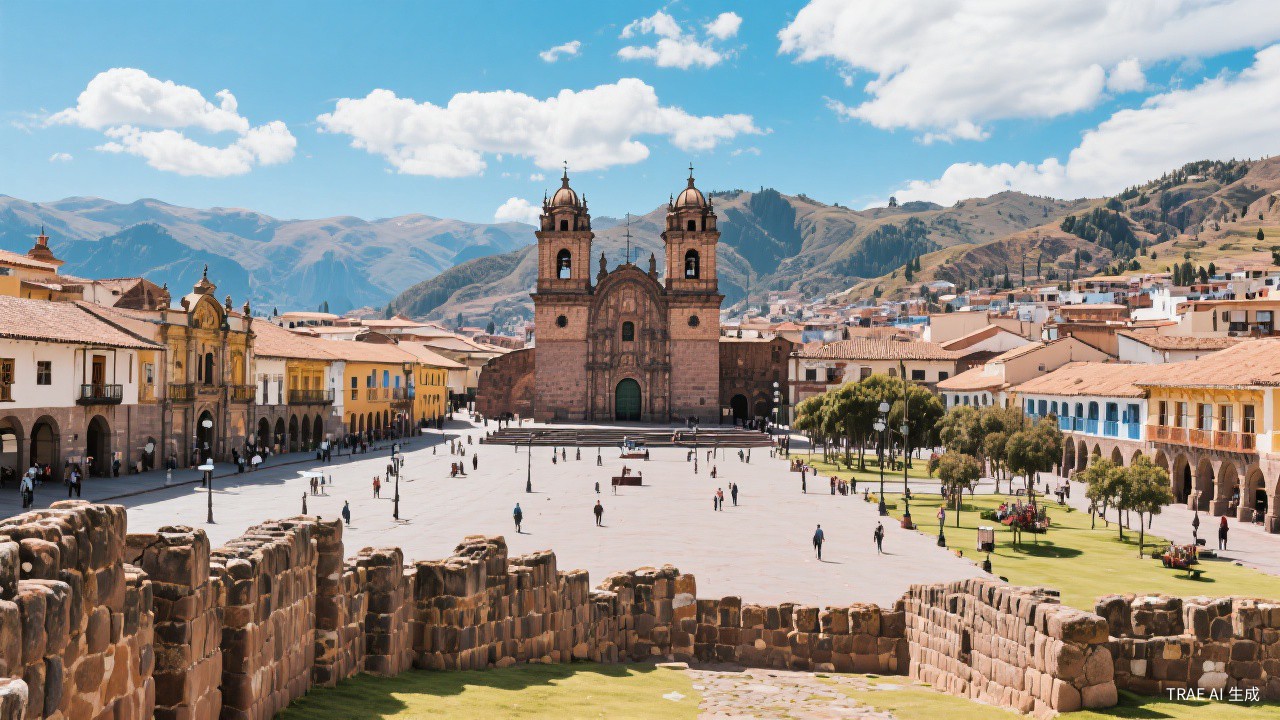
Discovering Cusco
Cusco was the capital of the Inca Empire, and its legacy is visible at every turn. Inca stone walls—fitted together without mortar in such tight joints that a knife blade cannot fit between the stones—form the foundations of colonial churches and modern buildings throughout the city center. The Spanish built their churches directly on top of Inca temples, creating layers of history that are unique in the Americas.
The city sits at 3,400 meters above sea level, in a valley surrounded by red-brown hills and snow-capped peaks. The altitude affects everyone on arrival—headaches, shortness of breath, and fatigue are common for the first day or two. But the altitude also means thin, clear air and intense light that makes the colonial architecture and Inca ruins glow.
Cusco is also the gateway to Machu Picchu, the most famous archaeological site in South America. Most visitors spend two to three days in Cusco acclimatizing before taking the train or hiking the Inca Trail to the citadel. But Cusco itself deserves more than a quick stop—the Sacred Valley, the ruins of Sacsayhuamán, the salt mines of Maras, and the Inca terraces of Moray are all within easy reach.
Best Time to Go
The dry season, May to September, is the best time to visit. Days are sunny and clear, with temperatures of 15-20°C in Cusco and cooler at higher elevations. Nights drop to near freezing in June and July. This is peak season, with the most visitors and highest prices. June is the busiest month due to the Inti Raymi festival (Festival of the Sun) on June 24.
The shoulder months of April and October-November offer a balance: decent weather, fewer crowds, and lower prices. Rain is possible but usually brief. The Scenery is greener during these months.
The wet season, December to March, brings daily afternoon rain. Temperatures remain mild (14-18°C), but trails can be muddy and views of mountains may be obscured by clouds. The Inca Trail closes for maintenance in February. Hotel prices are 20-40% lower than dry season. If you do not mind rain, this is a quieter time to visit.
Getting There and Around
Alejandro Velasco Astete International Airport (CUZ) is 10 minutes from the city center. Direct flights connect Cusco to Lima (1 hour 20 minutes), with multiple daily departures. From Lima, international connections are available. Cusco's airport is at high altitude, and flights are sometimes delayed or diverted due to weather.
The train to Machu Picchu departs from Poroy station (20 minutes from Cusco) or from Ollantaytambo in the Sacred Valley (1.5 hours by car from Cusco). Peru Rail and Inca Rail operate the route. The trip to Aguas Calientes (Machu Picchu town) takes about 3.5 hours and costs $50-200 one way depending on the service level. The Belmond Hiram Bingham luxury train costs $400+ one way.
Within Cusco, walking is the best way to explore the historic center. Taxis cost PEN 5-10 for short rides within the city. Colectivos (shared vans) run to nearby towns including Pisac and Urubamba for PEN 5-15. For the Sacred Valley, organized tours or private drivers are the most convenient options.
Where to Stay
Cusco Historic Center is the most convenient area, within walking distance of the Plaza de Armas, restaurants, and museums. Hotels in restored colonial buildings are atmospheric but can be noisy. Expect to pay PEN 100-250 ($25-65) per night for mid-range options. Boutique hotels in this area cost PEN 300-600 ($80-160).
San Blas, the artists' neighborhood on a hill above the Plaza de Armas, has narrow cobblestone streets, small galleries, and boutique hotels. The walk up from the plaza is steep at altitude—take it slowly. Hotels here cost PEN 80-200 ($20-50) per night. The views over the city are excellent.
Sacred Valley (Ollantaytambo, Urubamba) is at lower altitude (2,800 meters) and a good option for acclimatization before Cusco. Hotels and lodges here cost PEN 100-300 ($25-80) per night. Staying in the valley also puts you closer to Machu Picchu and the valley's archaeological sites.
Must-See Attractions
Machu Picchu
The 15th-century Inca citadel, perched on a ridge between two peaks at 2,430 meters, defines the skyline archaeological sites in the world. The site contains temples, terraces, water channels, and residential buildings. The classic view is from the Sun Gate (Inti Punku) at the end of the Inca Trail. Tickets are limited to 4,044 per day and must be purchased in advance through the government website. Entry is in two time slots: 6-8 AM and 8-10 AM. Huayna Picchu and Machu Picchu Mountain require separate permits and steep climbs.
Cost: PEN 152 ($40) + timed entry | Open: 6 AM-5:30 PM
Sacsayhuamán
This massive Inca fortress overlooks Cusco from a hilltop to the north. The site is famous for its enormous stone walls, built with boulders weighing up to 200 tons fitted together with precision that exceeds modern engineering. The site covers a large area and includes underground passages and carved rock formations. It is within walking distance of the Plaza de Armas (a 25-minute uphill walk). The Inti Raymi festival is reenacted here every June 24. Allow 1.5-2 hours.
Entry: Included in tourist ticket (PEN 130) | Open: 7 AM-6 PM
Sacred Valley
The fertile valley along the Urubamba River contains several important Inca sites. Ollantaytambo has a massive fortress with terraced hillsides and stone blocks that were in the process of being transported when the Spanish arrived. Pisac has hilltop ruins and a famous market selling textiles, ceramics, and produce. Moray contains circular agricultural terraces that may have been an Inca agricultural research station. Maras has salt mines where salt has been harvested from spring water since Inca times.
Entry: Tourist ticket PEN 130 (covers multiple sites) | Open: 7 AM-6 PM
Cusco Cathedral
Built between 1560 and 1664 on the site of the Inca palace of Viracocha, the cathedral dominates the Plaza de Armas. It contains one of the largest collections of colonial art in the Americas, including a famous painting of the Last Supper featuring a guinea pig on the table. The choir stalls are made from cedar wood, and the altar is solid silver. The adjacent church of Jesús María and the church of La Compañía are also worth visiting.
Entry: PEN 25 | Times: 10 AM-6 PM
San Pedro Market
Cusco's main market is where locals buy produce, meat, cheese, and household goods. The second floor has food stalls serving set menus (menu del día) for PEN 8-15 ($2-4)—a soup, main course, and drink. It is the cheapest place to eat in Cusco and the most authentic. The market also sells fresh juices, baked goods, and traditional remedies. Go in the morning for the freshest produce and the most activity.
Entry: Free to browse (meals PEN 8-15) | Open: 6 AM-6 PM daily
Food and Drink
Cuy (Guinea Pig) — A traditional Andean food dating back to Inca times. The guinea pig is roasted or fried whole and served with potatoes and salad. It is a delicacy and a centerpiece of celebrations. The taste is similar to rabbit or dark-meat chicken. Try it at a traditional restaurant like Kusikuy or at a picantería. Budget PEN 35-50 ($9-13) per person.
Lomo Saltado — A stir-fry of beef, onions, tomatoes, and soy sauce, served with french fries and rice. This dish reflects Peru's Chinese-Japanese influence (chifa cuisine). It draws huge crowds dishes in Peru and is served at nearly every restaurant. Budget PEN 20-35 ($5-9) for a generous portion.
Rocoto Relleno — A large red rocoto pepper stuffed with spiced beef, peanuts, cheese, and egg, then baked. It is a Cusco specialty and is served with a potato gratin. The pepper is very spicy despite its mild appearance. Try it at any traditional Cusqueña restaurant. Budget PEN 18-25 ($5-7).
Chicha de Jora — A fermented corn beer that has been brewed in the Andes for centuries. It is thick, slightly sour, and low in alcohol (2-4%). In Cusco, it is served at chicherías (small, unmarked bars identified by a red flag or plastic bag on a stick outside). A glass costs PEN 2-4 ($0.50-1). It is an acquired taste but a genuine cultural experience.
Practical Tips
• Arrive in Cusco at least two days before any strenuous activity. The altitude (3,400 meters) affects most people. Rest, drink coca tea, and avoid alcohol for the first 48 hours.
• Buy the boleto turístico (tourist ticket, PEN 130) if visiting multiple sites. It covers Sacsayhuamán, the Sacred Valley sites, and several museums, and is valid for 10 days.
Book Machu Picchu tickets well in advance through the official government website. Tickets sell out weeks ahead, especially for the high season and Huayna Picchu permits.
• Wear layers and a hat. The sun is intense at altitude, and temperatures swing dramatically between day and night. Sunscreen is essential.
• Be cautious with street vendors offering "free" tours or massages. They often expect a tip or try to sell crafts afterward.
Traveler's Tip
Spend a night in the Sacred Valley before Cusco. The valley is at 2,800 meters—lower than Cusco—and the gentler altitude helps you acclimatize while exploring Ollantaytambo and Pisac.