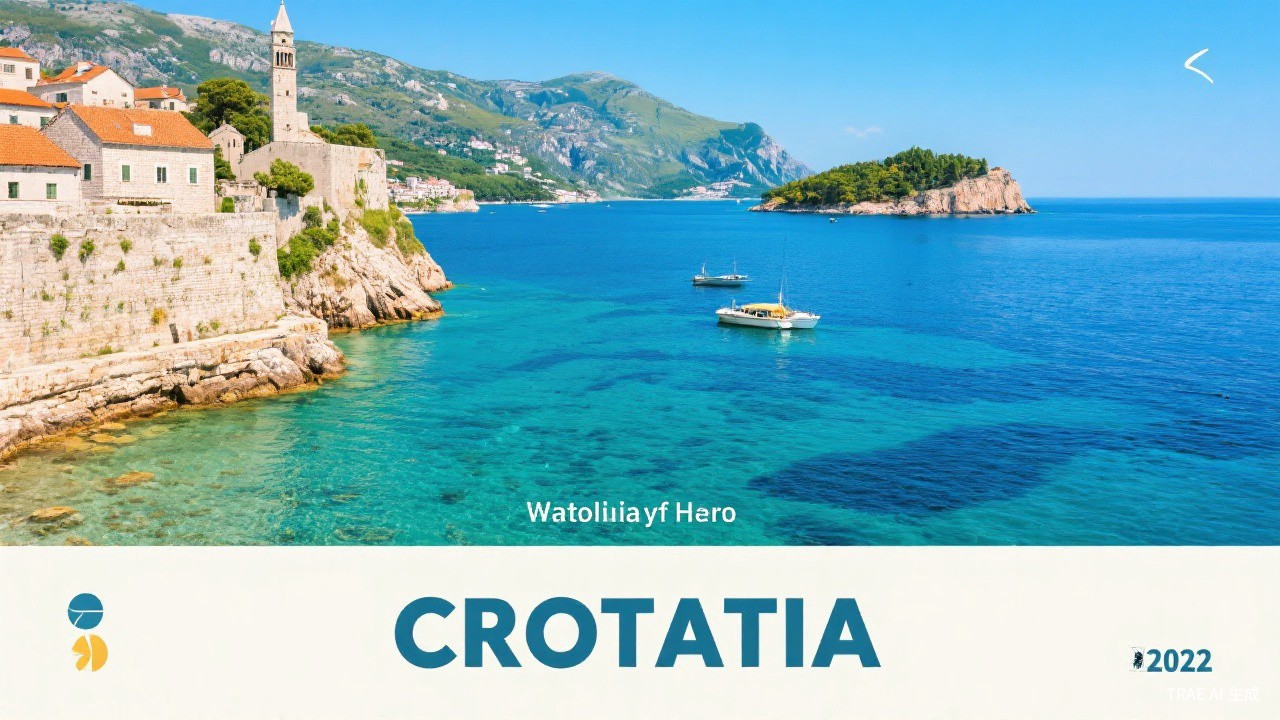
Discovering Dalmatian Coast
Croatia's Dalmatian Coast stretches 600 kilometers along the eastern Adriatic, dotted with over a thousand islands and anchored by the ancient cities of Split, Dubrovnik, and Zadar. Diocletian's Palace in Split, built by the Roman emperor in the 4th century AD, is not a museum but a living neighborhood—people still live, shop, and drink coffee within its walls. Dubrovnik's Old Town, encircled by medieval walls that walk in a complete circuit, is one of the best-preserved medieval cities in Europe. The Kornati Islands, a national park of 89 uninhabited islands, offer some of the clearest water in the Mediterranean.
The Dalmatian way of life revolves around the sea and the slow rhythm of coastal towns. Fishermen sell their catch at morning markets, konobas (traditional taverns) serve grilled fish and peka (meat and vegetables cooked under a bell-shaped lid), and the marakulice songs of the klapa (a cappella groups) drift from harbors in the evening. The islands each have their own character: Hvar is glamorous and party-focused, Vis is rugged and remote, Korcula claims to be Marco Polo's birthplace, and Brac has the famous Zlatni Rat beach.
Allow at least a week. Split and Dubrovnik each deserve two to three days. Add two days for island-hopping—Hvar and Korcula are the most accessible by ferry. Zadar, with its Roman ruins and Sea Organ, makes a good stop between Split and Dubrovnik. The Jadrolinija ferry connects major ports, and catamarans run to the islands. A car is useful for exploring the interior but unnecessary for the coastal towns.
Best Time to Go
May to June and September to October are ideal. Temperatures start at 20 to 28 degrees, the sea is warm enough for swimming from June, and the crowds are manageable. September is particularly pleasant—the water is at its warmest, and the grape harvest brings wine festivals. Wild lavender blooms on Hvar in late June.
July and August are peak season, with temperatures above 30 degrees and cruise ships filling Dubrovnik and Split. Accommodation prices double. The Split Summer Festival runs July to August with open-air theater and music. Winter (November to March) is mild on the coast (8 to 15 degrees) but many island hotels and restaurants close. Dubrovnik and Split remain active year-round.
Getting There and Around
Split Airport (SPU) and Dubrovnik Airport (DBV) handle most international flights. Split is 24 kilometers from the city center; the airport bus costs €5 and takes 30 minutes. Dubrovnik Airport is 20 kilometers from the Old Town; the Atlas bus costs €5.50. Zadar Airport (ZAD) has Ryanair connections to many European cities. From Zagreb, the A1 motorway connects to Split in about four hours.
Jadrolinija and Krilo catamarans connect Split to Hvar (€13, one hour), Korcula (€18, 2.5 hours), and Dubrovnik (€25, 4.5 hours). Car ferries run to the larger islands but are slower. Within cities, walking is sufficient. Local buses connect coastal towns. Renting a car costs about €40 to €60 per day and gives flexibility for exploring.
Where to Stay
Split's Old Town, within Diocletian's Palace walls, is the most atmospheric base. Rooms start at €60 to €180 per night. The Riva promenade is the social hub. For quieter stays, look at Varos, the hillside neighborhood above the palace, with rooms from €40 to €100 per night.
Dubrovnik's Old Town is spectacular but expensive—hotels start at €100 to €400 per night. Stay just outside the walls in Ploce or Lapad for better value (€60 to €150 per night) and a 10-minute walk to the Old Town. The views from Ploce over the Old Town and the sea are extraordinary.
Hvar Town on Hvar Island is the most popular island base. Rooms start at €70 to €250 per night in summer. The town is famous for nightlife, but the surrounding beaches and villages are peaceful. Stari Grad, on the other side of Hvar, is quieter and cheaper (€50 to €120 per night) with a charming historic center.
Must-See Attractions
Diocletian's Palace, Split
Built between 295 and 305 AD as a retirement residence for the Roman emperor, this palace stands out as significant Roman structures surviving today. Its walls enclose a neighborhood of narrow streets, the Peristyle (central court), the Cathedral of Saint Domnius (originally Diocletian's mausoleum), and the Temple of Jupiter. Over 3,000 people live within the palace walls. It is not a ruin—it is a living, functioning part of the city.
Cost: Free to wander; cathedral €5 | Open: Always open; cathedral 8 AM to 7 PM
Dubrovnik City Walls
The 16th-century walls encircle Dubrovnik's Old Town in a 1.94-kilometer circuit. Walking the walls takes about two hours and provides views over red-tiled rooftops, the harbor, and the Adriatic. The walls are up to 25 meters high and 6 meters thick in places. Start early in the morning to avoid the heat and crowds.
Tickets: €35 | Open: 8 AM to 7 PM, April to November
Plitvice Lakes National Park
A UNESCO World Heritage Site about two hours inland from Zadar, featuring 16 terraced lakes connected by waterfalls. Wooden boardwalks wind through beech and fir forests, past turquoise pools and cascading waterfalls. The park is divided into Upper and Lower Lakes. Allow a full day. The colors of the water change with the seasons.
Cost: €30 in summer, €18 in winter | Open: 7 AM to 8 PM, April to October
Kornati Islands National Park
An archipelago of 89 islands and islets in the Adriatic, mostly uninhabited and covered in dry-stone walls and low scrub. The islands are accessible only by boat—day trips depart from Zadar, Sibenik, and Murter. The water clarity is extraordinary, with visibility up to 30 meters. The Kornati cliffs on the southern side drop dramatically into the sea.
Cost: Boat tour €50 to €80 including park fee | Open: Day trips only, April to October
Zadar Sea Organ
An architectural sound installation on Zadar's waterfront, designed by Nikola Basic in 2005. Thirty-five pipes beneath marble steps produce musical tones as waves push air through them. The sound is random and haunting, especially at sunset when locals gather on the steps. The adjacent Greeting to the Sun installation lights up at night with solar-powered LEDs.
Entry: Free | Times: Always open
Food and Drink
Peka — Meat (usually lamb or octopus) and potatoes cooked with vegetables under a bell-shaped iron lid buried in embers. The slow cooking process creates tender, smoky flavors. Konoba Dubrava near Split serves an excellent version, but you must order it several hours in advance.
Black Risotto (Crni Rizot) — Risotto colored and flavored with cuttlefish ink, containing pieces of cuttlefish. It looks dramatic—jet black—and tastes richly of the sea. Try it at Nautika in Dubrovnik, an upscale restaurant near Pile Gate with a terrace overlooking the walls.
Pag Cheese (Paski Sir) — A hard sheep's cheese from the island of Pag, made from the milk of sheep that graze on wild herbs and salt-laden grass. The cheese is aged for months and has a sharp, slightly salty flavor. Buy it at the Split market or order a cheese platter at any konoba.
Maraschino Liqueur — Originally from Zadar, this clear cherry liqueur has been produced since the 16th century. The Maraschino factory in Zadar offers tours and tastings. The taste is dry and slightly bitter, unlike the sweet cherry liqueurs found elsewhere. Sip it chilled as a digestif.
Practical Tips
• Croatia uses the euro since January 2023. No need to exchange currency.
• Ferry tickets sell out in summer. Book online in advance, especially for weekend departures.
• The Dubrovnik walls get extremely hot in summer. Bring water and a hat, and start early.
• Many restaurants in tourist areas add a 10 to 15 percent service charge. Check the bill before tipping.
• Island hopping requires planning—check ferry schedules carefully, as connections are limited outside summer.
Traveler's Tip
Take the 10 AM Jadrolinija car ferry from Split to Supetar on Brac Island, rent a scooter, and ride to Zlatni Rat beach. The beach changes shape with the current. Afterward, ride to the inland village of Skrip for lunch at a local konoba. Return on the evening ferry. It makes a perfect day trip.