What Makes Darwin Worth Visiting
Darwin is the capital of Australia's Northern Territory and the gateway to the Top End—the tropical northern region of Australia. The city sits on the Timor Sea, closer to Indonesia than to Sydney, and its climate, culture, and Scenery are distinctly different from the rest of Australia. Darwin has a relaxed, tropical atmosphere, a large outdoor population, and a food scene influenced by its proximity to Asia.
Kakadu National Park, 3 hours east of Darwin, is a UNESCO World Heritage site covering 20,000 square kilometers of wetlands, escarpment country, and Aboriginal rock art sites. The park contains an estimated 5,000 Aboriginal rock art sites, some dating back 20,000 years. The wetlands are home to crocodiles, wallabies, jabirus, and hundreds of bird species. Litchfield National Park, 90 minutes south, has waterfalls, termite mounds, and swimming holes that are accessible year-round.
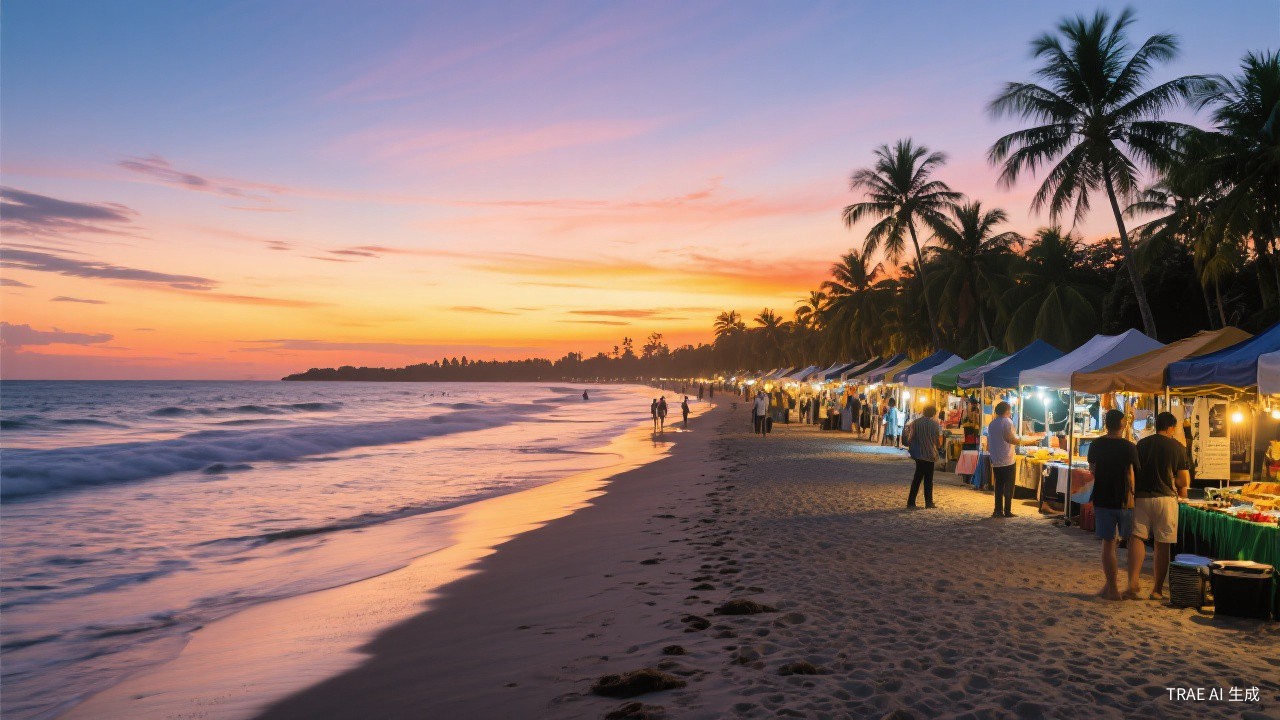
Darwin itself has attractions worth a day or two. The Mindil Beach Sunset Market, held from April to October, is one of the best night markets in Australia, with food stalls representing the city's multicultural population, live music, and sunset views over the Timor Sea. The Darwin waterfront precinct has a wave pool, restaurants, and a convention center. Crocosaurus Cove, in the city center, lets you swim with juvenile crocodiles in a clear pool.
Best Time to Go
The dry season, May to October, is the only practical time to visit. Temperatures start at 20-33°C with low humidity, minimal rainfall, and blue skies. This is peak season, with the highest prices and most visitors. The Mindil Beach Sunset Market runs during this period.
The wet season, November to April, brings extreme heat (33-38°C), high humidity, heavy rainfall, and occasional cyclones. Many roads in Kakadu and Litchfield become impassable. This is not recommended for visitors.
June to August is the busiest period. September and October offer warm weather with fewer crowds before the rains return. The Territory Day fireworks on July 1 are a major event.
Getting There and Around
Darwin International Airport (DRW) has direct flights from Sydney (4.5 hours), Melbourne (5 hours), Brisbane (3.5 hours), Cairns (2.5 hours), Singapore (4.5 hours), and Bali (2.5 hours). It is a smaller airport with limited international connections.
Darwin is compact and easy to get around. The city center is walkable, and the Darwin Bus service connects major areas (A$3 per ride). That said, for Kakadu and Litchfield, you need a car or an organized tour.
Renting a car is essential for independent exploration. Rental cars cost A$60-100 per day. A 4WD is recommended for Kakadu (some roads are unsealed). Organized tours to Kakadu (2-3 days, A$300-600) and Litchfield (1 day, A$120-200) depart daily from Darwin hotels.
Where to Stay
Darwin City Center puts you near the waterfront, Crocosaurus Cove, and the Mindil Beach area. Hotels start at A$100-250 per night. The area is compact and walkable.
Mindil Beach and Stuart Park, near the city center, have hotels and apartments (A$120-300 per night) with beach access and sunset views.
Parap and Fannie Bay are residential suburbs with boutique hotels and B&Bs (A$80-200 per night) and are close to the Parap Markets. For budget travelers, hostels in the city center charge A$25-40 per bed.
Must-See Attractions
Kakadu National Park
This 20,000-square-kilometer UNESCO World Heritage site contains wetlands, escarpment country, waterfalls, and one of the world’s greatest concentrations of Aboriginal rock art. Ubirr and Nourlangie Rock are the main rock art sites, with paintings dating back 20,000 years. The Yellow Water Billabong cruise (A$60) is the best way to see the park’s wildlife—crocodiles, jabirus, egrets, and wallabies. The park requires a permit (A$40 per person, valid for 14 days). Allow 2-3 days.
Tickets: Park permit A$40, Yellow Water cruise A$60 | Open: Always open (visitor centers 8 AM-5 PM)
Litchfield National Park
This park, 90 minutes south of Darwin, has waterfalls, crystal-clear swimming holes, and enormous magnetic termite mounds. Wangi Falls, Florence Falls, and Buley Rockhole are the most popular swimming spots. The termite mounds at the Information Center stand up to 2 meters tall and are aligned north-south to regulate temperature. The park is free to enter and can be visited as a day trip from Darwin.
Tickets: Free | Open: Always open (swimming holes best May-Oct)
Mindil Beach Sunset Market
Held every Thursday and Sunday from April to October, this market is Darwin’s premier social event. Over 200 food stalls serve cuisine from around the world—Thai, Indian, Greek, Indonesian, Australian—along with local specialties like barramundi and crocodile. Live music, craft stalls, and sunset views over the Timor Sea complete the experience. Arrive by 5 PM to watch the sunset at 6:30.
Tickets: Free entry (food A$8-20 per dish) | Open: 5-10 PM Thu and Sun (Apr-Oct)
Crocosaurus Cove
This wildlife park in Darwin’s city center focuses on crocodiles. The "Cage of Death" (A$50) lets you be lowered into a pool with a full-grown saltwater crocodile in a clear acrylic cage. The park also has a reptile house, a turtle enclosure, and daily crocodile feeding shows. It is a convenient way to see crocodiles up close without going to the wild.
Entry: A$35 adult, Cage of Death A$50 | Times: 9 AM-6 PM daily
Darwin Waterfront Precinct
This redeveloped area along the harbor has a wave pool (A$7), restaurants, bars, and a convention center. The Wave Lagoon is a saltwater swimming pool with artificial waves—a safe alternative to the ocean beaches, which are unsafe for swimming due to crocodiles and box jellyfish. The waterfront is a pleasant place to walk in the evening.
Entry: Wave Lagoon A$7 | Hours: Wave Lagoon 10 AM-6 PM
Food and Drink
Barramundi — The Northern Territory’s most prized fish, barramundi is firm, white, and mild. It is grilled, pan-fried, or served as fish and chips. Try it at the Mindil Beach market or at Pee Wee’s at the Point. Budget A$25-40 for a main course.
Crocodile — Crocodile meat is lean, white, and tastes similar to chicken. It is served as crocodile burgers, crocodile skewers, or crocodile wings. Try it at the Mindil Beach market or at Crocosaurus Cove’s cafe. Budget A$15-25 per serving.
Asian Food — Darwin’s proximity to Asia means excellent Thai, Indonesian, Vietnamese, and Malaysian food. Hanuman Restaurant in the city center serves modern Asian cuisine and is widely regarded as Darwin’s best restaurant. Budget A$25-40 per main course.
Mangoes — The Northern Territory produces some of Australia’s best mangoes, particularly the Kensington Pride variety. Mango season runs from October to April. Fresh mangoes, mango smoothies, and mango desserts are available at markets and restaurants. A mango costs A$3-5.
Practical Tips
Visit Kakadu with an organized tour if you do not have a 4WD. Many park roads are unsealed, and a 4WD is essential for accessing the best sites.
• Swim only in designated areas. Saltwater crocodiles inhabit all waterways in the Top End, and box jellyfish are present in the ocean from October to May.
• Go to the Mindil Beach market on a Thursday. It is less crowded than Sunday and has the same food and sunset views.
Bring insect repellent. The Top End has mosquitoes year-round, and they can carry Ross River virus and dengue fever.
• Start early for Kakadu and Litchfield. The heat builds quickly, and the best wildlife viewing is in the early morning.
Traveler's Tip
Travel to the Mary River wetlands (90 minutes from Darwin) at dawn and take a wetland cruise. The crocodile density here is higher than in Kakadu, and the bird watching is outstanding. It is less crowded and less expensive than Kakadu, and you will see more crocodiles per hour than anywhere else in Australia.