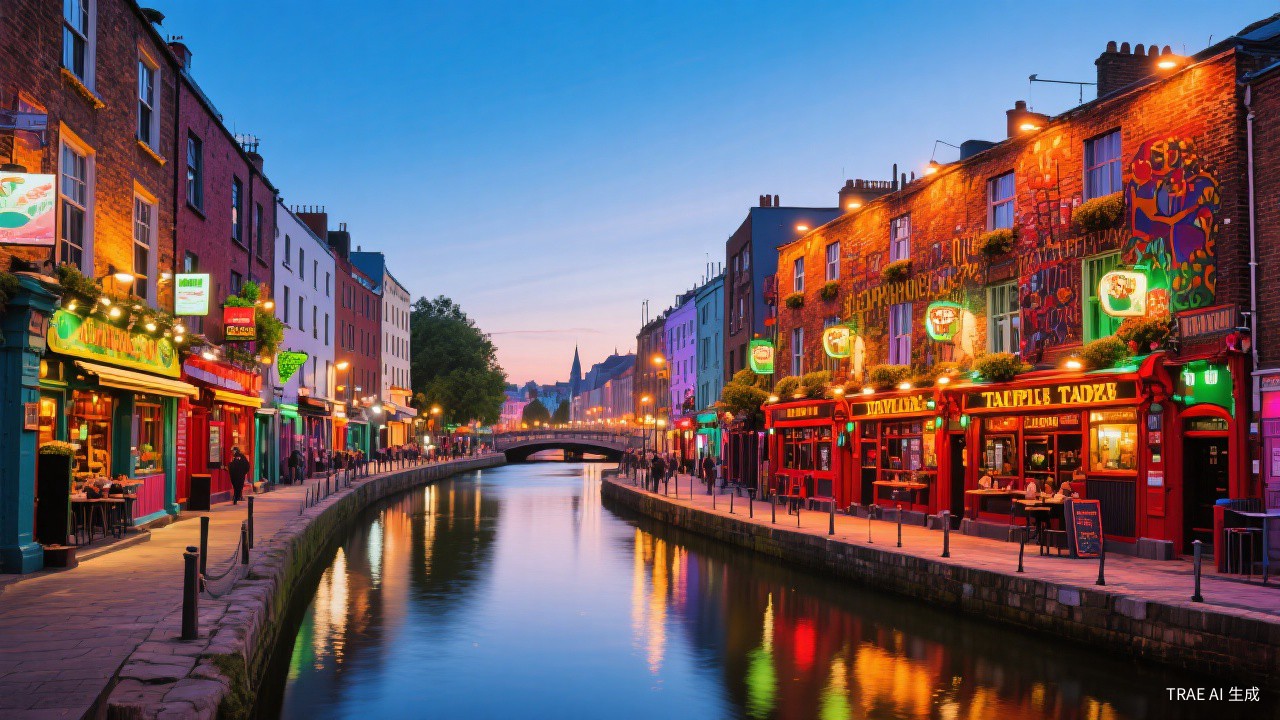
The Real Dublin
Dublin is a compact city with an outsized cultural influence—the birthplace of James Joyce, W.B. Yeats, Samuel Beckett, and a pub culture that has been exported worldwide. Trinity College, founded in 1592, houses the Book of Kells, an illuminated manuscript from the 9th century that is one of the finest examples of Western calligraphy. The city's Georgian architecture, with its colorful doors and brick facades, lines streets like Merrion Square and Fitzwilliam Square. The River Liffey divides the city into north and south, crossed by the Ha'penny Bridge and the Samuel Beckett Bridge.
Dublin's pub culture is not about getting drunk—it is about conversation, music, and community. The traditional pub session, where musicians gather to play jigs and reels on fiddle, flute, and bodhran (drum), happens nightly in pubs across the city. The Cobblestone in Smithfield and O'Donoghue's on Merrion Row are legendary for their music. Dubliners are talkers—expect to be drawn into conversations about politics, sport, and the weather within minutes of sitting down.
Two to three days is enough for the city center. Spend day one at Trinity College, Grafton Street, and Temple Bar. Day two covers Kilmainham Gaol, the Guinness Storehouse, and Phoenix Park. Day three can include a literary pub crawl or a day trip to Howth or Malahide. Dublin is walkable, and the LUAS tram and Dublin Bus cover the rest.
Best Time to Go
May to September offers the best weather, with temperatures from 12 to 20 degrees and the longest daylight hours (sunset after 9 PM in June). The Bloomsday festival on June 16 celebrates James Joyce's Ulysses with readings, walks, and pub crawls. July's Temple Bar Trad Festival brings traditional Irish music to the streets.
Winter (November to February) is mild by Irish standards (4 to 8 degrees) but wet and dark. The Christmas lights on Grafton Street are charming, and the pubs are cozy. Hotel prices drop 20 to 30 percent. Spring (March to April) brings daffodils and St. Patrick's Day on March 17—the city goes all out with parades and events.
Getting There and Around
Dublin Airport (DUB) is 10 kilometers north of the city. The Aircoach and Dublin Bus routes 41 and 16 connect the airport to the city center in 30 to 40 minutes for €3 to €7. Taxis cost about €25 to €30. The airport also has a direct bus to Heuston Station for connections to the west of Ireland.
Dublin Bus covers the city with flat fares (€2.15 for short trips, €3.30 for longer). The LUAS tram has two lines: the Green Line (St. Stephen's Green to Sandyford) and the Red Line (Tallaght to Connolly Station). A Leap Card offers discounted fares. The DART commuter train runs along the coast to Howth (€4, 25 minutes) and Malahide (€4.50, 30 minutes).
Where to Stay
Temple Bar is the most famous (and most touristy) neighborhood. Hotels start at €80 to €200 per night. The area is loud on weekends but puts you in the heart of Dublin's cultural scene. Stay on the edges of Temple Bar for a better balance of atmosphere and quiet.
The South Side around Grafton Street, Merrion Square, and St. Stephen's Green is elegant and convenient. Hotels start at €100 to €250 per night. The area has excellent restaurants, theaters, and shopping. The Georgian townhouse hotels in this area are particularly charming.
The Liberties, southwest of the city center, is an up-and-coming area with craft breweries and the Digital Hub project. Rooms cost €50 to €120 per night. The area is grittier but authentic and within walking distance of everything. Portobello, along the Grand Canal, offers a quieter alternative with rooms from €70 to €150 per night.
Must-See Attractions
Book of Kells at Trinity College
The 9th-century illuminated manuscript containing the four Gospels, created by Columban monks on the island of Iona. The elaborate interlace designs and vivid pigments—some derived from lapis lazuli imported from Afghanistan—are extraordinary. The manuscript is displayed in a climate-controlled room with only two pages visible at a time. The Long Room library above, with its barrel-vaulted ceiling and 200,000 books, is equally impressive.
Tickets: €16 | Times: 9:30 AM to 5 PM, Monday to Saturday; 12 PM to 4:30 PM Sundays
Guinness Storehouse
Housed in a seven-story former fermentation plant at St. James's Gate, this is Ireland's most visited tourist attraction. The self-guided tour covers the brewing process, the history of Guinness advertising, and ends with a pint in the Gravity Bar overlooking the city. The experience takes about 90 minutes. Even non-beer drinkers will find the building and the views worthwhile.
Tickets: €26 | Hours: 9:30 AM to 7 PM, last entry 5 PM
Kilmainham Gaol
A former prison that played a central role in Irish history. Leaders of the 1916 Easter Rising were executed here, and the guided tour brings the history to life through the stories of individual prisoners. The Victorian wing is architecturally striking, with iron walkways and glass-roofed corridors. Book online in advance—tours sell out days ahead.
Entry: €8 | Open: 9:30 AM to 6 PM, closed Mondays
National Museum of Ireland - Archaeology
Ireland's premier archaeological museum, housed in a grand Victorian building on Kildare Street. The collection includes Bronze Age gold jewelry, Viking artifacts from Dublin's Wood Quay excavations, and the bog bodies—naturally preserved human remains found in Irish peat bogs, some over 2,000 years old. The Kingship and Sacrifice exhibition is haunting.
Cost: Free | Times: 10 AM to 5 PM, Tuesday to Saturday; 2 PM to 5 PM Sundays
Phoenix Park
At 707 hectares, this is one of the largest enclosed city parks in Europe. It contains the residence of the President of Ireland (Aras an Uachtarain), Dublin Zoo, and a large herd of fallow deer that have lived in the park since the 17th century. The Wellington Monument obelisk is 62 meters tall. The park is ideal for cycling, running, or a quiet walk.
Cost: Free | Hours: Always open; Dublin Zoo €22
Food and Drink
Full Irish Breakfast — Eggs, bacon, sausages, black pudding, white pudding, baked beans, grilled tomato, and toast. The Porterhouse in Temple Bar serves a proper version with local ingredients. It is a substantial meal that will keep you going until dinner.
Fish and Chips at Beshoffs — Freshly battered cod or haddock with thick-cut chips, served in paper. Beshoffs, operating since 1913, is Dublin's most famous fish and chip shop. The original location is on O'Connell Street. Eat in or take away to the nearby Liffey boardwalk.
Irish Stew — Lamb or mutton with potatoes, carrots, and onions, slow-cooked until the meat falls apart. The Brazen Head, Ireland's oldest pub (dating to 1198), serves a hearty version alongside live music. The pub is on Bridge Street in the Liberties.
Pint of Guinness — A pint of Guinness in Dublin is a ritual. The brewery is here, and the stout tastes different—creamier, fresher—than anywhere else. Pouring takes 119.5 seconds. Try it at the Gravity Bar in the Storehouse, or better, at a quiet pub like Kehoe's on South Anne Street where the barman pulls a perfect pint.
Practical Tips
• Ireland uses the euro. Tipping in pubs is not expected, but rounding up at restaurants is customary.
• The weather changes constantly. Carry a compact umbrella and dress in layers.
• Temple Bar is overpriced and touristy. For better pubs and music, try the Cobblestone, Whelan's, or Kehoe's.
Book Kilmainham Gaol online at least a week in advance. Walk-in tickets are rarely available.
• The Leap Card saves 20 percent on all public transport. Buy one at any convenience store.
Traveler's Tip
Take the DART train to Howth (25 minutes from Connolly Station). Walk the Howth Cliff Path loop (about two hours) for dramatic views of the Irish Sea and the Baily Lighthouse. End with fish and chips at the harbour and a pint in the Abbey Tavern, where live music starts at 9 PM.