What You Will Find in Ecuador
Ecuador stands out as geographically diverse countries on Earth relative to its size. In an area smaller than the US state of Colorado, it contains Amazon rainforest, Andean highlands, Pacific coastline, and—600 miles offshore—the Galápagos Islands. The country's name comes from the equator, which passes through the Andes just north of Quito.
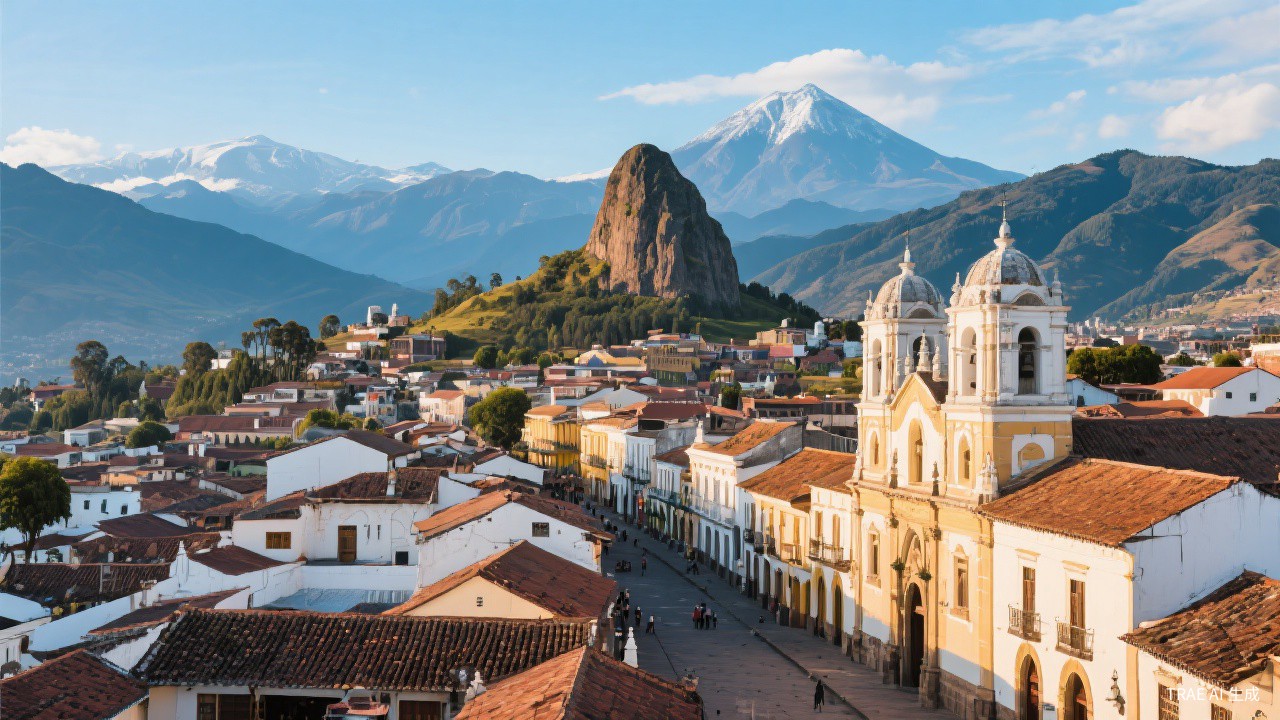
Quito, the capital, sits at 2,850 meters in a highland valley surrounded by volcanic peaks. Its historic center is a UNESCO World Heritage site, with colonial churches, monasteries, and plazas dating to the 16th century. The Church of la Compañía de Jesús, with its baroque interior covered entirely in gold leaf, stands out as ornate buildings in South America.
Beyond Quito, the Avenue of the Volcanoes—a stretch of the Pan-American Highway between the cities of Quito and Cuenca—passes snow-capped volcanoes including Cotopaxi (5,897 meters) and Chimborazo (6,263 meters, the point on Earth closest to the sun due to the equatorial bulge). The indigenous markets of Otavalo and Saquisilí offer traditional textiles and crafts, and the Amazon basin, accessible from the town of Tena, provides rainforest experiences at a fraction of the cost of similar trips in Brazil or Peru.
Best Time to Go
Ecuador's climate varies dramatically by region. In the highlands (Quito, Cuenca, Avenue of the Volcanoes), the dry season is June to September, with clear skies and mild temperatures (15-22°C during the day, 5-10°C at night). This is the best time for hiking and outdoor activities.
The Amazon region is wet year-round but slightly drier from October to December. Temperatures are consistently 25-32°C with high humidity. The Galápagos Islands are best visited from June to November (cooler, drier, better wildlife viewing) or December to May (warmer water, calmer seas).
The Pacific coast has a dry season from June to December, with cooler temperatures (22-28°C) and morning fog. January to May is warmer and wetter. The shoulder months offer a balance of weather and cost across all regions.
Getting There and Around
Mariscal Sucre International Airport (UIO) in Quito is Ecuador's main international gateway, with direct flights from Miami, New York, Houston, Atlanta, Madrid, Amsterdam, and major South American cities. José Joaquín de Olmedo International Airport (GYE) in Guayaquil has fewer international connections but serves as the gateway to the Galápagos Islands.
Domestic flights connect Quito and Guayaquil to the Galápagos (about $400-500 round trip), Cuenca, the Amazon, and the coast. TAME, Avianca Ecuador, and LATAM operate domestic routes. Flights are relatively inexpensive within Ecuador.
Long-distance buses are the backbone of Ecuadorian travel. Reclining-seat buses (first class) connect Quito to Cuenca (10 hours, $10-15), Baños (4 hours, $5-8), and Guayaquil (8 hours, $8-12). Buses are comfortable and reliable. Within cities, taxis are inexpensive ($2-5 for most rides in Quito).
Where to Stay
Quito's Historic Center has boutique hotels in restored colonial buildings for $40-100 per night. The Mariscal Sucre (La Mariscal) neighborhood has more hotels, restaurants, and nightlife at similar prices. La Floresta is a quieter, more upscale area with boutique accommodations ($60-150 per night).
Baños, the adventure capital of Ecuador, has hotels and hostels from $10-60 per night. The town is small and walkable, with hot springs, waterfalls, and adventure activities nearby.
Galápagos Islands accommodations start at budget hostels on Santa Cruz ($20-40 per night) to high-end eco-lodges ($200-500 per night). Most visitors opt for a cruise (4-8 days, $2,000-6,000 per person) which includes accommodation, meals, and guided excursions.
Must-See Attractions
Galápagos Islands
This volcanic archipelago, 600 miles off Ecuador's coast, inspired Darwin's theory of natural selection and remains one of the most important wildlife destinations on Earth. The islands' isolation produced species found nowhere else: marine iguanas, giant tortoises, blue-footed boobies, and Galápagos penguins. Most visitors explore by cruise, visiting several islands with a naturalist guide. Independent travelers can stay on Santa Cruz, Isabela, or San Cristóbal and take day trips. Snorkeling with sea lions and sea turtles is a daily possibility.
Cost: Park entry $100 + cruise $2,000-6,000 | Hours: Year-round
Cotopaxi National Park
Cotopaxi is one of the world's highest active volcanoes at 5,897 meters. The park contains the volcano, a glacial lake, and páramo (high-altitude grassland). The Go from Quito takes 1.5 hours. Starting with the parking lot at 4,500 meters, a 45-minute hike leads to the José Ribas refuge at 4,800 meters. Further ascent to the glacier requires mountaineering equipment and a guide. The park is also popular for mountain biking on the dirt roads and horseback riding.
Admission: $5 park entry | Open: 8 AM-4 PM (check conditions before visiting)
Otavalo Market
The largest indigenous market in South America takes place every Saturday in the town of Otavalo, 2 hours north of Quito. Vendors sell textiles, ponchos, tapestries, wood carvings, jewelry, and leather goods. The market has two sections: the Plaza de los Ponchos for crafts and the animal market on the outskirts. Bargaining is expected—start at about half the asking price. The market is colorful, busy, and authentic. Weekdays have a smaller version of the craft market.
Tickets: Free to browse | Hours: Saturday 7 AM-6 PM (crafts), 6 AM (animals)
Church of la Compañía de Jesús (Quito)
This Jesuit church, built between 1605 and 1765, is the most ornate religious building in Ecuador. Nearly every interior surface is covered in gold leaf, carved wood, and paintings. The baroque style is overwhelming in its detail—the central nave alone contains an estimated seven tons of gold. The adjacent museum displays religious art from the colonial period. Allow 45 minutes to 1 hour. Photography is not permitted inside.
Tickets: $5 | Times: 9 AM-6:30 PM (closed Mondays)
Baños and the Route of the Waterfalls
The town of Baños, at the foot of the active Tungurahua volcano, is Ecuador's adventure tourism capital. Activities include whitewater rafting, canyoning, zip-lining, and mountain biking. The Route of the Waterfalls, a road east of town, passes more than 20 waterfalls. Pailón del Diablo (Devil's Cauldron) is the most dramatic—a powerful waterfall you can reach by a short, steep trail. The town also has hot springs heated by volcanic activity.
Tickets: Varies (hot springs $5-8, tours $15-40) | Open: Year-round
Food and Drink
Ceviche de camarón — Ecuadorian ceviche is different from other Latin American versions—it is served as a soup with lots of liquid, tomato, onion, and cilantro. Shrimp ceviche is the most popular variety. It is always served with popcorn, plantain chips, or tostadas. Try it at any coastal restaurant or in Quito's La Mariscal district. Budget $5-10 per serving.
Llapingachos — Cheese-stuffed potato patties, fried until golden and served with peanut sauce, avocado, and a fried egg. This is a highland specialty and one of Ecuador's most distinctive dishes. Try it at a traditional restaurant in Quito or Cuenca. Budget $4-7 per serving.
Encebollado — A fish soup made with albacore (or fresh tuna), onions, tomatoes, yuca, and pickled red onions, served with lime and cilantro. It is considered a hangover cure in Ecuador and is popular as a breakfast or lunch dish. Every coastal town has its own version. Budget $3-6 per bowl.
Chocolate — Ecuador produces some of the finest cacao in the world, particularly the Arriba Nacional variety. Pacari and República del Cacao are the best-known brands. Chocolate tours are available near Quito (Yumbo Chocolate Factory) and in the Amazon region. A high-quality chocolate bar costs $3-5. Hot chocolate made from real cacao is a Quito specialty.
Practical Tips
• Use US dollars. Ecuador adopted the US dollar as its currency in 2000. Bring small bills ($1 and $5)—change is often scarce.
• Acclimatize to Quito's altitude (2,850 meters) before attempting strenuous activities. Drink coca tea and take it easy for the first day.
• Negotiate taxi fares before getting in, or use apps like Easy Taxi. Taxis in Quito should cost $2-5 for most rides within the city.
Bring layers for the highlands. Quito's temperature can swing 15 degrees between day and night, and it can be cool even when the sun is shining.
• Learn basic Spanish. English is not widely spoken outside tourist areas and the Galápagos.
Traveler's Tip
Take the bus from Quito to Baños ($5, 4 hours) instead of a tour. The road descends through cloud forest and farmland, and the views of the Tungurahua volcano from the town are extraordinary.