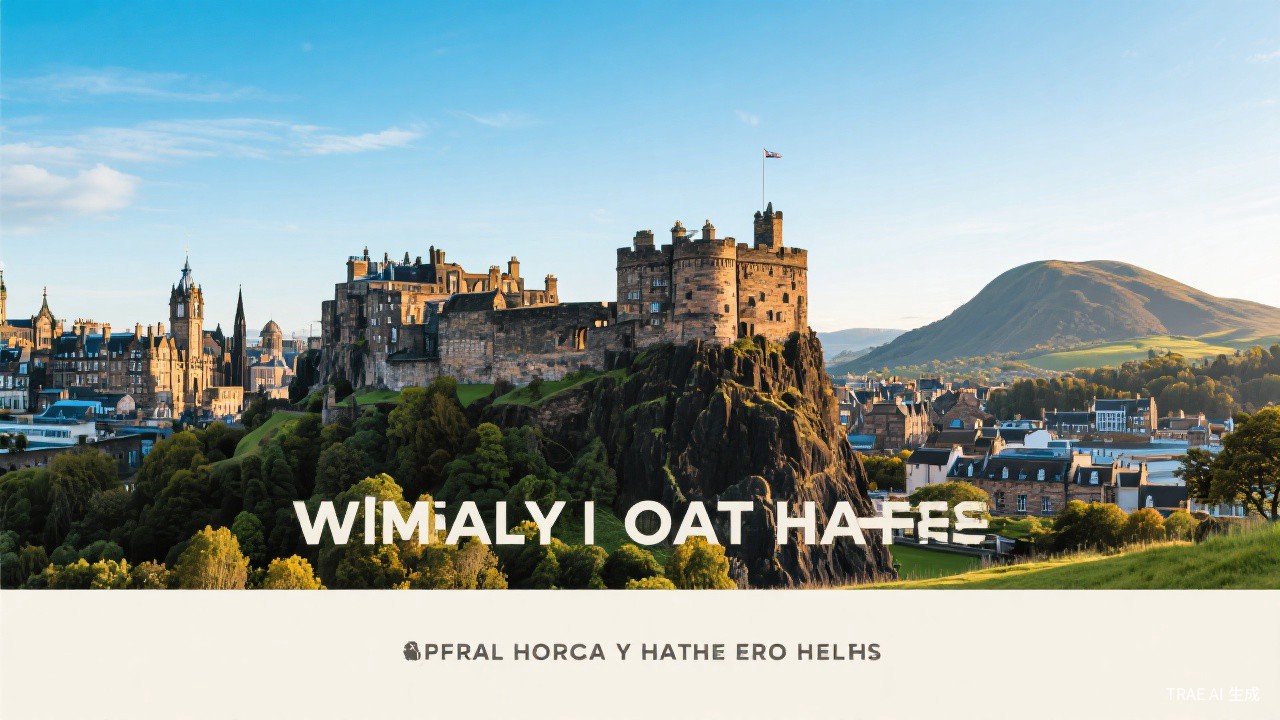
The Real Edinburgh
Edinburgh is built on volcanic hills, and its dramatic geography shapes the city. Edinburgh Castle sits atop Castle Rock, a 700-million-year-old extinct volcano, overlooking the medieval Old Town with its narrow closes (alleyways) and the Georgian New Town with its neoclassical crescents. The Royal Mile connects the castle to the Palace of Holyroodhouse, passing St Giles' Cathedral, the Scotch Whisky Experience, and the Real Mary King's Close—a warren of underground streets preserved from the 17th century. Arthur's Seat, another ancient volcano, rises 251 meters at the eastern end of the city and offers a hike that feels like wilderness within city limits.
Edinburgh is Scotland's cultural capital, home to the world's largest arts festival every August. The Edinburgh Festival Fringe brings 3,000 shows to 300 venues across the city for three weeks. Beyond August, the city has a year-round cultural life: the National Museum of Scotland, the Scottish National Gallery, and the Usher Hall offer world-class exhibitions and performances. The pub scene centers on Rose Street and Grassmarket, where you can find Scottish ales, whisky, and live folk music.
Three to four days is ideal. Spend day one on the Royal Mile and the castle. Day two covers the New Town, Dean Village, and the Scottish National Gallery. Day three is for Arthur's Seat and Leith (for food and the Royal Yacht Britannia). If visiting in August, add extra days for the festivals. Edinburgh is compact and very walkable, though the hills are steep.
Best Time to Go
May to September offers the best weather, with temperatures from 10 to 20 degrees and long daylight hours. August is festival month—the Fringe, the International Festival, and the Royal Edinburgh Military Tattoo all run simultaneously. The city is packed and hotel prices double, but the atmosphere is electric. June brings the Edinburgh International Film Festival.
Winter (December to February) is cold (2 to 7 degrees) and dark, but Hogmanay (New Year's Eve) is one of the world's biggest New Year celebrations, with street parties, concerts, and fireworks over the castle. The Christmas market on Princes Street Gardens is atmospheric. Spring (March to April) brings daffodils to the Meadows and cherry blossoms to the Royal Botanic Garden.
Getting There and Around
Edinburgh Airport (EDI) is 12 kilometers west of the city. The Airlink 100 bus runs to Waverley Station in 30 minutes for £4.50. The tram connects the airport to the city center in 35 minutes for £6. Taxis cost about £20 to £25. The train from London King's Cross to Edinburgh Waverley takes 4 hours 20 minutes on the East Coast line.
Edinburgh is best explored on foot. The city center is compact, and most attractions are within a 20-minute walk of each other. Lothian Buses cover the wider city—a single fare is £1.80, and a day ticket is £4.50. The tram runs from the airport through the city center to Leith. Taxis start at £3.50.
Where to Stay
The Old Town around the Royal Mile is the most atmospheric base. Hotels start at £80 to £250 per night. The Grassmarket area has good pubs and restaurants and is slightly cheaper than the Royal Mile itself. Closes (alleyways) off the Royal Mile hide some excellent boutique hotels.
The New Town, centered on Princes Street and George Street, offers elegant Georgian architecture and good shopping. Hotels start at £90 to £300 per night. The area is quieter and more refined than the Old Town. Broughton Street and Stockbridge, to the north, have a village feel with independent shops and cafes.
Leith, the port district north of the center, has become Edinburgh's food destination. Hotels and apartments start at £50 to £150 per night. The Shore area is lined with excellent restaurants and bars. It is a 20-minute walk or a short bus ride from the center.
Must-See Attractions
Edinburgh Castle
Perched on Castle Rock above the city, this fortress has dominated Edinburgh's skyline for 900 years. Inside, the Crown Jewels of Scotland (the Honours of Scotland) are the oldest royal regalia in Britain, dating to the 15th century. The Stone of Destiny, used in Scottish coronations, is also here. The One O'Clock Gun fires daily at 1 PM—a tradition since 1861. Allow at least two hours.
Cost: £17 | Hours: 9:30 AM to 6 PM, April to September; 9:30 AM to 5 PM, October to March
Royal Mile and St Giles' Cathedral
The main street of the Old Town runs from the castle to Holyroodhouse. Along the way, St Giles' Cathedral (also called the High Kirk of Edinburgh) features a distinctive crown spire and stained glass windows. The Thistle Chapel inside contains the Order of the Thistle, Scotland's highest order of chivalry. The Real Mary King's Close, an underground street frozen in time since the 17th century, is accessed from Waverley Bridge.
Tickets: Cathedral free; Mary King's Close £17 | Times: Cathedral 9 AM to 7 PM summer; Mary's Close 10 AM to 9 PM
Arthur's Seat
A 251-meter ancient volcano in Holyrood Park, offering the best views of Edinburgh from above. The main path from the Holyrood Palace car park takes about 45 minutes to the summit. The climb is moderate—steep in sections but manageable for anyone reasonably fit. On a clear day, you can see across the Firth of Forth to Fife. Go early for fewer people.
Admission: Free | Open: Always open
National Museum of Scotland
A grand Victorian building on Chambers Street housing collections covering Scottish history, natural history, science, and art. Highlights include the cloned sheep Dolly, medieval artifacts, and a rooftop terrace with views over the city. The Grand Gallery, with its cast-iron balconies, is one of Edinburgh's most impressive interior spaces. Allow at least three hours.
Tickets: Free | Hours: 10 AM to 5 PM daily
Palace of Holyroodhouse
The official Scottish residence of the British monarch, located at the foot of the Royal Mile. The palace's state apartments include the room where Mary, Queen of Scots lived, and the ruins of the 12th-century Holyrood Abbey are in the grounds. The gardens are extensive and peaceful. The ruins alone are worth the visit.
Cost: £16 | Times: 9:30 AM to 6 PM, April to October; 10 AM to 4 PM, November to March
Food and Drink
Haggis, Neeps, and Tatties — Scotland's national dish: savory sheep's offal mixed with oatmeal and spices, served with mashed turnips (neeps) and potatoes (tatties) and a whisky sauce. Try it at the Witchery by the Castle, an atmospheric restaurant in a 16th-century building near the castle entrance. Even skeptics usually enjoy it.
Cullen Skink — A thick, creamy soup made with smoked haddock, potatoes, and onions. It originated in the fishing village of Cullen in northeast Scotland. The Royal McGregor on the Royal Mile serves an excellent version alongside other Scottish classics.
Scotch Whisky Tasting — Edinburgh has dozens of whisky bars. The Scotch Whisky Experience on the Royal Mile offers a guided tour with tasting. For a more intimate experience, visit the Bow Bar on West Bow, which stocks over 300 single malts. A dram costs £4 to £8.
Full Scottish Breakfast — Similar to a full English but with Scottish specialties: Lorne sausage (square sliced), tattie scones (potato griddle cakes), black pudding, and sometimes haggis. The Southern on South Clerk Street serves one of the best in the city.
Practical Tips
• Scotland uses the British pound (£). Euros are not widely accepted.
• The Edinburgh Festival Fringe in August is incredible but overwhelming. Book accommodation months ahead and expect crowds.
• Wear layers and waterproof clothing. Edinburgh weather changes rapidly.
• The Royal Mile is touristy and overpriced. Eat and drink on Rose Street, Grassmarket, or in Leith instead.
• Many attractions offer online discounts of 10 to 20 percent. Book ahead.
Traveler's Tip
Climb Calton Hill at sunset for the best view in Edinburgh. The hill, a 10-minute walk from Princes Street, has several monuments including the National Monument (Edinburgh's unfinished replica of the Parthenon). The panorama takes in the castle, Arthur's Seat, and the Firth of Forth. It is free and takes 15 minutes to reach the top.