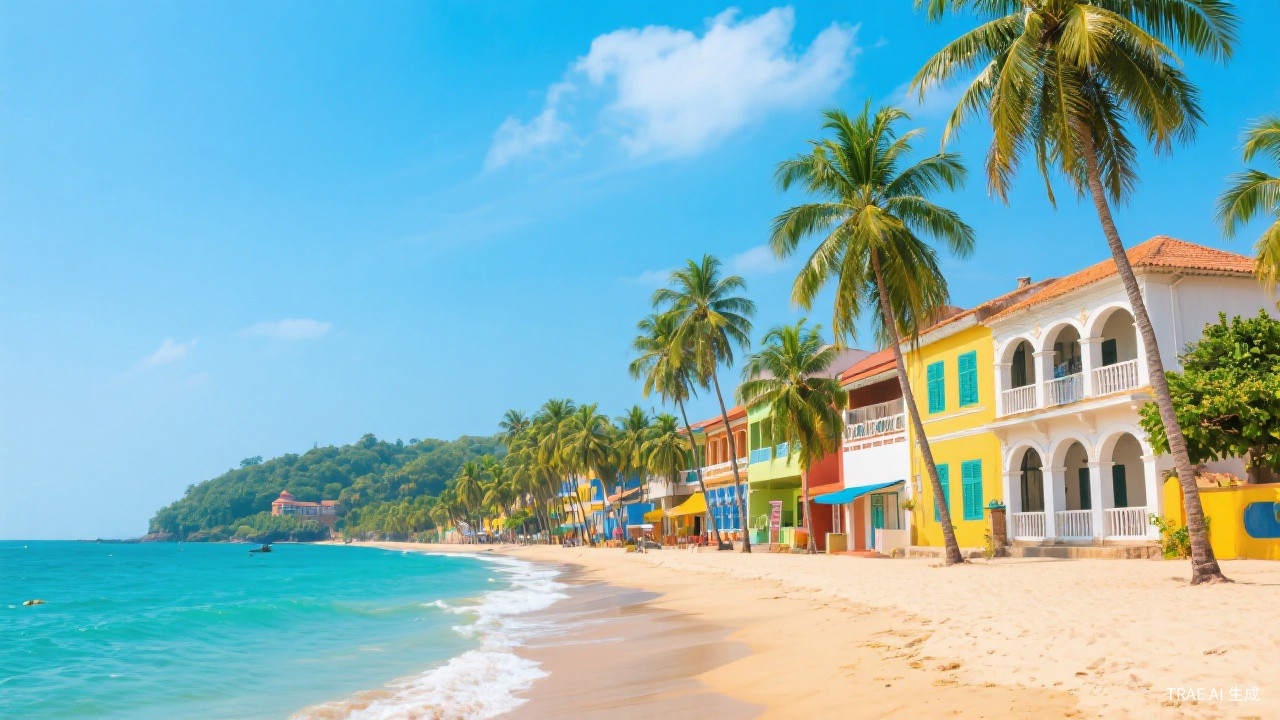
The Real Goa
Goa occupies a unique place in India as a former Portuguese colony where Hindu temples stand next to Catholic churches and where the beach culture of the tropics meets the spice markets of the Deccan. The state's 100-kilometer coastline contains everything from the crowded, party-focused beaches of North Goa (Baga, Anjuna, Vagator) to the quieter, palm-fringed coves of the south (Palolem, Agonda, Patnem). Old Goa, a UNESCO World Heritage Site, holds the Basilica of Bom Jesus, which contains the remains of Saint Francis Xavier, and the Se Cathedral, one of Asia's largest churches.
Goan life revolves around the sea, the market, and the church. Fishing communities like those in Siolim and Chapora still use traditional wooden boats, and the daily fish market in Panaji (Panjim) is where locals buy their kingfish and prawns. The state's food reflects its mixed heritage: vindaloo and xacuti (spiced coconut curries) alongside bebinca (a layered coconut cake) and feni, a potent cashew or coconut spirit. The Saturday Night Market at Arpora brings together food stalls, live music, and handicraft vendors in a festive atmosphere.
Spend at least five days. Split your time between North Goa (for beaches, nightlife, and the Saturday market) and South Goa (for quieter beaches and the spice plantations). Dedicate one day to Old Goa's churches and the Latin Quarter of Fontainhas in Panaji. A spice plantation tour in Ponda (Savoi or Sahakari) takes half a day and includes a traditional Goan lunch.
Best Time to Go
November through February is the peak season, with daytime temperatures between 25 and 32 degrees Celsius, low humidity, and clear skies. The Goa Carnival in February or March (dates vary with Easter) features parades, music, and masked balls. Christmas and New Year bring huge crowds and inflated prices—book three months ahead. This is the best time for beach activities and water sports.
March to May becomes increasingly hot (35 to 40 degrees) and humid. The monsoon from June to September brings heavy daily rain, rough seas, and the closure of many beach shacks and restaurants. That said, the countryside turns lush green, hotel rates drop by 60 to 70 percent, and the monsoon atmosphere has its own appeal. October sees the return of sunshine but the sea can still be rough.
Getting There and Around
Goa has two airports: Dabolim (GOI) in the south handles most flights, while the newer Manohar/Mopa Airport (GOX) in the north opened in 2022. Both receive direct flights from Mumbai, Delhi, Bangalore, and Hyderabad (2 to 3 hours). International connections include flights from Doha, Dubai, and Sharjah. A prepaid taxi from Dabolim to Panaji costs INR 800 to 1,000. The Konkan Railway connects Goa to Mumbai (8 to 12 hours) and Kerala (10 to 14 hours).
Within Goa, rented motorbikes and scooters are the most popular transport (INR 300 to 500 per day). Taxis are expensive—use Goa Miles (the state's official taxi app) for metered rides. Local buses are cheap (INR 10 to 30) but slow and crowded. Private ferry services cross the Mandovi and Zuari rivers. For covering longer distances between north and south Goa, a rental car with driver costs INR 2,000 to 3,000 per day.
Where to Stay
North Goa's Candolim and Calangute offer the widest range of accommodation, from beach resorts like the Taj Holiday Village (INR 10,000 to 20,000 per night) to budget guesthouses (INR 800 to 1,500). Vagator and Anjuna attract a younger, backpacker crowd with hostels like the Hostel Crowd (INR 400 to 600 per dorm bed). The area around Siolim offers boutique stays like the W Goa (INR 15,000+) in a quieter setting.
South Goa's Palolem Beach has a mix of beach huts (INR 1,000 to 2,500 in season) and small hotels like the Palolem Beach Resort (INR 3,000 to 5,000). Agonda and Patnem are quieter alternatives with similar pricing. Old Goa and Panaji have heritage properties like the Panjim Inn (INR 4,000 to 7,000) in the charming Fontainhas Latin Quarter.
Must-See Attractions
Basilica of Bom Jesus
This baroque church in Old Goa, completed in 1605, houses the tomb and mortal remains of Saint Francis Xavier, the patron saint of Goa. The basilica's facade is carved from laterite stone and the interior contains gilded altars and a silver casket holding the saint's body. The church is a UNESCO World Heritage Site and one of India's most important Christian pilgrimage destinations.
Admission: Free | Hours: Daily 9 AM-6:30 PM; mass Sun 8 AM and 9:15 AM
Fontainhas Latin Quarter
Panaji's historic Portuguese quarter is a maze of narrow streets lined with pastel-colored houses, tiled roofs, and wrought-iron balconies. The area dates to the late 18th century and is the best-preserved example of Portuguese urban architecture in Asia. Small art galleries, bakeries selling Portuguese bread, and the Gitanjali Gallery make this a pleasant area to wander.
Cost: Free | Hours: Always open; galleries 10 AM-7 PM
Dudhsagar Falls
A four-tiered waterfall on the Mandovi River, standing 310 meters tall, Dudhsagar ("Sea of Milk") is one of India's tallest waterfalls. During the monsoon, the falls are at their most powerful, cascading through the Western Ghats in a white torrent. Access is via a jeep safari from Collem or a trek through Bhagwan Mahavir Wildlife Sanctuary.
Entry: Jeep safari INR 400-500 per person | Hours: Best Oct-Jan; jeeps depart 6-10 AM
Anjuna Flea Market
Held every Wednesday since the 1970s, this was one of the first hippie markets in Asia. Today it sells everything from Kashmiri handicrafts and Tibetan jewelry to electronic goods and second-hand clothing. The atmosphere is chaotic and colorful, with live music and food stalls. Bargaining is expected—start at half the asking price.
Admission: Free entry | Times: Wednesdays 8 AM-6 PM
Spice Plantation Tour (Savoi Plantation)
This family-run plantation near Ponda grows pepper, cardamom, nutmeg, cinnamon, vanilla, and areca palms. Guided walks explain how each spice is cultivated and processed, ending with a traditional Goan lunch served on banana leaves. The plantation has been operating for over 200 years and offers a peaceful escape from the beaches.
Entry: INR 400-500 (includes lunch) | Open: Daily 9 AM-5 PM
Food and Drink
Goan fish curry with rice (kingfish or pomfret) — Mum's Kitchen, Panaji. INR 350-500.
Pork vindaloo and sorpotel — Martin's Corner, Betalbatim, South Goa. INR 400-600.
Bebinca (layered coconut cake) and feni — Longuinhos Bar, Panaji. INR 150-300.
Prawn balchao and xacuti — Cafe Tito's, Baga Beach. INR 350-550.
Practical Tips
• Scooter rental requires a valid Indian or international driving license—police checkpoints are common.
• Beach shacks are seasonal (November to May); most close during the monsoon.
• The Saturday Night Market at Arpora is the best market experience—go after 7 PM for live music.
• ATMs in South Goa are limited; withdraw cash in Panaji or Margao before heading south.
• Dress modestly when visiting churches—cover shoulders and knees.
Traveler's Tip
Take a sunset river cruise on the Mandovi River from Panaji jetty (INR 300, departing 5:30 PM). The one-hour cruise passes the Reis Magos Fort and the old quarter of Panaji while local musicians play Goan folk music on board. The view of the city from the water at golden hour is the best perspective of Goa's capital.