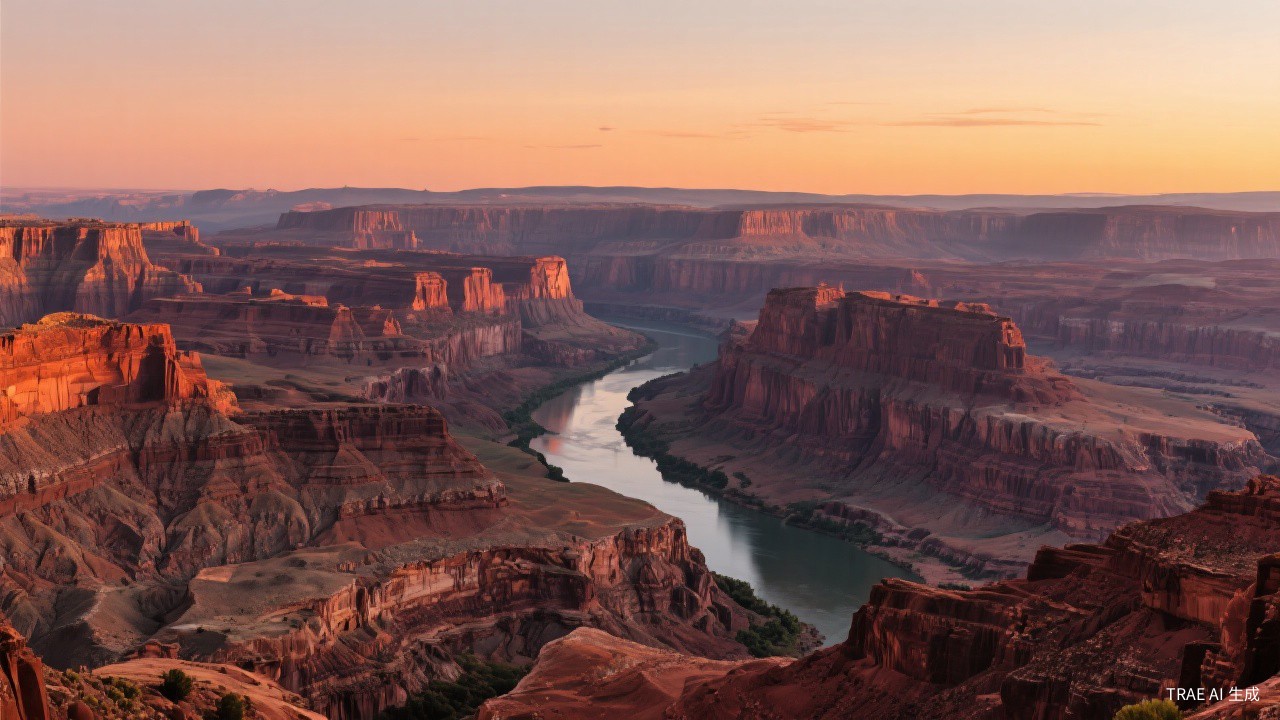
What Makes Grand Canyon Worth Visiting
The Grand Canyon is a geological window into nearly two billion years of Earth's history. The Colorado River has carved a chasm 1.6 kilometers deep, 446 kilometers long, and up to 29 kilometers wide through layers of sedimentary rock, each one a record of a different geological era. The scale is difficult to comprehend from photographs—standing at the rim for the first time, most people fall silent.
The South Rim, at 2,100 meters elevation, is the most accessible section. It has the most viewpoints, the most developed infrastructure, and stays open year-round. The North Rim, 300 meters higher and reached by a long Go, receives about 10% of the visitors and offers a quieter, more forested experience. The canyon floor, accessible only by foot, mule, or raft, is a different world—hotter, drier, and home to the Colorado River that created the canyon.
Beyond the geology, the Grand Canyon has deep cultural significance. The Havasupai, Hopi, Navajo, and other indigenous peoples have lived in and around the canyon for thousands of years. The Havasupai village, deep in a side canyon, is home to turquoise waterfalls that are among the most photographed spots in the American Southwest.
Best Time to Go
Spring (March to May) and autumn (September to November) offer the best combination of weather and manageable crowds. Spring temperatures at the South Rim start at 5-20°C, with wildflowers blooming along the rim. Autumn brings cooler temperatures and golden cottonwood trees along the river.
Summer (June to August) is hot at the canyon floor (over 40°C) and crowded at the rim. Thunderstorms in July and August can produce flash floods in side canyons. This is the busiest season, and parking at popular viewpoints fills by 9 AM.
Winter (December to February) is quiet and cold. The South Rim receives snow, and temperatures drop below freezing at night. The North Rim closes from mid-October to mid-May. Winter offers clear air, dramatic cloud formations, and the fewest visitors.
Getting There and Around
The South Rim is the primary access point. Grand Canyon Village is 145 kilometers from Flagstaff, Arizona (1.5 hours by car). Flagstaff has an airport with connections to Phoenix and Denver. Las Vegas is 4.5 hours away by car, and Phoenix is 3.5 hours. The Grand Canyon Railway runs daily from Williams, Arizona (2.5 hours, $65-190 round trip).
The North Rim is reached via Highway 67 from Jacob Lake, Arizona—a 5-hour trip from the South Rim. The road is closed in winter. There is no bridge across the canyon; going between rims requires a 4.5-hour detour.
Within the park, free shuttle buses run along the South Rim, connecting Grand Canyon Village, viewpoints, and trailheads. Walking along the Rim Trail between viewpoints is also feasible and often more pleasant than driving.
Where to Stay
Grand Canyon Village (South Rim) has the most options, including El Tovar Hotel (historic, $200-400 per night), Bright Angel Lodge ($100-200), and Yavapai Lodge ($120-180). Book well in advance—South Rim lodging sells out 6-12 months ahead. The nearby town of Tusayan has chain hotels for $80-200 per night.
Grand Canyon Lodge (North Rim) has cabins and motel rooms for $130-250 per night. The North Rim's isolation means fewer options but a more peaceful experience.
For backcountry camping, a permit ($10 + $8 per person per night) is required for overnight trips below the rim. Phantom Ranch, at the bottom of the canyon, has dorm beds ($55) and cabins ($160+) and is booked 15 months in advance by lottery.
Must-See Attractions
South Rim Viewpoints
Mather Point, near the visitor center, offers the classic first view of the canyon. Yavapai Observation Station has geology exhibits and panoramic views. Desert View Watchtower, 40 kilometers east, is a 21-meter stone tower designed by Mary Colter in 1932, with views of the Colorado River and the Painted Desert. Sunrise and sunset are the best times at any viewpoint—the changing light transforms the canyon's colors dramatically.
Admission: Free (park entry $35/vehicle, 7 days) | Open: South Rim open year-round
Bright Angel Trail
The most popular trail into the canyon descends from Grand Canyon Village to the Colorado River, 16 kilometers one way with a 1,340-meter elevation change. Most day hikers go as far as Indian Garden (7.6 km round trip) or Plateau Point (19 km round trip). The trail has shade, water stations, and resthouses. Do not attempt to hike to the river and back in one day in summer. Start early, carry 3-4 liters of water per person.
Admission: Free | Hours: Year-round (check conditions)
Grand Canyon Skywalk
This glass-bottomed bridge extends 21 meters over the canyon rim on the Hualapai Reservation, at the West Rim (2.5 hours from Las Vegas). The Skywalk is 1,200 meters above the canyon floor and offers views through the glass floor. It is not inside the national park. Admission includes the Skywalk and access to viewpoints along the rim.
Cost: $50-70 | Hours: 7 AM-sunset
Colorado River Rafting
Rafting the Colorado River through the Grand Canyon is one of the great outdoor experiences in North America. Trips start at half-day smooth-water floats ($95-180) to full canyon trips lasting 3-18 days ($2,000-6,000 per person). Motorized rafts cover the full canyon in 7-8 days; oar-powered trips take 14-18 days. Commercial outfitters handle permits, equipment, and food.
Entry: Half-day $95-180, multi-day $2,000-6,000 | Open: Seasonal (March-October)
North Rim Viewpoints
The North Rim sits about 300 meters higher than the South Rim, offering a different perspective and denser forest. Bright Angel Point, a short walk from the lodge, provides views across the canyon to the South Rim. Cape Royal Road leads 30 kilometers to Cape Royal, with views of the Colorado River and Wotan's Throne. The North Rim receives about 10% of the park's visitors, making it noticeably quieter.
Admission: Free (included in park entry) | Times: Mid-May to mid-October
Food and Drink
El Tovar Dining Room — The historic El Tovar Hotel's dining room has been serving meals since 1905. The menu features steak, trout, and Southwestern cuisine. A dinner entrée costs $25-45. The dining room has canyon views from some tables. Reservations are recommended.
Arizona Green Chile Stew — A Southwestern specialty made with pork, green chiles, potatoes, and tomatoes. It is hearty and warming on cool canyon evenings. Try it at the Arizona Room or at the Maswik Food Court. Budget $10-15 per bowl.
Bright Angel Restaurant — A casual restaurant in Bright Angel Lodge serving American classics—burgers, sandwiches, and salads. A meal costs $12-20. The outdoor seating area has rim views.
Navajo Tacos — Fry bread topped with seasoned ground beef, beans, lettuce, tomato, cheese, and salsa. This Navajo Nation specialty is sold at food stands near the park. One costs $8-12 and is a filling meal.
Practical Tips
Book South Rim lodging and Phantom Ranch as early as possible. South Rim hotels sell out 6-12 months ahead.
• Do not underestimate the heat at the canyon floor. Summer temperatures exceed 40°C. Carry 3-4 liters of water per person.
• Fill your gas tank in Williams or Flagstaff. Gas is available at the South Rim but is expensive.
• Arrive at viewpoints before sunrise or stay for sunset. The canyon's colors change dramatically in low-angle light.
Check trail conditions and weather before hiking. The park service posts daily updates on water availability and trail closures.
Traveler's Tip
If you have one day, walk the Rim Trail from Mather Point to Hermits Rest (12 kilometers one way). The shuttle bus can take you back. You will see the canyon from multiple angles and avoid the parking crowds.