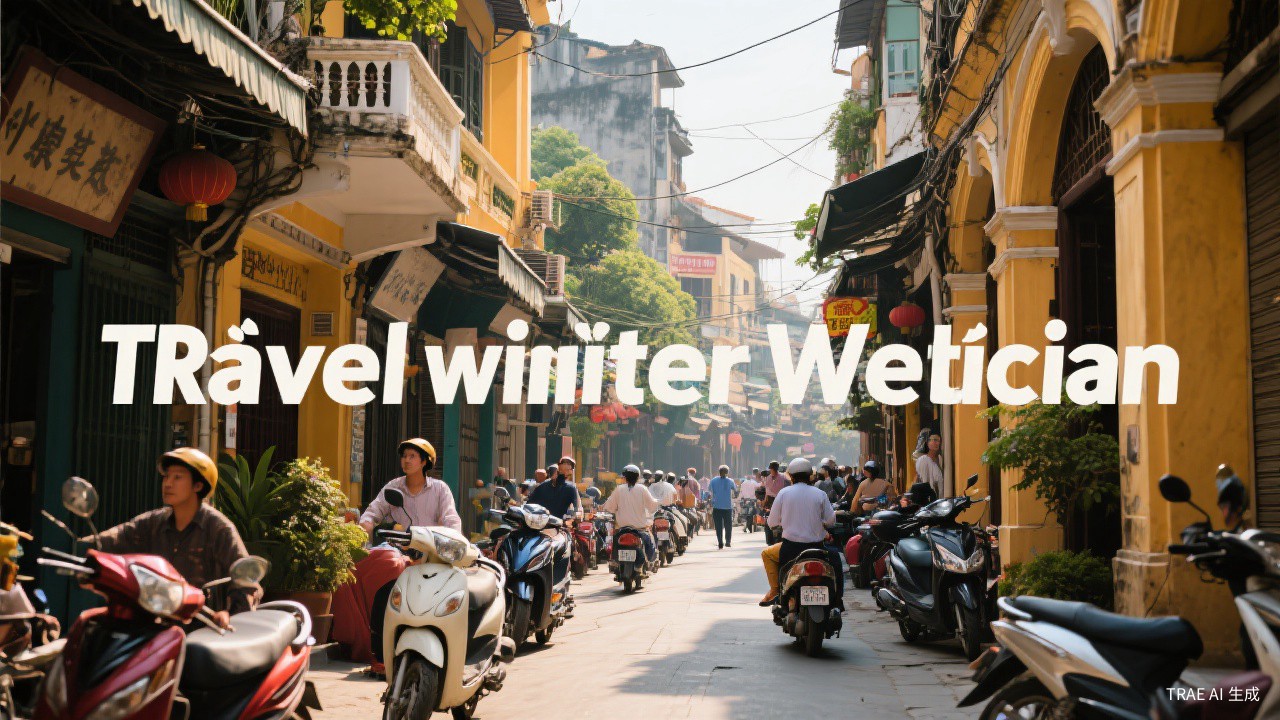
Welcome to Hanoi
Hanoi, the capital of Vietnam, is one of the oldest continuously inhabited cities in Southeast Asia, with a history that stretches back over 1,000 years to its founding as Thang Long, the Ascending Dragon, in 1010. The city has served as the political and cultural center of Vietnam for most of its history, enduring centuries of Chinese influence, French colonial rule, and the tumultuous events of the 20th century. Today, Hanoi is a rapidly modernizing metropolis of approximately 8 million people that retains a remarkable depth of historical character. The city's tree-lined boulevards, colonial-era villas, and ancient pagodas create an atmosphere that is distinctly different from the more modern and commercial southern hub of Ho Chi Minh City.
The Red River, or Song Hong, flows through the eastern edge of Hanoi and has been central to the city's identity and economy since its founding. The river's fertile floodplains provided the agricultural abundance that allowed Hanoi to flourish as a major center of civilization in northern Vietnam. Today, the riverfront areas offer a glimpse into rural Vietnamese life, with floating villages, vegetable gardens, and traditional fishing communities existing just a short distance from the city center. Several bridges cross the Red River, including the historic Long Bien Bridge, built by the French in 1902, which survived extensive bombing during the Vietnam War and remains in use today as both a railway bridge and a pedestrian crossing.
Hanoi's climate is characterized by four distinct seasons, unlike the tropical year-round warmth of southern Vietnam. Spring, from February to April, brings mild temperatures and occasional drizzle, while summer, from May to August, is hot and humid with heavy rainfall and occasional typhoons. Autumn, from September to November, is widely considered the most beautiful season, with comfortable temperatures, low humidity, and clear blue skies. Winter, from December to January, can be surprisingly cool with temperatures occasionally dropping to 10 degrees Celsius, and the damp cold can feel more penetrating than the actual temperature suggests. The best time to visit Hanoi is during the autumn months when the weather is at its most pleasant.
What makes Hanoi such a compelling destination for travelers is the authenticity of its daily life and the warmth of its people. Unlike cities that have been heavily sanitized for tourism, Hanoi retains a raw, lived-in quality that makes every walk through its streets an adventure. The city's famous traffic, a seemingly chaotic ballet of motorbikes, cars, and pedestrians, is intimidating at first but quickly becomes part of the charm. Crossing the street in Hanoi is a rite of passage for every visitor, requiring a steady pace and faith that the oncoming motorbikes will flow around you like water around a stone. This constant motion and energy give Hanoi an infectious vitality that captivates most visitors within hours of arrival.
The Old Quarter
Hanoi's Old Quarter, also known as the 36 Streets, is a labyrinth of narrow streets and alleyways that has been the commercial heart of the city for over 1,000 years. The quarter was originally organized into 36 guild streets, each named after the product that was traditionally sold there, such as Hang Bac for silver, Hang Gai for silk, and Hang Duong for sugar. While the commercial landscape has evolved over the centuries, many of these streets still specialize in their traditional trades, creating a fascinating living museum of Vietnamese commerce. The Old Quarter covers an area of approximately 100 hectares and contains over 1,000 traditional tube houses, long narrow buildings that maximize limited street frontage.
Hoan Kiem Lake, the "Lake of the Returned Sword," sits at the southern edge of the Old Quarter and is both the physical and spiritual center of Hanoi. The lake is surrounded by a pleasant park that serves as a gathering place for residents who come to exercise, socialize, and relax throughout the day. In the morning, the park fills with people practicing tai chi, jogging, and doing calisthenics, while in the evening, couples and families stroll along the illuminated pathways. On a small island in the lake, the Ngoc Son Temple, or Temple of the Jade Mountain, is connected to the shore by a distinctive red-painted wooden bridge called The Huc, or Rising Sun Bridge.
The architecture of the Old Quarter is one of its most distinctive features, with traditional Vietnamese tube houses standing alongside French colonial buildings and modern structures in a layered urban tapestry. The traditional tube house, or nha ong, is a narrow, multi-story building that typically measures only 3 to 5 meters wide but can extend 20 to 60 meters deep. This architectural form evolved as a response to a historical property tax based on street frontage, encouraging owners to build deep rather than wide. Many of these houses have been converted into boutique hotels, cafes, and shops, offering visitors the chance to stay in or explore these unique living spaces.
The weekend night market in the Old Quarter transforms Hang Dao and surrounding streets into a vibrant pedestrian zone every Friday, Saturday, and Sunday evening. The market stretches from Hang Dao Street to the edge of Dong Xuan Market and features hundreds of vendors selling clothing, accessories, handicrafts, and street food. The atmosphere is festive and energetic, with live music, cultural performances, and crowds of locals and tourists filling the streets until late at night. The night market is one of the best places in Hanoi to shop for souvenirs, try local snacks, and experience the social energy that makes the Old Quarter such a special place.
Street Food
Hanoi is widely regarded as the street food capital of Vietnam, and many food enthusiasts consider it one of the greatest street food cities in the world. The city's street food culture is deeply rooted in daily life, with sidewalks throughout the city transformed into impromptu dining rooms each morning, noon, and evening. Small plastic stools arranged on the pavement, a steaming pot of broth, and a handful of fresh ingredients are all that is needed to create meals of extraordinary flavor and complexity. The beauty of Hanoi's street food lies in its simplicity and its focus on perfecting a small number of dishes over generations.
Pho, Vietnam's national dish, is believed to have originated in Hanoi in the early 20th century, and the city remains the best place in the country to experience this iconic soup in its purest form. Hanoi-style pho features a clear, aromatic beef broth simmered for hours with charred ginger, star anise, cinnamon, and other spices, served with flat rice noodles and thinly sliced beef. The dish is traditionally eaten for breakfast, and the best pho stalls open in the early morning and sell out by midday. Pho Bat Dan, Pho Gia Truyen, and Pho Thin are among the most revered pho establishments in Hanoi, each with its own loyal following and distinct style.
Bun cha, a dish of grilled pork patties and sliced pork belly served in a sweet and savory fish sauce broth with rice noodles and fresh herbs, is Hanoi's most iconic lunch dish. The dish was famously enjoyed by Anthony Bourdain and Barack Obama during their 2016 visit to Hanoi, when they dined at the humble Bun Cha Huong Lien restaurant, which has since been nicknamed "Bun Cha Obama." The grilled pork is cooked over charcoal, giving it a smoky char that balances the richness of the fish sauce broth. Diners assemble each bite individually, combining noodles, herbs, and pork in their own proportions, making every mouthful a personalized experience.
Egg coffee, or ca phe trung, is a uniquely Hanoian beverage that was invented in the 1940s when milk was scarce and a creative bartender at the Sofitel Legend Metropole Hotel substituted whisked egg yolks. The drink consists of strong Vietnamese coffee topped with a thick, creamy layer of whipped egg yolk mixed with condensed milk, creating a beverage that is part coffee and part dessert. Giang Cafe, located in the Old Quarter, is the most famous purveyor of egg coffee and has been serving the drink for three generations. The cafe is tucked away in a narrow alley and has no sign, but the aroma of coffee and egg will guide you to the right place.
Historical Sites
The Temple of Literature, or Van Mieu, is Hanoi's most historically significant cultural site and a monument to Vietnam's long tradition of scholarly achievement. Founded in 1070 as a Confucian temple, it became Vietnam's first university, the Quoc Tu Giam, six years later, making it one of the oldest universities in the world. The temple complex consists of five courtyards, each with its own architectural character and significance, culminating in the Khue Van Pavilion with its distinctive red pavilion and the Stele Garden containing 82 stone stele that record the names of graduates from the royal examinations. The Temple of Literature is a place of deep reverence for Vietnamese people and a beautiful, peaceful retreat from the bustle of the surrounding city.
Ho Chi Minh's Mausoleum is the final resting place of Ho Chi Minh, the founding father of modern Vietnam, and one of the most visited sites in Hanoi. The massive granite and marble structure, modeled on Lenin's Mausoleum in Moscow, stands in Ba Dinh Square where Ho Chi Minh declared Vietnam's independence on September 2, 1945. The embalmed body of Ho Chi Minh is displayed in a glass case inside the mausoleum and is guarded by an honor guard in pristine white uniforms. Visiting hours are limited to the morning, and a strict dress code requiring covered shoulders and knees is enforced. The mausoleum is closed for several weeks each year while the body undergoes maintenance in Russia.
The Hoa Lo Prison, ironically nicknamed the "Hanoi Hilton" by American prisoners of war during the Vietnam War, is a powerful museum that chronicles Vietnam's struggle for independence from both French colonial rule and American intervention. Originally built by the French in 1896 to house Vietnamese political prisoners, the prison was used to hold American pilots shot down over North Vietnam during the war. The museum presents the Vietnamese perspective on both periods of the prison's history, with exhibits focusing on the harsh conditions endured by Vietnamese prisoners under the French and the more humane treatment claimed for American POWs. The guillotine room, containing an original guillotine used by the French, is one of the most sobering exhibits.
The Imperial Citadel of Thang Long, a UNESCO World Heritage Site, is an archaeological and historical complex that reveals over 1,000 years of Hanoi's history as a seat of political power. The citadel was the center of regional political power for almost continuously from the 7th century through the end of the 19th century. Excavations at the site have revealed foundations of palaces, pavilions, and roads from the Ly, Tran, and Le dynasties, as well as artifacts including ceramics, coins, and weapons. The site also includes the D67 underground bunker, which served as the military command center during the Vietnam War and has been preserved with its original maps, telephones, and equipment intact.
Halong Bay
Halong Bay, located approximately 170 kilometers east of Hanoi, is one of Vietnam's most spectacular natural wonders and a UNESCO World Heritage Site that attracts over 3 million visitors annually. The bay covers an area of approximately 1,553 square kilometers and contains nearly 2,000 limestone karsts and islands that rise dramatically from the emerald-green waters. According to Vietnamese legend, the islands were created when dragons sent by the gods descended from heaven and spat out jewels that turned into the rocky formations we see today. The name Halong translates to "Descending Dragon," reflecting this mythological origin story.
The most popular way to experience Halong Bay is on an overnight cruise, which allows visitors to fully appreciate the bay's beauty at different times of day, including the magical moments of sunrise and sunset. Cruise options range from budget day trips on large boats to luxurious overnight cruises on traditional wooden junks equipped with modern amenities. A typical two-day, one-night cruise includes visits to floating fishing villages, kayaking through hidden caves and lagoons, swimming in the bay's calm waters, and cooking demonstrations on board. The more expensive cruises tend to visit less crowded areas of the bay and offer higher-quality food and accommodations.
Sung Sot Cave, or Surprise Cave, is the largest and most impressive cave in Halong Bay and a standard stop on most cruise itineraries. The cave consists of two massive chambers filled with spectacular stalactites and stalagmites that have been formed over millions of years. The chambers are illuminated with colored lights that highlight the natural formations, creating an otherworldly atmosphere. The cave was discovered by French explorers in 1901 and was named "Surprise" for the astonishment they felt upon entering its vast interior. While the colored lighting has been criticized by some as garish, the sheer scale and beauty of the cave formations are genuinely impressive.
For travelers seeking a less crowded alternative to the main Halong Bay, Lan Ha Bay to the south offers a similarly stunning landscape with a fraction of the tourist traffic. Lan Ha Bay shares the same limestone karst geology as Halong Bay but has approximately 400 islets compared to Halong's nearly 2,000, creating a more intimate and serene atmosphere. The waters of Lan Ha Bay are also cleaner and clearer, making them better for swimming and kayaking. Bai Tu Long Bay, to the northeast of Halong, is another excellent alternative that offers pristine landscapes and a more remote, untouched feel. Both bays can be reached from the same departure points as Halong Bay cruises, and several cruise operators now offer itineraries in these less-visited areas.
Traveler's Tip
Always check the latest travel advisories and entry requirements before planning your trip. Requirements can change, so verify visa policies, health recommendations, and safety guidelines with official government sources before you go.
Related Articles
AsiaThe Ultimate Tokyo Travel Guide: From First-Timer to Expert
Tokyo is a dazzling metropolis where centuries-old traditions coexist with cutting-edge technology. This comprehensive guide covers everything you need to plan an unforgettable trip to Japan's dynamic capital.
AsiaKyoto Travel Guide: Exploring Japan's Ancient Capital
Kyoto is the cultural heart of Japan, home to over 2,000 temples and shrines, exquisite gardens, and living traditions that have been preserved for over a millennium. This guide reveals the best ways to experience this extraordinary city.
AsiaBangkok In-Depth: Temples, Street Food, and Night Market Culture
Bangkok is a city of contrasts where ornate temples stand beside gleaming skyscrapers and ancient traditions thrive alongside modern urban life. This guide explores the best of Thailand's vibrant capital.