The Real Havana
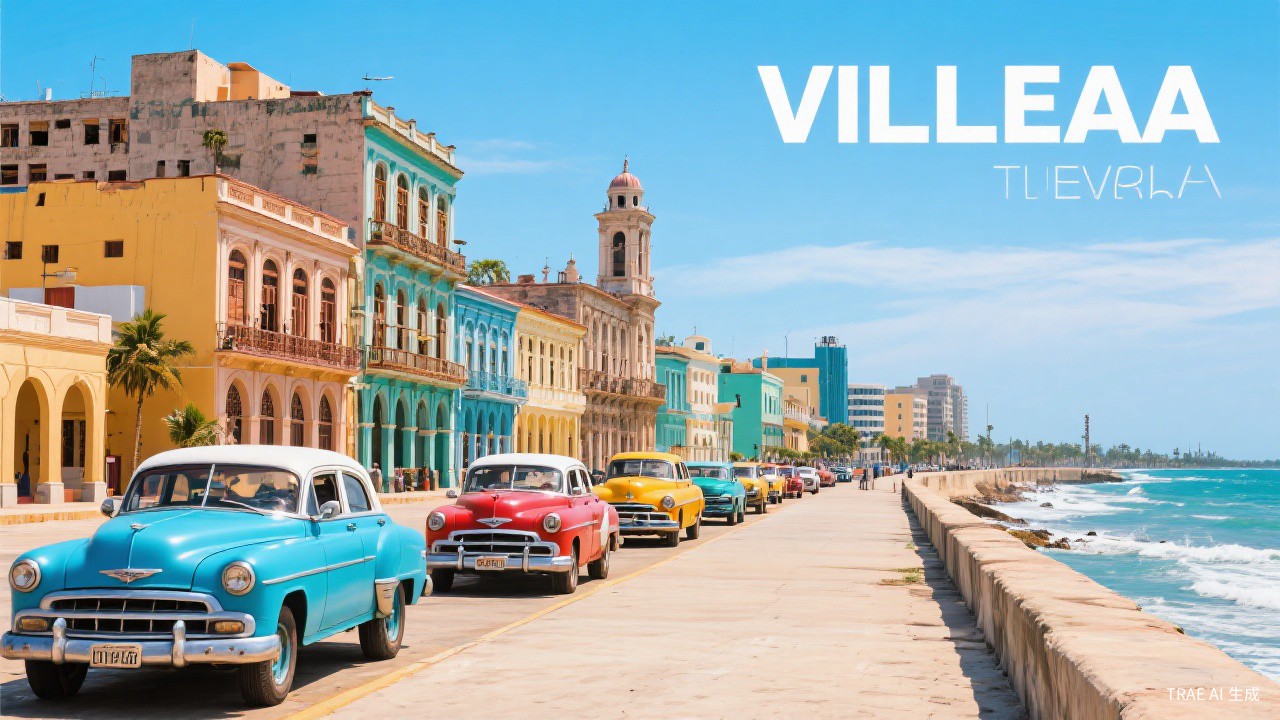
Havana is a city that exists in multiple centuries simultaneously. The colonial core, Old Havana (Habana Vieja), contains the largest collection of Spanish colonial architecture in the Americas—cathedrals, plazas, and fortresses dating to the 16th century. The Vedado and Miramar districts, developed in the 19th and 20th centuries, are lined with Art Deco buildings, grand mansions, and the former diplomatic quarter. And everywhere, 1950s American cars roll through streets that look like a film set.
Havana's atmosphere is its greatest asset. Musicians play son and salsa in corner bars, couples dance in the street, and the smell of coffee and cigars drifts from doorways. The Malecon, the 8-kilometer seawall promenade, is where the city gathers in the evening—families, lovers, fishermen, and musicians, all watching the sun drop into the Florida Strait.
The city is also a living museum of the Cold War. Revolutionary slogans are painted on buildings, vintage Soviet vehicles share the roads with American classics, and the Plaza de la Revolucion has witnessed some of the largest political rallies in history. The Museum of the Revolution occupies the former presidential palace, telling Cuba's story from the Spanish conquest through the 1959 revolution.
Best Time to Go
November to April is the dry season and the best time to visit. Temperatures start at 21-27°C, humidity is lower, and rainfall is minimal. This is peak season, with higher prices and more visitors. December through March is the busiest period.
May and October are shoulder months with warm temperatures (25-30°C) and occasional rain. Prices are lower, and the city is less crowded. May brings the Havana Biennial art festival in even-numbered years.
June to September is the hot, humid, and rainy season. Temperatures reach 30-35°C with high humidity. Afternoon thunderstorms are common but usually brief. This is hurricane season. Hotel rates are 30-50% lower. The city is quieter and more relaxed.
Getting There and Around
Jose Marti International Airport (HAV) is 20 kilometers southwest of central Havana. Direct flights are available from Miami, Fort Lauderdale, New York, Tampa, Houston, and several other cities. From Miami, the flight takes 1 hour.
Taxis from the airport to Old Havana or Vedado cost $25-35. Official airport taxis are yellow and metered. Private taxis (colectivos) are cheaper but less reliable. Some hotels offer airport transfers.
Within Havana, walking is the best way to explore Old Havana and Vedado. For longer distances, coco taxis (three-wheeled motorcycle taxis) cost $1-5 for short rides. Classic car taxis charge $10-30 for longer rides. City buses (guaguas) cost less than $0.01 but are crowded and confusing for visitors.
Where to Stay
Old Havana (Habana Vieja) puts you in the colonial center, within walking distance of the main plazas, museums, and the Malecon. Casa particulares (licensed homestays) cost $25-50 per night and offer the most authentic experience. Hotels like the Hotel Inglaterra ($80-150) and Hotel Saratoga ($150-300) are in restored colonial buildings.
Vedado is a more modern residential district with wider streets, the University of Havana, and the Coppelia ice cream park. Casa particulares here cost $20-40 per night. The Hotel Nacional ($150-300) is a landmark with ocean views.
Miramar, west of Vedado, has upscale hotels and embassies. Casa particulares in Miramar cost $25-45 per night. For the best value, book casa particulares directly or through Airbnb.
Must-See Attractions
Old Havana (Habana Vieja)
This UNESCO World Heritage site contains the core of colonial Havana. The four main plazas—Plaza de Armas, Plaza de la Catedral, Plaza Vieja, and Plaza de San Francisco—are connected by narrow streets lined with baroque buildings. The Catedral de San Cristobal, the Palacio de los Capitanes Generales (now the city museum), and the Bodeguita del Medio (famous for mojitos) are highlights. Allow a full day to explore properly.
Entry: Free to explore (museums $3-8 each) | Hours: Always open (museums 9 AM-6 PM)
Malecon
This 8-kilometer seawall promenade stretches from Old Havana to the Almendares River in Vedado. It is the social heart of Havana—especially at sunset and in the evening, when people gather to fish, listen to music, drink rum, and watch the waves crash over the wall. Walking the Malecon at sunset is one of the essential Havana experiences.
Cost: Free | Hours: Always open
Plaza de la Revolucion
This massive square has been the site of major political events since the revolution. The Jose Marti Memorial, a 109-meter tower, dominates the square. The steel outline of Che Guevara's face on the Ministry of the Interior building defines the skyline images of Cuba. The memorial has an observation deck at the top ($3).
Admission: Free (memorial observation deck $3) | Times: Square always open, memorial 9 AM-5 PM
Museum of the Revolution
Housed in the former Presidential Palace, this museum covers Cuban history from the Spanish conquest through the 1959 revolution and beyond. Exhibits include the Granma yacht (which carried Castro and 81 revolutionaries from Mexico to Cuba), weapons, documents, and photographs. Allow 1.5-2 hours.
Entry: $8 | Times: 10 AM-5 PM (closed Mondays)
Fabrica de Arte Cubano (FAC)
This converted cooking oil factory in Vedado is Havana's most exciting cultural space. It houses galleries, performance spaces, a cinema, and multiple bars under one roof. The emphasis is on contemporary Cuban art—painting, sculpture, photography, music, and dance. Open Wednesday through Sunday evenings. Entry is free or a small cover charge.
Tickets: Free-$5 | Hours: Wed-Sun 8 PM-3 AM
Food and Drink
Ropa Vieja — Cuba's national dish—shredded beef slow-cooked in a tomato-based sauce with peppers, onions, and olives. It is served with white rice, black beans, and fried plantains. Try it at La Guarida, a paladar (private restaurant) in a restored mansion. Budget $8-15 per meal.
Mojo Pork (Lechon Asado) — Slow-roasted pork marinated in mojo criollo—a sauce of sour orange juice, garlic, and oregano. It is tender, garlicky, and served at every celebration. Budget $5-10 per serving.
Cuban Sandwich — Roasted pork, ham, Swiss cheese, pickles, and mustard on pressed Cuban bread. Try it at a cafe or street vendor for $2-4. It is a quick, satisfying lunch.
Cuban Coffee and Rum — Cuban coffee (cafecito) is strong, sweet espresso served in small cups. A shot costs $0.50-1. Cuban rum—Havana Club and Santiago de Cuba—are excellent and cheap ($4-8 per bottle). A mojito costs $3-6 at a bar.
Practical Tips
Bring cash (euros or Canadian dollars preferred over US dollars due to exchange penalties). ATMs for foreign cards are unreliable. Budget $50-100 per day.
• Stay in casa particulares (homestays) for the best value and most authentic experience. They cost $25-50 per night and include breakfast.
• Learn basic Spanish. Very few Cubans speak English outside the tourist industry.
Bring your own toilet paper and hand sanitizer. Public restrooms often lack supplies.
• Be prepared for intermittent internet. Wi-Fi is available only in designated parks and hotels, sold by the hour ($1-2 per hour).
Traveler's Tip
Spend an evening at the Fabrica de Arte Cubano (FAC). It is where Havana's creative energy is most visible—you will see contemporary art, hear live music, and meet Cubans in a setting that feels nothing like a tourist attraction.