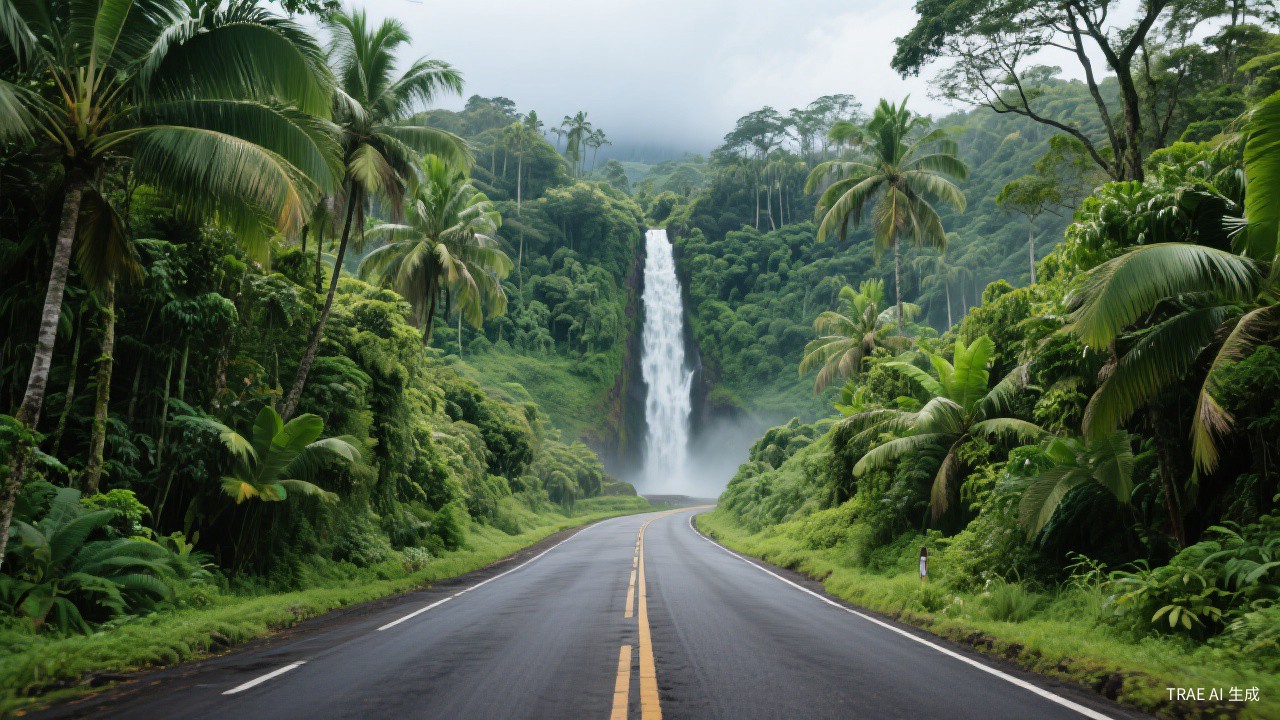
Discovering Hawaii Maui
Maui is the second-largest Hawaiian island and the one many visitors return to most often. The island is shaped like a figure eight, with two volcanic peaks—Haleakalā in the east and the West Maui Mountains—connected by a low-lying isthmus. This geography creates distinct microclimates: the windward (east) coast is lush and rainy, while the leeward (south and west) coast is dry and sunny.
The Road to Hana, a 103-kilometer highway with 620 curves and 59 one-lane bridges, is Maui's most famous Go. It passes rainforests, waterfalls, bamboo groves, and coastal villages where the pace of life has changed little in decades. The Go is less about the destination and more about the ride—stopping at every waterfall and overlook turns it into a full-day experience.
Haleakalā National Park, home to a dormant volcano that rises 3,055 meters above sea level, is Maui's other defining feature. Watching the sunrise from the summit, above a sea of clouds, is a ritual that draws visitors every morning. The park also contains the Sliding Sands trail, which descends into the crater itself—a Scenery of cinder cones and silversword plants that looks more like Mars than Hawaii.
Best Time to Go
Maui is warm year-round, but the best weather is from April to May and September to November. Temperatures start at 22-28°C at sea level, with less rain and humidity than summer. These shoulder seasons offer lower hotel rates and fewer crowds.
Summer (June to August) is the driest and warmest season (26-31°C). It is peak season for family travel, and hotel rates are highest. The ocean is calmest for snorkeling. Whale watching season ends in May.
Winter (December to March) brings the humpback whale migration—thousands of whales arrive in Maui's waters to breed and calve. This is whale watching season, with tours departing daily from Lahaina and Ma'alaea. Winter also brings larger surf on the north shore and more rain on the windward coast. Hotel rates are lower except around Christmas and New Year.
Getting There and Around
Kahului Airport (OGG) is Maui's main airport, with direct flights from Los Angeles, San Francisco, Seattle, Denver, Phoenix, Dallas, Chicago, and several other US cities. From the US West Coast, flights take 5-6 hours. Hawaiian Airlines, Alaska Airlines, and United are the primary carriers.
Renting a car is essential on Maui. The island is large, and public transit is limited. The Maui Bus connects a few towns but does not reach most attractions. Rental cars cost $50-80 per day. Book well in advance, especially in winter.
The Go from Kahului to Lahaina takes about 45 minutes. The Road to Hana takes a full day. The Go to Haleakalā summit takes about 2 hours from most hotels. Allow plenty of time—Maui traffic can be slow, especially on the narrow roads.
Where to Stay
Lahaina and Ka'anapali (west Maui) are the most popular areas, with the widest range of hotels, restaurants, and beaches. Ka'anapali Beach is one of the best on the island. Hotels start at $200-600 per night. Lahaina's historic Front Street has shops, restaurants, and art galleries.
Wailea (south Maui) is the upscale resort area, with luxury hotels (Grand Wailea, Four Seasons), golf courses, and a long beach path. Expect $300-800 per night. The area is quieter and more manicured than west Maui.
Kīhei, between Lahaina and Wailea, offers more affordable accommodations ($150-350 per night) with good beach access. Paia, on the north shore, is a small surf town with a hippie vibe and budget-friendly options ($100-250 per night). It is the gateway to the Road to Hana.
Must-See Attractions
Haleakalā National Park
The summit of this dormant volcano rises 3,055 meters above sea level. Sunrise viewing requires a reservation (book online) and an early start—most visitors leave their hotels by 3 AM. The temperature at the summit is 10-15°C colder than at sea level, even at sunrise. The Sliding Sands trail descends 3.2 kilometers into the crater, passing cinder cones and rare silversword plants. The Hosmer Grove trail in the park's lower section is a short walk through a native forest.
Tickets: $30 per vehicle (3-day pass) | Open: Park 24 hours, visitor center 7 AM-4 PM
Road to Hana
This 103-kilometer highway (Highway 36) connects Kahului to Hana with 620 curves and 59 one-lane bridges. The Go passes waterfalls (Wai'anapanapa State Park, Twin Falls), bamboo forests, coastal lookouts, and small towns. Key stops include Wai'anapanapa's black sand beach and caves, Wailua Falls, and the Ke'anae Peninsula. The Go takes 3-4 hours without stops; allow a full day. The road beyond Hana to the Ohe'o Pools (Seven Sacred Pools) is worth continuing.
Admission: Free (Wai'anapanapa State Park $5) | Hours: Always open (Go in daylight)
Snorkeling at Molokini Crater
Molokini is a partially submerged volcanic crater 5 kilometers off Maui's south coast. The crescent-shaped islet creates a protected bay with clear water and abundant marine life. Boat tours depart from Ma'alaea Harbor (45 minutes each way) and include snorkeling gear and lunch. Expect to see tropical fish, sea turtles, and coral formations. Trips cost $100-180 per person and take about 5 hours. Morning tours have the calmest water and best visibility.
Entry: $100-180 per person | Open: Morning departures (6-7 AM)
Whale Watching (Winter)
From December to April, thousands of humpback whales migrate to Maui's warm waters to breed and calve. Whale watching tours depart from Lahaina and Ma'alaea harbors. The whales are often visible from shore as well— McGregor Point and the Lahaina Pali Trail are good onshore viewing spots. Boat tours cost $50-100 per person and last 2-3 hours. Calves are most commonly seen in February and March.
Tickets: $50-100 per person | Hours: December to April, multiple departures daily
Īo Valley State Monument
This lush valley in west Maui is a sacred site in Hawaiian culture and the location of the Battle of Kepaniwai (1790), where King Kamehameha I defeated Maui's army. The valley contains the Īo Needle, a 685-meter green stone pinnacle, and a park with memorials to different immigrant groups that worked Maui's plantations. The go up the valley is short but dramatic, with walls of green on either side.
Entry: $5 per vehicle | Hours: 7 AM-7 PM daily
Food and Drink
Hawaiian Poke — Raw fish (usually ahi tuna) marinated in soy sauce, sesame oil, and onions. Poke is a Hawaiian staple, and the best versions are found at local fish markets and grocery stores rather than restaurants. Foodland, Tamura's, and the Maui Fish Market are reliable. A poke bowl costs $12-18.
Loco Moco — A Hawaiian comfort food: white rice topped with a hamburger patty, a fried egg, and brown gravy. It originated in Hilo and is now found at every local restaurant on Maui. Try it at Kihei Caffe or Clock Shop in Lahaina. Budget $10-15.
Banana Bread — Fresh-baked banana bread is a Road to Hana tradition. The most famous stop is Aunty Sandy's in Ke'anae, where the bread is baked in a wood-fired oven. A loaf costs $6-8. Other roadside stands along the route also sell it.
Shave Ice — Hawaiian shave ice is finer than a snow cone, with syrup absorbed into the ice rather than pooling at the bottom. Matsumoto Shave Ice in Haleiwa (Oahu) is the most famous, but Ululani's Hawaiian Shave Ice in Kihei and Lahaina is Maui's best. A large shave ice costs $6-8 with up to three flavors.
Practical Tips
Book rental cars well in advance. Maui has a limited supply, and prices spike during peak seasons. Book as early as possible.
• Make sunrise reservations for Haleakalā. The park limits the number of vehicles at sunrise, and reservations sell out weeks ahead.
• Start the Road to Hana early. The Go takes a full day, and many stops are best in the morning light. Fill your gas tank before departing.
• Use reef-safe sunscreen only. Hawaii has banned sunscreens containing oxybenzone and octinoxate to protect coral reefs.
• Respect private property along the Road to Hana. Many waterfalls and trails are on private land—do not trespass.
Traveler's Tip
Go beyond Hana to the Ohe'o Pools (Seven Sacred Pools) in Kipahulu, then continue around the back side of Haleakala. This route (Highway 31) is mostly unpaved but passable in a rental car, and it offers views of the island most visitors never see.