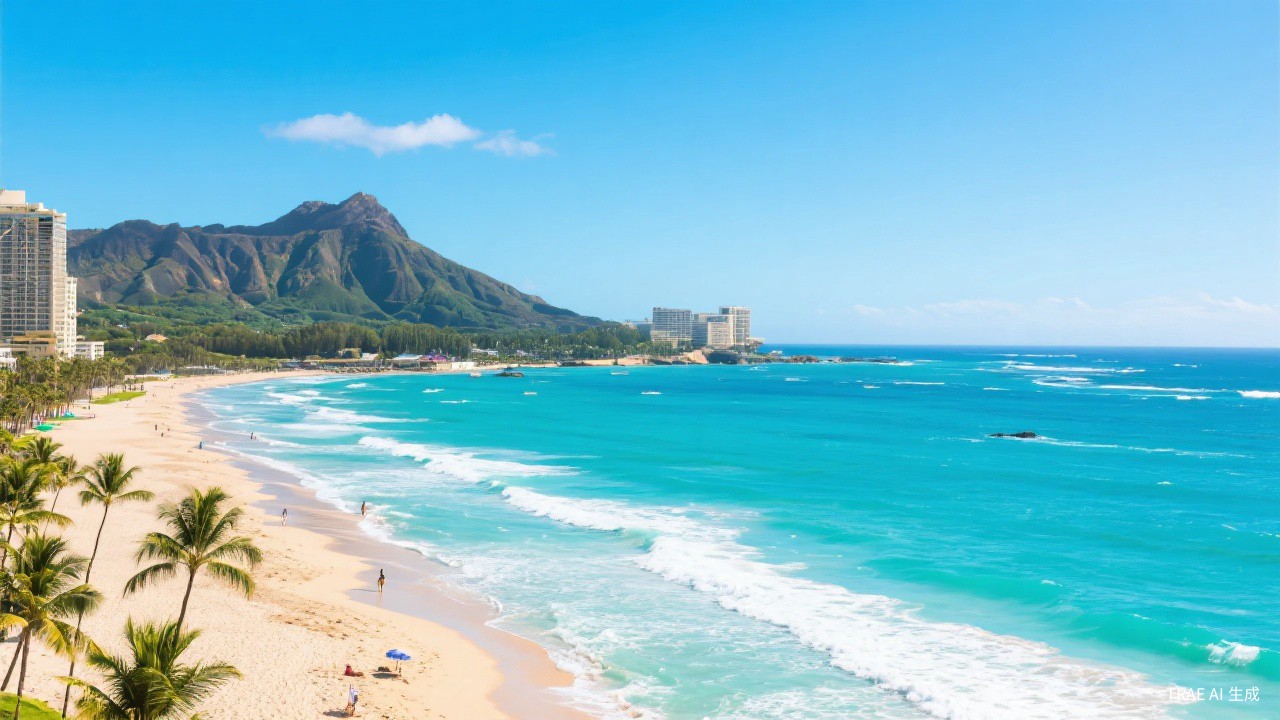
First Impressions of Hawaii Oahu
Oahu is the most populated and visited Hawaiian island, home to Honolulu, Pearl Harbor, and the North Shore's legendary surf breaks. The island packs an enormous range of experiences into a relatively small area—within an hour's Go, you can go from Waikiki's urban beach scene to the rural North Shore, from a World War II memorial to a rainforest hike.
Waikiki Beach, with Diamond Head crater as its backdrop, is the most famous beach in Hawaii. The 3-kilometer stretch of sand fronts a dense strip of hotels, restaurants, and shops. It is crowded and commercialized, but the beach itself is wide, the surf is gentle for beginners, and the sunsets over the Pacific are consistent.
Beyond Waikiki, Oahu has a different character. The North Shore, a 45-minute trip from Honolulu, is the surfing capital of the world—during winter, waves at Pipeline and Waimea Bay reach 9-15 meters. The east coast (Windward Side) has the most dramatic scenery, with the lush Ko'olau Mountains rising directly from the sea. The leeward (west) coast is drier and less visited, with long stretches of undeveloped coastline.
Best Time to Go
Oahu is warm year-round (24-30°C at sea level). The best weather is from April to June and September to November, with less rain and humidity. These shoulder seasons offer lower hotel rates and fewer crowds.
Summer (July to September) is the driest season, with calm water on the south and west shores—ideal for snorkeling. The North Shore surf is flat in summer, making the beaches safe for swimming. This is peak season with the highest hotel rates.
Winter (December to March) brings large surf to the North Shore and humpback whales to all Hawaiian waters. The Eddie Aikau big-wave surf contest at Waimea Bay is held when waves exceed 20 feet. Hotel rates are lower except around Christmas and New Year.
Getting There and Around
Daniel K. Inouye International Airport (HNL) in Honolulu is Hawaii's main gateway, with direct flights from more US cities than any other Hawaiian airport. From the US West Coast, flights take 5-6 hours. Hawaiian Airlines, Alaska, United, American, and Delta all serve Honolulu.
TheBus, Oahu's public transit system, covers most of the island with routes connecting Honolulu, Waikiki, the North Shore, and other areas. A single ride costs $3, and a day pass is $7.50. The bus is slow but extensive.
Renting a car gives the most flexibility. Cars cost $40-70 per day. The H-1, H-2, and H-3 freeways connect Honolulu to the outlying areas. Traffic in Honolulu is heavy during rush hours—allow extra time.
Where to Stay
Waikiki is the most convenient area, with the widest range of hotels, restaurants, and shops. Expect $200-500 per night for beachfront hotels. The area is walkable and has excellent public transit connections. It is crowded and commercialized but undeniably convenient.
Ko Olina (west Oahu) has upscale resorts (Aulani, Marriott's Ko Olina Beach Club) with lagoon beaches and a more relaxed atmosphere. Expect $300-600 per night. It is 30 minutes from Honolulu.
Haleiwa (North Shore) offers a surf-town atmosphere with small hotels and vacation rentals ($150-350 per night). It is far from the airport but puts you on the North Shore. Kailua (windward side) has a more local feel with a beautiful beach and vacation rentals ($150-400 per night).
Must-See Attractions
Pearl Harbor and USS Arizona Memorial
The site of the December 7, 1941 attack that brought the US into World War II. The USS Arizona Memorial, built over the sunken battleship, is accessible by a short boat ride. The visitor center has exhibits, a documentary film, and artifacts. The USS Bowfin Submarine Museum and the Battleship Missouri (where the Japanese surrender was signed) are also on site. Free timed-entry tickets for the Arizona Memorial are available first-come, first-served—arrive by 7 AM or book online. Allow 3-4 hours.
Cost: Free (audio tour $7.50) | Times: 7 AM-5 PM (closed Thanksgiving, Christmas, New Year)
Diamond Head State Monument
This 232-meter volcanic crater is Oahu's most recognizable landmark. The 1.6-kilometer trail to the summit climbs 171 meters through a tunnel and steep staircases to a World War II bunker with panoramic views of Waikiki, Honolulu, and the Pacific. The trail takes 45-60 minutes round trip and is moderately strenuous. Arrive early—parking is limited and the trail gets hot by mid-morning.
Tickets: $5 per person | Open: 6 AM-6 PM (gates close at 4 PM)
North Shore Beaches
The North Shore is the surfing capital of the world. In winter (November to February), waves at Pipeline, Sunset Beach, and Waimea Bay reach 9-15 meters, drawing the world's best surfers. In summer, the water is calm and the beaches are safe for swimming and snorkeling. Waimea Bay has a rock jump in summer. Haleiwa town has surf shops, food trucks, and a laid-back atmosphere. The Go from Honolulu takes about 45 minutes.
Tickets: Free | Times: Always open
Hanauma Bay Nature Preserve
This curved bay in southeast Oahu is one of the best snorkeling spots in Hawaii, with calm, clear water and abundant marine life. The bay is a flooded volcanic crater, and the reef is home to over 400 species of fish. The preserve limits visitors to 1,000 per day to protect the reef. Closed on Mondays and Tuesdays for rest. Arrive early—the parking lot fills by 7 AM. Snorkel gear rental is available on site.
Admission: $25 per person (includes tram) | Times: Wed-Mon 6:45 AM-4 PM (closed Mon-Tue)
Kualoa Ranch
This 4,000-acre ranch on the windward coast is where Jurassic Park, Jumanji, and Lost were filmed. The Scenery—lush green mountains meeting the blue sea—is among the most photographed in Hawaii. Activities include ATV tours ($120), horseback riding ($130), zipline tours ($170), and a movie site tour ($50). The ranch also has a working farm with cattle and fruit orchards. Book activities online in advance.
Admission: Tours $50-170 | Hours: 7:30 AM-5 PM daily
Food and Drink
Plate Lunch — A Hawaiian staple: two scoops of rice, one scoop of macaroni salad, and an entrée such as chicken katsu, kalua pork, or teriyaki beef. Try it at Rainbow Go-In, L&L Hawaiian Barbecue, or any local plate lunch spot. Budget $10-15.
Malasadas — Portuguese doughnuts, deep-fried and coated in sugar. Leonard's Bakery in Honolulu has been making them since 1952 and is the most famous spot. A malasada costs $1.50-2.50. Go early—they sell out by afternoon.
Poke — Raw ahi tuna marinated in soy sauce, sesame oil, and onions. The best poke on Oahu is found at Foodland grocery stores, Tamura's Fine Wine & Liquors, and Ono Seafood. A poke bowl costs $12-18.
Garlic Shrimp — North Shore food trucks serve garlic shrimp—large shrimp sautéed in garlic butter and served with rice. Giovanni's Shrimp Truck and Romy's Kahuku Prawns are the most famous. A plate costs $14-18. Expect a wait in line.
Practical Tips
Book Pearl Harbor tickets online in advance. Free timed-entry tickets for the USS Arizona Memorial are limited and often sell out.
• Rent a car for at least part of your visit. TheBus covers the island but is slow. A car lets you reach the North Shore, Kualoa Ranch, and other areas efficiently.
Visit Hanauma Bay on a weekday if possible. The 1,000 daily visitor limit means the park can fill early, especially on weekends.
• Get up early for Diamond Head. The parking lot fills by 7 AM, and the trail is hot and crowded later in the day.
Try a food truck on the North Shore. The shrimp trucks, garlic shrimp, and other offerings are better and cheaper than most Waikiki restaurants.
Traveler's Tip
travel the H-3 freeway from Honolulu to Kaneohe at sunset. The highway cuts through the Ko'olau Mountains, and the views of the windward coast as you emerge from the tunnel are extraordinary.