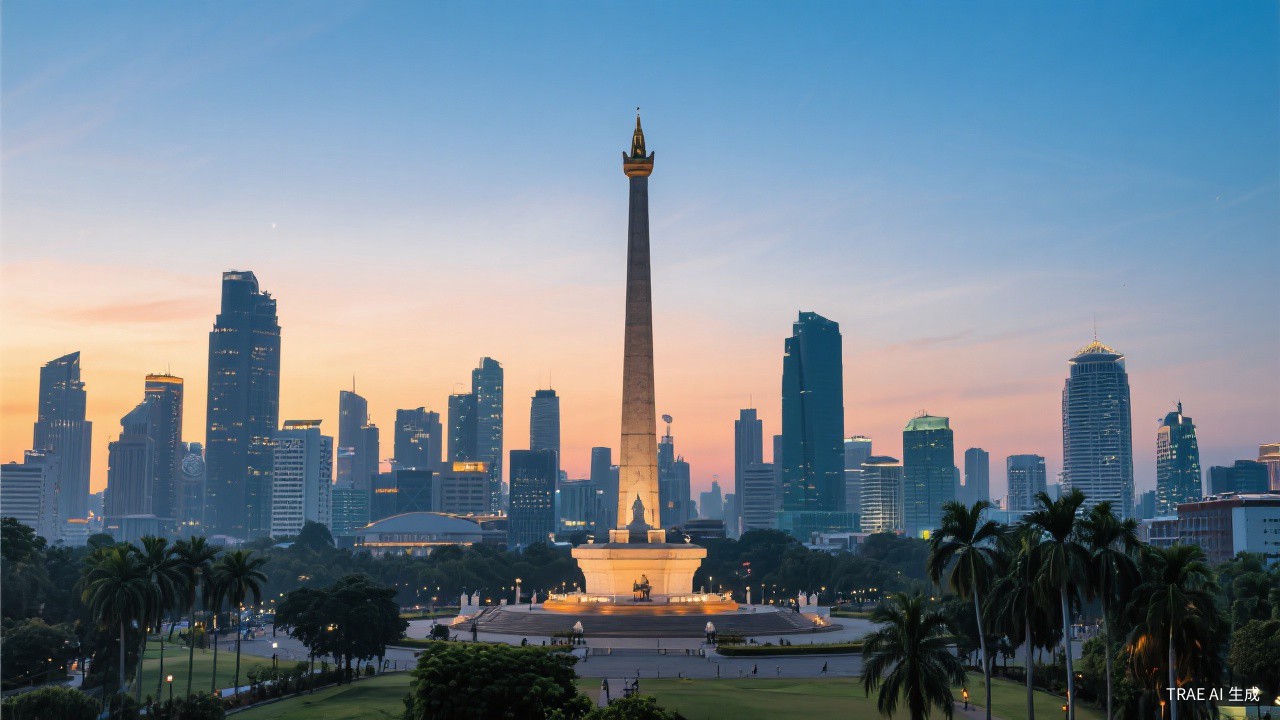
The Real Jakarta
Jakarta is Southeast Asia's largest city, a sprawling metropolis of 12 million people that serves as Indonesia's political and economic center. The old town of Kota Tua preserves Dutch colonial buildings from the 17th century, including the Fatahillah Square and the Wayang (puppet) Museum. Modern Jakarta rises in the Golden Triangle of Sudirman, Thamrin, and Rasuna Said, where the 132-meter Monas (National Monument) towers over Merdeka Square. The city's museum scene is surprisingly strong, with the National Museum holding the world's largest collection of Indonesian ethnographic artifacts.
Jakarta's energy is relentless. The city has the worst traffic in the world, but it also has one of the region's most exciting food scenes, with street-side warungs serving nasi goreng, sate ayam, and gado-gado alongside Michelin-recommended restaurants. The shopping ranges from the massive Grand Indonesia mall to the antique markets of Surabaya Street. The city's young population drives a creative scene visible in street art, independent galleries, and the music venues of Kemang and Senopati. The Istiqlal Mosque, the largest in Southeast Asia, and the Cathedral of Jakarta stand across from each other on the same square—a symbol of the country's religious diversity.
Two to three days is enough for most visitors. Focus on Kota Tua and the old port of Sunda Kelapa in the morning, the National Museum and Monas in the afternoon, and the food scene in the evening. Save time for at least one mall experience—Grand Indonesia or Plaza Indonesia—and a night out in the Senopati or Menteng area.
Best Time to Go
May through September is the driest period, with temperatures between 25 and 33 degrees Celsius. June and July are the most pleasant months, with lower humidity and occasional cool breezes. The Jakarta Fair (Pekan Raya Jakarta) runs from June to July at the JIExpo Kemayoran, drawing millions of visitors for food, music, and cultural performances.
October through April is the rainy season, with heavy afternoon downpours that can cause severe flooding in low-lying areas. January and February are the wettest months. The rain rarely lasts all day, but it can disrupt outdoor plans. Hotel prices are lower during this period.
Getting There and Around
Soekarno-Hatta International Airport (CGK) is 25 kilometers west of the city. The Airport Train (Soekarno-Hatta Airport Rail Link) connects to the city center in 55 minutes for IDR 70,000. A taxi costs IDR 200,000 to 300,000 depending on traffic. The airport handles direct flights from cities across Asia, the Middle East, and Europe. Halim Perdanakusuma Airport (HLP) serves domestic flights and some regional routes.
Jakarta's traffic makes public transport essential. The MRT (Mass Rapid Transit) runs from Lebak Bulus to Bundaran HI, covering the south-north corridor. The TransJakarta bus rapid transit system has 13 corridors. Grab and Gojek are the most practical options for point-to-point travel. A typical Grab car ride within the city costs IDR 30,000 to 80,000. Ojek (motorcycle taxi) rides via Gojek start at IDR 15,000 and are faster in heavy traffic.
Where to Stay
The Sudirman-Thamrin area (Central Jakarta) puts you near Monas, the National Museum, and the main business district. Hotels like the Pullman (USD 100 to 150 per night) and the Grand Hyatt (USD 150 to 250) offer luxury, while the Ibis budget chain provides rooms from USD 30 to 50. This area has the best MRT access.
Menteng and Senopati offer a more residential feel with excellent restaurants and cafes. The Menteng area has boutique hotels like the Kosenda (USD 50 to 80) and is walking distance from the antique market on Surabaya Street. Kemang in South Jakarta is the nightlife district, with hotels like the Alila (USD 120 to 180) and a concentration of bars and clubs. Budget travelers can find hostels in the Menteng area for USD 10 to 15 per night.
Must-See Attractions
National Museum (Museum Nasional)
Indonesia's oldest and largest museum holds over 140,000 artifacts spanning the archipelago's history from prehistoric times to the present. The collection includes Hindu-Buddhist sculptures from Java and Bali, traditional textiles from across the islands, and ethnographic displays representing each of Indonesia's 300+ ethnic groups. The building's front courtyard features a bronze elephant statue, a gift from the King of Thailand.
Admission: IDR 5,000 (foreigners IDR 25,000) | Times: Tue-Fri 8 AM-4 PM, Sat-Sun 8 AM-5 PM (closed Mon)
Kota Tua (Old Batavia)
The former headquarters of the Dutch East India Company contains the best-preserved colonial architecture in Indonesia. Fatahillah Square is surrounded by the Jakarta History Museum, the Wayang (Puppet) Museum, and the Fine Art and Ceramics Museum. The cobblestone square fills with street performers and vendors on weekends. Rent a bicycle (IDR 10,000) to explore the area.
Admission: Free to explore; museums IDR 5,000-10,000 each | Times: Tue-Sun 9 AM-3 PM
Istiqlal Mosque
The largest mosque in Southeast Asia can accommodate 200,000 worshippers. Designed by a Christian architect (Frederich Silaban) and inaugurated in 1978, the mosque features a massive dome, marble floors, and a rectangular prayer hall. Free guided tours are available for non-Muslim visitors, who are provided with robes. The mosque stands across from Jakarta Cathedral, symbolizing religious tolerance.
Cost: Free | Hours: Daily (tours 8 AM-noon, 1-4 PM)
Taman Mini Indonesia Indah (TMII)
This 150-hectare cultural park in East Jakarta features full-scale replicas of traditional houses from all 34 Indonesian provinces. Each pavilion showcases the architecture, crafts, and cuisine of its region. The park also contains museums, a bird park, a cable car, and a lake shaped like the Indonesian archipelago.
Tickets: IDR 25,000 (foreigners IDR 50,000) | Open: Daily 7 AM-10 PM
Monas (National Monument)
Standing 132 meters tall, the Monas tower is topped with a 35-kilogram gold flame coated in 50 kilograms of gold leaf. The base houses the National History Museum, which displays dioramas of Indonesian history from prehistoric times to independence. An elevator carries visitors to the observation deck at 115 meters for panoramic views of the city.
Tickets: IDR 15,000 (foreigners IDR 25,000) | Hours: Daily 8 AM-10 PM; last entry 8 PM
Food and Drink
Nasi goreng (fried rice) with fried egg and kerupuk — Nasi Goreng Kebon Jeruk, West Jakarta. IDR 25,000-40,000.
Sate ayam (chicken satay with peanut sauce) — Sate Senayan, Blok S, South Jakarta. IDR 40,000-60,000.
Kopi tubruk (traditional Javanese coffee) and pisang goreng — Toko Kopi Tuku, Senopati. IDR 15,000-25,000.
Padang food (rendang, gulai ayam, nasi padang) — Sederhana Padang Restaurant, multiple locations. IDR 40,000-80,000.
Practical Tips
Avoid rush hours (7-9 AM and 5-8 PM) at all costs—traffic can turn a 30-minute trip into 2 hours.
• Use Grab or Gojek for transport; street taxis often refuse to use meters.
• The MRT is air-conditioned, reliable, and avoids traffic—use it for north-south travel.
• Jakarta is predominantly Muslim; dress modestly and be aware of prayer times.
• Carry small bills (IDR 5,000-20,000) for street food and tips—vendors rarely have change for large notes.
Traveler's Tip
Visit the Sunda Kelapa old port in Kota Tua at 7 AM, when the traditional pinisi schooners are being loaded with spices and timber bound for the Maluku Islands and Papua. The wooden ships, some over 100 years old, create one of the most photogenic scenes in Indonesia. The harbor workers are friendly and may let you board for a small tip (IDR 20,000).