What You Will Find in Japan Alps
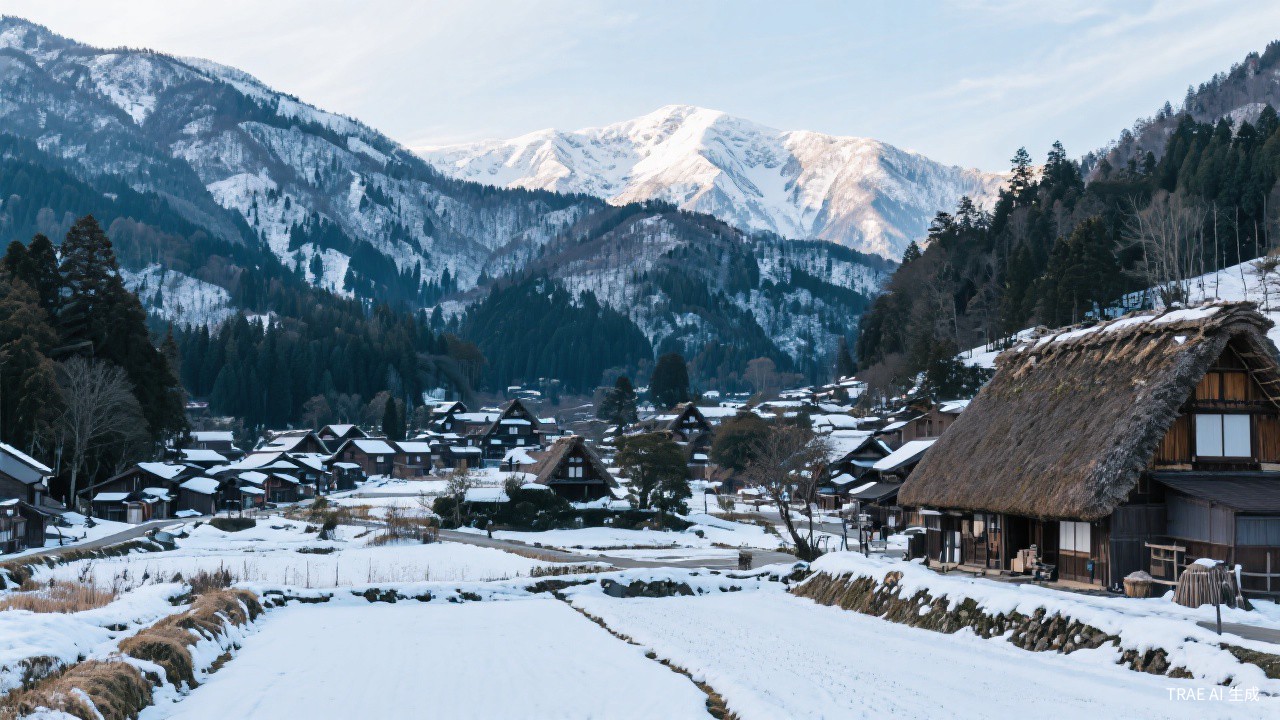
The Japan Alps stretch across central Honshu, a chain of rugged mountain peaks that reach over 3,000 meters and receive some of the heaviest snowfall on earth. The region is divided into the Northern Alps (Hida Mountains), Central Alps (Kiso Mountains), and Southern Alps (Akaishi Mountains). The Northern Alps are the most accessible and most visited, containing the historic mountain towns of Takayama, Matsumoto, and the UNESCO-listed thatched villages of Shirakawa-go. The Tateyama Kurobe Alpine Route, a 90-kilometer scenic passage through the mountains, is one of Japan's most celebrated engineering feats.
Takayama, in the northern part of the Alps, preserves a well-preserved old town with wooden merchant houses dating to the Edo period. The morning markets along the Miyagawa River sell local pickles, miso, and crafts. Matsumoto, to the east, is dominated by Matsumoto Castle, one of Japan's few original surviving castles, with a black six-story keep dating from 1593. Kamikochi, a highland valley at 1,500 meters in the Northern Alps, is one of Japan's most popular hiking destinations, with trails following the Azusa River through forests of Japanese cedar and birch.
Plan five to seven days for a thorough Japan Alps circuit. Start in Matsumoto (2 days: castle, old town, day trip to Kamikochi). Then Takayama (2 days: old town, morning market, Hida Folk Village). Next, Shirakawa-go (1 day: thatched villages). Finish with the Tateyama Kurobe Alpine Route (1 to 2 days). The route can be done by train and bus using the JR Pass, though some mountain roads require private buses.
Best Time to Go
June and September are the best months for hiking, with comfortable temperatures and clear skies. July and August bring wildflowers to the alpine meadows but also crowds and afternoon thunderstorms. October is spectacular for autumn foliage—the maples and beeches turn red and gold, and the thatched roofs of Shirakawa-go look their best against the colored mountains.
November to April is the winter season, with heavy snowfall and many mountain roads closed. The Tateyama Kurobe Alpine Route's famous "Snow Corridor" (walls of snow up to 20 meters high) is open from April to June and draws visitors from around the world. January and February are the best months for skiing at resorts like Hakuba and Shiga Kogen. Spring (late April to May) brings cherry blossoms to the lower valleys.
Getting There and Around
Matsumoto is the most convenient gateway, served by the JR Shinonoi Line from Nagano (1 hour) and the Azusa limited express from Tokyo (2.5 hours). Takayama is reached by the JR Takayama Line from Nagano (2.5 hours) or the Wide View Hida express from Nagoya (2.5 hours). Shirakawa-go is served by bus from Takayama (75 minutes) and Kanazawa. The Tateyama Kurobe Alpine Route operates from mid-April to late November and requires a combination of cable cars, buses, and a ropeway.
Within the region, JR buses connect Matsumoto to Kamikochi (75 minutes, reservation required in peak season). The Takayama-Hokuriku Area Tourist Pass covers buses between Takayama, Shirakawa-go, and Kanazawa. Renting a car gives the most flexibility—expect to pay JPY 6,000 to 8,000 per day—but mountain roads require winter driving experience from November to March.
Where to Stay
Matsumoto has the widest range of options, from the Buena Vista (JPY 15,000 to 25,000 per night) with castle views to budget business hotels like the Toyoko Inn (JPY 6,000 to 8,000). The Nawate-dori area, a restored historic street along the Metoba River, has several atmospheric guesthouses. Takayama's old town contains ryokan (traditional inns) like the Honjin Hiranoya Kachoan (JPY 25,000 to 40,000 per person with dinner and breakfast) and simpler guesthouses from JPY 8,000.
Shirakawa-go has several farmhouses converted into minshuku (family-run guesthouses), where you sleep on futons in tatami rooms and eat home-cooked meals. Expect to pay JPY 10,000 to 20,000 per person with two meals. Kamikochi has mountain lodges like the Kamikochi Hotel (JPY 15,000 to 25,000) for those who want to stay inside the park.
Must-See Attractions
Matsumoto Castle
One of Japan's four original surviving castles, built in 1593 by Ishikawa Kazumasa. The six-story black keep (donjon) stands out as photogenic in Japan, especially when reflected in the moat on a clear day. The interior is steep and dark, with low ceilings and wooden floors worn smooth by centuries of footsteps. The castle grounds contain a moon-viewing pavilion and a small shrine.
Tickets: JPY 700 | Hours: Daily 8:30 AM-5 PM (closed Dec 29-Jan 3)
Shirakawa-go (Ogimachi Village)
This UNESCO World Heritage village is famous for its gassho-zukuri farmhouses, built with steep thatched roofs designed to shed heavy snowfall. The oldest houses date back 250 years. The Shiroyama Viewpoint, a 20-minute walk above the village, offers the classic panoramic view. Several farmhouses are open to the public, including the Wada House, the largest in the village.
Cost: Free; museum houses JPY 300-500 each | Hours: Daily 8:30 AM-5 PM
Kamikochi Highland Valley
A protected highland valley at 1,500 meters in the Northern Alps, following the Azusa River through forests of Japanese cedar and birch. The main trail from Taisho Pond to Myojin Bridge is flat and easy (3 kilometers one way), passing the crystal-clear waters of the Azusa River with views of the Hotaka peaks. The Kappabashi (Demon Bridge) and Dakesawa marsh are popular side trails.
Tickets: Free; bus from Matsumoto JPY 2,930 round trip | Hours: Park open mid-Apr to mid-Nov; buses 7 AM-6 PM
Tateyama Kurobe Alpine Route
This 90-kilometer scenic route crosses the Northern Alps from Toyama to Nagano using seven different modes of transport: cable car, funicular, bus, ropeway, and walking. The highlight is the Snow Corridor (Yuki no Otani), where walls of snow up to 20 meters high line the road in spring. The route passes Murodo Dam, Kurobe Lake, and the Daikanbo observation deck with panoramic views.
Admission: Full route JPY 12,490 one way | Open: Mid-Apr to late Nov; first departures 7 AM
Takayama Old Town and Morning Market
The Sanmachi Suji historic district contains three streets of well-preserved Edo-period merchant houses, sake breweries, and craft shops. The Miyagawa Morning Market, held daily along the riverbank from 6:30 AM, sells local specialties including Hida beef skewers, pickled vegetables, and apple juice. The Takayama Jinya, a former government office from the Edo period, is open to the public.
Cost: Free; Takayama Jinya JPY 440 | Times: Market daily 6:30 AM-noon; Jinya 8:45 AM-5 PM
Food and Drink
Hida beef (wagyu) skewers — Morning Market, Miyagawa River, Takayama. JPY 500-1,000 per skewer.
Soba noodles with mountain vegetables — Kikunoya, Matsumoto old town. JPY 1,200-1,800.
Gohei-mochi (rice cakes with walnut miso sauce) — Shirakawa-go village stalls. JPY 300-500.
Oyaki dumplings (stuffed with vegetables or red bean) — Nakamura-ya, Takayama old town. JPY 200-350.
Practical Tips
• The JR Pass covers trains between Matsumoto, Nagano, and Nagoya but not the private buses to Kamikochi or Shirakawa-go.
• Kamikochi buses require reservations in July, August, and during autumn foliage season.
• The Tateyama Kurobe Alpine Route is one-way for most visitors—plan your return transport.
• Shirakawa-go farmstays book out months ahead for winter—reserve early.
Bring layers, even in summer—the mountains are significantly cooler than the cities.
Traveler's Tip
Take the last bus from Kamikochi at 4 PM and ask the driver to let you off at the Taisho Pond stop instead of the main terminal. The pond, formed by a volcanic eruption in 1915, is at its most beautiful in the late afternoon light, with dead silver birch trunks rising from the still water and the Hotaka peaks reflected on the surface. You will have the place almost entirely to yourself.