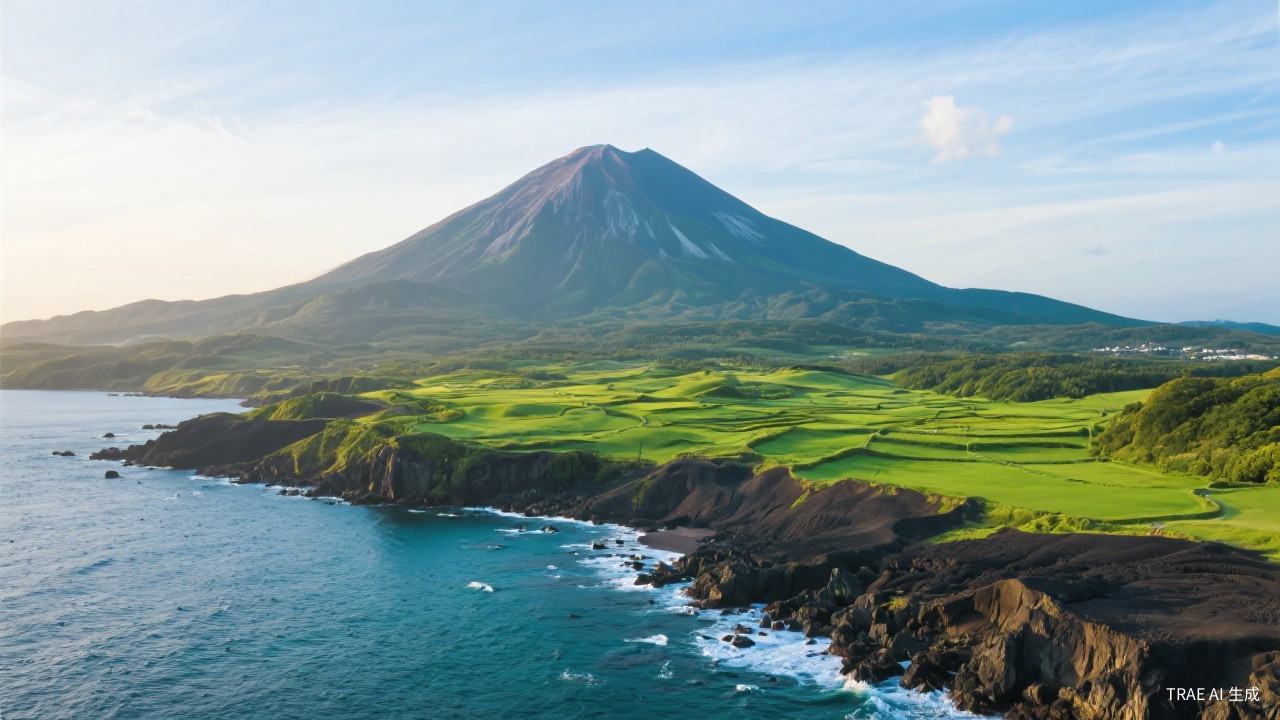
What You Will Find in Jeju Island
Jeju Island is a volcanic island off the southern coast of South Korea, formed by Hallasan, a shield volcano that rises 1,950 meters at the island's center. The island's UNESCO-listed geological features include the Manjanggul Lava Tube, a 7.4-kilometer cave formed by basaltic lava flows, and Seongsan Ilchulbong (Sunrise Peak), a dramatic tuff cone rising from the sea. Jeju's coastline alternates between black volcanic rock beaches and white sand, while the interior is covered with tangerine orchards, stone walls, and grass-roofed houses unique to the island.
Jeju has a distinct culture from mainland Korea. The island's women, known as haenyeo (sea women), free-dive for abalone, sea urchins, and octopus without scuba gear—a tradition dating back centuries and recognized by UNESCO. The local cuisine features heukdwaeji (black pork BBQ), fresh seafood, and hallabong (Jeju tangerines). The island's slow pace and clean air attract Korean honeymooners, retirees, and nature lovers. The Olle Trail, a network of 26 walking paths covering 425 kilometers around the coastline, is one of Asia's great hiking experiences.
Plan five to seven days. Spend two days exploring the east coast (Seongsan Ilchulbong, Manjanggul, and the beaches near Sehwa). Dedicate two days to Hallasan National Park and the south coast. One day for the west coast (Hyeopjae Beach, the Osulloc tea fields). Leave a day for Udo Island, a small island off the east coast accessible by ferry.
Best Time to Go
April to June and September to November offer the best conditions. Spring brings cherry blossoms (Jeju has a later bloom than Seoul, typically early April) and yellow canola fields. Autumn offers clear skies and pleasant hiking temperatures (15 to 22 degrees Celsius). The Jeju Fire Festival in March involves burning the dry grass on Hallasan's slopes—a dramatic spectacle.
July and August are hot, humid, and crowded with Korean school holidays. The beaches are at their best but accommodation prices peak. Winter (December to February) is mild by mainland standards (5 to 12 degrees) but Hallasan can receive heavy snow. Winter is mandarin season and the island is quiet.
Getting There and Around
Jeju International Airport (CJU) receives flights from Seoul (1 hour), Busan (50 minutes), and several international destinations including Tokyo, Osaka, Shanghai, and Hong Kong. Jeju Air, Korean Air, and Asiana all serve the route. Domestic flights from Seoul cost KRW 40,000 to 80,000 one way if booked in advance. Ferries from Mokpo, Wando, and Busan take 4 to 12 hours and are cheaper but much slower.
Renting a car is the best way to explore Jeju (KRW 50,000 to 70,000 per day). An international driving permit is required. The island's roads are well-maintained and traffic is light outside Jeju City. Public buses cover major routes but are slow and infrequent. Taxis are available but expensive for long distances. Motorbike and scooter rentals are not available due to local regulations.
Where to Stay
Jeju City on the north coast is the main hub, with hotels like the Shinhwa World (KRW 150,000 to 300,000 per night) and budget guesthouses near the airport (KRW 40,000 to 70,000). The city has the best restaurant selection and transport connections. Seogwipo on the south coast is a quieter alternative, with the Jeju Shinhwa World and several mid-range hotels (KRW 80,000 to 150,000).
The eastern coast near Seongsan has a growing number of pensions (Korean-style guesthouses) with ocean views, typically KRW 60,000 to 120,000 per night. The Jungmun Resort area on the south coast contains luxury properties like the Jeju Shinhwa World and the Lotte Hotel (KRW 200,000+). For a unique stay, the volcanic stone guesthouses in the rural interior offer a traditional experience for KRW 50,000 to 80,000.
Must-See Attractions
Seongsan Ilchulbong (Sunrise Peak)
This 182-meter tuff cone rises from the ocean on Jeju's eastern tip, its crater rim offering 360-degree views of the coastline and Udo Island. The hike to the summit takes 30 to 40 minutes via a steep stairway. Sunrise is the most popular time to visit, but the views are impressive at any hour. The surrounding meadows are filled with wildflowers in spring.
Entry: KRW 2,000 | Times: Daily, sunrise to sunset (gate closes 1 hour before sunset)
Manjanggul Lava Tube
One of the longest lava tubes in the world, Manjanggul extends 7.4 kilometers underground, though only 1 kilometer is open to the public. The cave features lava stalactites, lava columns, and stone pillars formed by cooling basalt. The temperature inside is a constant 11 to 15 degrees Celsius, making it a cool escape in summer.
Cost: KRW 2,000 | Open: Daily 9 AM-6 PM (closed first Monday of month)
Hallasan National Park
The trail to Hallasan's summit (1,950 meters) is Jeju's most popular hike, taking 4 to 5 hours round trip via the Seongpanak trail. The summit holds Baengnokdam, a crater lake that freezes in winter. Shorter trails on the lower slopes pass through dense forest with azaleas in spring and colorful foliage in autumn.
Tickets: Free | Times: Daily (summit trail 5:30 AM-1 PM ascent)
Udo Island
A small island 3.5 kilometers off Jeju's east coast, accessible by a 15-minute ferry (KRW 2,000). Udo's Scenery is gentler than Jeju's, with rolling green hills, peanut fields, and a lighthouse at the eastern tip. Rent a bicycle or scooter to circle the island in 2 hours. The Seobin Beach has white sand and turquoise water.
Entry: Ferry KRW 2,000; bicycle rental KRW 10,000 | Open: Ferries from 7:30 AM-6 PM
Jeju Stone Park (Dol Hareubang Park)
This outdoor museum showcases Jeju's volcanic geology and the iconic dol hareubang (stone grandfather) statues that guard the island's gates. The park contains over 40 of these carved basalt figures, each with slightly different features. Walking trails wind through native vegetation and explain how volcanic rock shaped Jeju's culture and architecture.
Tickets: KRW 5,000 | Times: Daily 9 AM-6 PM
Food and Drink
Jeju black pork BBQ (heukdwaeji) — Heukdwaeji Street, Jeju City. KRW 15,000-25,000 per person.
Fresh abalone and sea urchin (from haenyeo divers) — Seongsan Port market. KRW 10,000-20,000.
Hallabong tangerines and tangerine juice — Daejeong and Seogwipo tangerine farms. KRW 5,000-15,000.
Jeju seafood ramen at the Noodle Factory — Jeju Noodle Factory, Seogwipo. KRW 10,000-15,000.
Practical Tips
• Rent a car—public transport on Jeju is too infrequent for efficient sightseeing.
• The Hallasan summit trail closes at 1 PM (last ascent); start early if you want to reach the top.
• Jeju can be windy year-round—bring a windbreaker even in summer.
• Many restaurants on Jeju close between 3 PM and 5 PM; plan lunch before or after this gap.
• The haenyeo divers are most active in the morning; visit Seongsan Port before noon to see them at work.
Traveler's Tip
travel the 1130 Road (also called the "New Jeju Road") at sunset. This winding coastal road on the southwest side of the island passes through tangerine orchards and offers views of Sanbangsan Mountain and the Marado Islands. Pull over at the designated viewpoints—the light hitting the volcanic rock formations at golden hour is extraordinary.