The Real Kangaroo Island
Kangaroo Island, 13 kilometers off the coast of South Australia, is Australia's third-largest island and one of its most ecologically diverse. The island separated from the mainland around 10,000 years ago, and its isolation has created a refuge for wildlife found nowhere else—the Kangaroo Island kangaroo, the glossy black cockatoo, and the tammar wallaby. Over one-third of the island is protected within national parks and conservation reserves. Flinders Chase National Park, at the western end, contains the Remarkable Rocks (wind-sculpted granite boulders perched on a granite dome above the ocean) and Admirals Arch, a natural rock bridge where New Zealand fur seals breed.
The island produces some of Australia's finest food and drink. The Ligurian bee, introduced from Italy in the 1880s, produces honey that is unique to the island. Sheep farmers make artisanal cheeses, and the island's cool-climate vineyards produce award-winning wines. The seafood is exceptional—King George whiting, southern rock lobster, and abalone are caught in the surrounding waters. The island's farmers' markets and cellar doors offer tastings in settings that feel far removed from the mainland's crowds.
Plan three to four days. Day one: ferry from Cape Jervis to Penneshaw, then Go to Seal Bay and the island's south coast. Day two: Flinders Chase National Park (Remarkable Rocks, Admirals Arch, Weirs Cove). Day three: the island's north coast—Kangaroo Island Wildlife Park, Emu Bay, and the honey farms. Day four: wine tasting at the Cygnet River cellar doors and a beach walk at Stokes Bay before the return ferry.
Best Time to Go
September to November (spring) and March to May (autumn) are the best seasons. Spring brings wildflowers and newborn wildlife, while autumn offers warm days (18 to 24 degrees Celsius) and calm seas. The island's wildlife is active year-round, but the cooler months make koala spotting easier, as they are more likely to be active during the day.
December to February is summer, with temperatures between 20 and 30 degrees and the busiest period on the beaches. Book accommodation and ferry tickets well ahead. June to August is winter, with cooler temperatures (10 to 16 degrees) and rougher seas, but the Scenery is green and the crowds are gone. Winter is whale-watching season—southern right whales pass the island's south coast.
Getting There and Around
The SeaLink ferry departs Cape Jervis (90 minutes south of Adelaide) for Penneshaw on Kangaroo Island. The crossing takes 45 minutes and costs AUD 98 per vehicle (return) and AUD 49 per adult passenger (return). Buses connect Adelaide to Cape Jervis. Regional Express (REX) flies from Adelaide to Kingscote Airport (30 minutes), with fares from AUD 150 to 250 return. A car is essential on the island—rent one in Adelaide or at Penneshaw (AUD 70 to 100 per day).
The island is large (155 kilometers long) and the roads are mostly unsealed—allow extra time for driving. The speed limit on unsealed roads is 80 km/h, but wildlife crossings are common, especially at dawn and dusk. Fuel is available at Penneshaw, Kingscote, and American River—fill up when you can, as stations are spread far apart.
Where to Stay
Kingscote, the island's largest town, has the widest range of accommodation, from the Aurora Ozone Hotel (AUD 150 to 250 per night) to motels and holiday apartments (AUD 100 to 180). The town has supermarkets, restaurants, and a waterfront. Penneshaw, where the ferry arrives, is smaller and quieter, with B&Bs from AUD 120 to 200.
For a more isolated experience, the western end of the island near Flinders Chase has several eco-lodges and cottages. The Southern Ocean Lodge (AUD 1,000+ per night) is one of Australia's most exclusive luxury lodges, with cliff-top views and all-inclusive dining. For budget travelers, campgrounds at Flinders Chase, Penneshaw, and Kingscote charge AUD 15 to 30 per night.
Must-See Attractions
Flinders Chase National Park
The park covers 326 square kilometers at the western end of the island and contains two of Australia's most photographed natural landmarks. The Remarkable Rocks are a cluster of granite boulders sculpted by wind and rain into surreal shapes, perched on a granite dome 60 meters above the Southern Ocean. Admirals Arch is a natural rock arch beneath the headland, where a colony of New Zealand fur seals breeds on the rocks below. The park also contains the Cape du Couedic lighthouse and the Weirs Cove campground.
Admission: AUD 12 per vehicle | Hours: Daily 24 hours; visitor center 9 AM-5 PM
Seal Bay Conservation Park
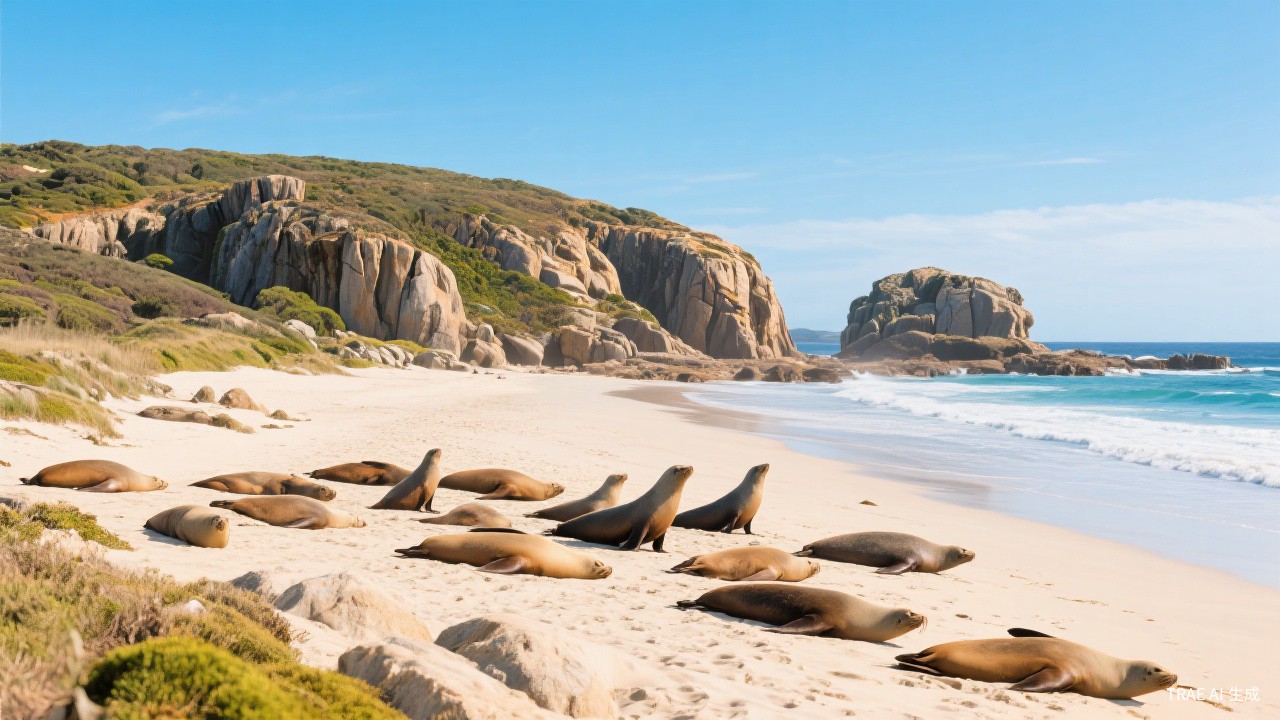
The only place in Australia where you can walk on a beach with a colony of wild Australian sea lions. Guided tours (45 minutes) take visitors onto the beach where sea lions rest, nurse their pups, and surf in the waves. The colony contains around 600 sea lions. The boardwalk above the beach offers views without a guide.
Admission: Boardwalk AUD 16; guided beach tour AUD 38 | Open: Daily 9 AM-5 PM (beach tours at set times)
Kangaroo Island Wildlife Park
A privately run wildlife park near Parndana where visitors can hand-feed kangaroos, hold koalas, and see Tasmanian devils, echidnas, and reptiles. The park focuses on native wildlife rescue and rehabilitation. The koala holding experience (AUD 30) allows a supervised photo with a koala.
Cost: AUD 28 adults; koala hold AUD 30 | Open: Daily 9 AM-5 PM
Remarkable Rocks
Perched on the granite dome of the Kanawinka escarpment, these massive boulders have been sculpted by 500 million years of wind, rain, and salt spray into shapes that resemble abstract sculptures. The rocks glow orange and gold at sunset. The viewing platform is wheelchair-accessible. The surrounding heathland contains native grass trees and bottlebrush.
Entry: Included in Flinders Chase entry | Times: Daily 24 hours
Hanson Bay Wildlife Sanctuary
A private conservation property on the island's south coast offering guided nocturnal walks to spot kangaroos, tammar wallabies, brush-tailed possums, and, if you are lucky, the endangered glossy black cockatoo. The sanctuary also has a koala boardwalk through eucalyptus forest where koalas are easily spotted in the trees.
Admission: Koala walk AUD 12; nocturnal tour AUD 35 | Times: Koala walk daily 9 AM-5 PM; nocturnal tours 8:30 PM
Food and Drink
Kangaroo Island Ligurian honey — Clifford's Honey Farm, Elsegood Road. AUD 8-15 per jar.
Fresh King George whiting and chips — The Oyster Farm Shop, American River. AUD 18-28.
Sheep milk cheese and yogurt — Island Pure Sheep Dairy, Cygnet River. AUD 8-20.
Kangaroo Island wine (Sauvignon Blanc, Shiraz) — The Islander Estate Vineyards, Cygnet River. AUD 25-45 per bottle.
Practical Tips
Book the ferry and accommodation well ahead in summer—the island fills up quickly.
• Go slowly at dawn and dusk—kangaroos, wallabies, and echidnas cross the roads frequently.
• Fill up with fuel at every opportunity—service stations are far apart on the island.
• The Seal Bay guided beach tour is worth the extra cost over the self-guided boardwalk.
Bring insect repellent—the island's flies and mosquitoes can be persistent in summer.
Traveler's Tip
Go to Stokes Bay on the north coast and follow the signs to the "secret beach" through a crack in the rocks. The path leads through a narrow tunnel in the cliff face and opens onto a sheltered cove with a natural rock pool. The water is calm and clear, and you will usually have the beach to yourself. Pack a picnic from the Kingscote bakery and spend the afternoon.