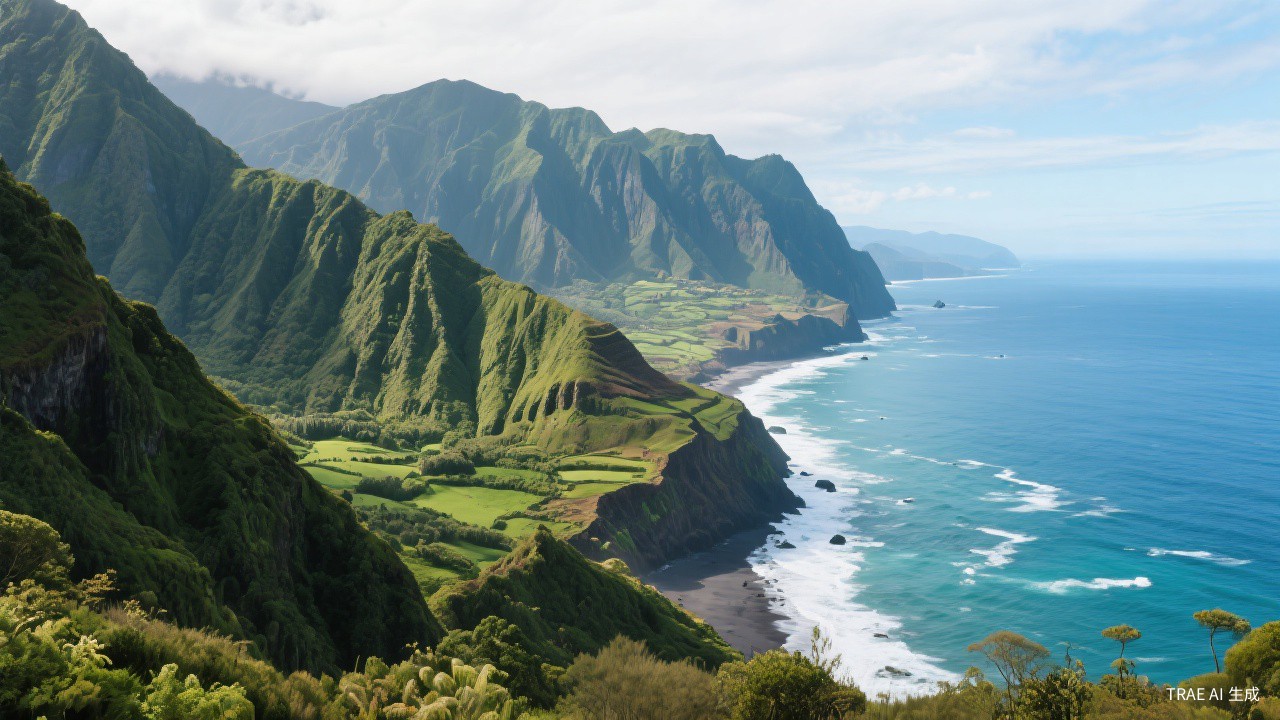
First Impressions of Madeira
Madeira is a volcanic island 900 kilometers southwest of Lisbon, rising steeply from the Atlantic Ocean. The Scenery shifts dramatically from coast to summit—banana plantations and vineyards near sea level give way to laurel forests and eventually bare peaks above 1,800 meters. The island's levada walks—irrigation channels that trace paths along cliff edges and through ancient forest—are one of Europe's most distinctive hiking experiences. The capital, Funchal, spills down a hillside in a cascade of white and pastel buildings, with the Mercado dos Lavradores (Farmers' Market) selling exotic fruits and the freshest fish in Portugal.
Madeira's culture is a blend of Portuguese tradition and island isolation. The local wine, Madeira, was once the most popular drink in America—the founding fathers toasted independence with it. The wine is still produced using the estufagem method, heating it in barrels to create its characteristic oxidized flavor. Poncha, a potent mix of aguardente (sugarcane rum), honey, and lemon, is the island's other drink. The food is hearty: espetada (beef skewers grilled over charcoal), bolo do caco (garlic bread), and black scabbardfish with banana.
Five to seven days is ideal. Spend two days exploring Funchal, one on a levada walk, one in the mountains around Pico do Arieiro or Pico Ruivo, and one on the western peninsula of Ponta de Sao Lourenco. Renting a car gives the most flexibility—the roads are well-maintained but extremely winding. The island is small (57 kilometers long) but the terrain makes distances deceptive.
Best Time to Go
April to June and September to November offer the best conditions. Temperatures start at 18 to 25 degrees year-round thanks to the Gulf Stream, but spring and autumn have less rain and fewer cruise ship visitors. The Madeira Flower Festival in April fills Funchal with elaborate flower carpets. The Atlantic Festival in June has nightly fireworks.
July and August are the warmest and driest months (23 to 28 degrees), but also the busiest. The Madeira Wine Rally in August brings classic car enthusiasts. Winter (December to March) is mild (16 to 20 degrees) but rainy—the levada walks can be slippery. January brings the Madeira Carnival, one of Portugal's largest.
Getting There and Around
Madeira Airport (FNC), also known as Cristiano Ronaldo International Airport, is 20 kilometers east of Funchal. The approach is famously dramatic—the runway sits between the ocean and the mountains. The airport bus (Rodoeste line 113) connects to Funchal for €5. Taxis cost about €25 to €30. Direct flights operate from Lisbon (90 minutes), London, Frankfurt, and several other European cities.
Funchal has a public bus network (Horarios do Funchal) with single tickets at €1.95. A day pass is €3.50. The buses serve the main tourist areas but run infrequently to remote trailheads. Renting a car costs €25 to €40 per day and is the best way to reach levada trailheads. The roads are narrow and winding—automatic transmission is recommended.
Where to Stay
Funchal's Old Town (Zona Velha) is the most atmospheric base. Hotels start at €60 to €200 per night. The area is pedestrian-friendly, with painted doors on Rua de Santa Maria and dozens of restaurants. Stay near the marina for easy access to boat tours.
The Lido area, west of Funchal center, has the best hotel pools and sea access. Hotels start at €80 to €300 per night. The area is modern and less characterful but very convenient. The Formosa promenade connects Lido to the center in a 20-minute walk.
For a quieter base, consider Canico or Machico on the eastern side of the island. Hotels start at €50 to €150 per night. Machico has a sandy beach (rare on Madeira) and is close to the airport. Ponta do Sol, on the south coast, claims the most sunshine hours on the island and has boutique hotels from €70 to €180 per night.
Must-See Attractions
Levada do Caldeirao Verde
One of Madeira's most spectacular levada walks, following an irrigation channel through the Laurisilva forest—a UNESCO World Heritage Site of ancient laurel trees. The path runs along cliff faces and through tunnels (bring a flashlight). The destination is the Caldeirao Verde, a waterfall cascading into an emerald pool. The round trip takes about five hours from the Queimadas park.
Admission: Free | Hours: Always open; best started before 9 AM
Pico Ruivo
Madeira's highest peak at 1,862 meters. The hike from Pico do Arieiro takes about three hours round trip and crosses three peaks with views over the entire island. On clear days, you can see the neighboring island of Porto Santo. The path is well-maintained but exposed—check weather conditions before setting out. A shorter access road from Achada do Teixeira reduces the walk to one hour.
Entry: Free | Hours: Always open; check weather before hiking
Mercado dos Lavradores (Farmers' Market)
Funchal's covered market has two floors: the lower level sells tropical fruits like passion fruit, guava, and custard apples, while the upper level is a fish market where vendors sell espada (black scabbardfish) and tuna. The building dates to 1940 and has decorative azulejo tile panels. Go early in the morning for the most activity.
Tickets: Free to browse | Open: 7 AM to 8 PM Monday to Saturday, closed Sunday afternoons
Monte Palace Tropical Garden
A 70,000-square-meter botanical garden on the slopes above Funchal, containing plants from every continent. The garden features Japanese-style ponds with koi, tile panels depicting Portuguese history, and views over Funchal and the ocean. The Monte Toboggan ride—wicker sleds guided by two men in straw hats—descends from Monte to Livramento and has been operating since the 19th century.
Tickets: €12.50 | Open: 9:30 AM to 6 PM daily
Ponta de Sao Lourenco
The easternmost point of Madeira is a dramatic peninsula of layered volcanic rock, colored in reds, yellows, and blacks. The coastal walk takes about two hours each way and offers views of sea stacks, natural arches, and the neighboring Desertas Islands. The Scenery is arid and otherworldly—completely different from the lush interior. Bring water and sun protection.
Cost: Free | Open: Always open
Food and Drink
Espetada — Beef cubes marinated in garlic and bay leaf, grilled on a laurel skewer over charcoal and hung from a metal stand at the table. Every traditional restaurant on Madeira serves it. Try it at O Parral in Funchal, where it comes with bolo do caco and fried corn.
Black Scabbardfish with Banana — Espada preta, a deep-sea fish with an eel-like appearance, is filleted and served with a fried banana and passion fruit sauce. It looks unusual but tastes mild and pleasant. The combination of fish and banana is uniquely Madeiran. Try it at Restaurante Do Forte in Ponta do Sol.
Bolo do Caco — A round, flat bread cooked on a clay slab over charcoal, split open and spread with garlic butter. It is served as an appetizer at most restaurants and sold at roadside stalls. The best versions are crispy on the outside and soft inside. A loaf costs about €3.
Madeira Wine — A fortified wine ranging from dry (Sercial) to sweet (Malvasia), aged in oak barrels using heat. The Blandy's Wine Lodge in Funchal offers tours and tastings of wines aged for 10 to 100 years. A tasting of five wines costs about €15. The 10-year-old Sercial is a good introduction.
Practical Tips
• Levada walks can be narrow and exposed. Wear proper hiking shoes and carry water.
• The weather changes rapidly in the mountains. Check forecasts and carry a rain jacket.
• Madeira is hilly. If you have mobility issues, stay in Funchal center and use taxis.
• Car rental is cheap and gives the most flexibility. Book a small automatic car.
• The Madeira Card (€19.50 for 3 days) includes bus transport, cable car, and museum entries.
Traveler's Tip
Take the cable car from Funchal to Monte, visit the Tropical Garden, then ride the Monte Toboggan down. The wicker sleds slide on greased runners for two kilometers while two carreiros (drivers) steer with their feet. It costs €15 for two people and stands out as fun 10-minute rides in Europe.