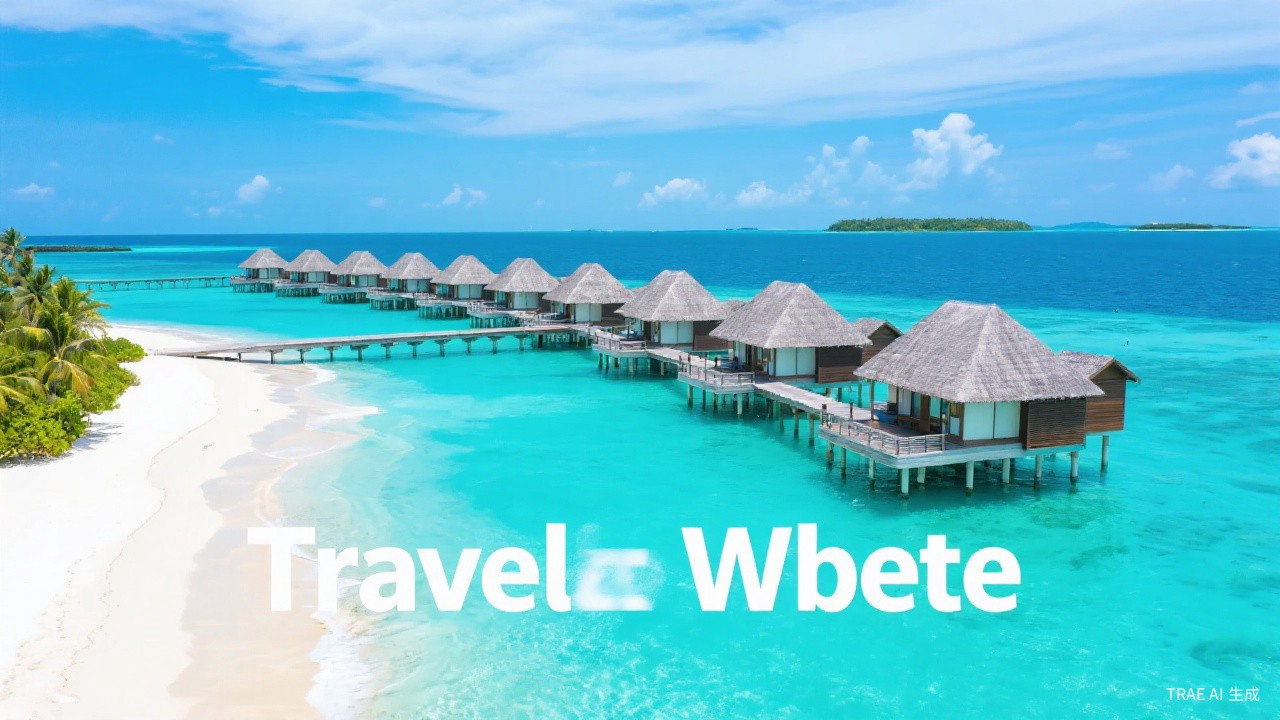
The Maldives exists in most people's minds as a screensaver come to life—crystal-clear blue-green water, pristine white sand beaches, and overwater bungalows stretching into the horizon. This archipelago of 1,192 coral islands delivers on that promise, but offers much more than postcard views. Beneath the surface lies one of the world's richest marine ecosystems, with coral reefs teeming with manta rays, whale sharks, and thousands of tropical fish species.
What defines the Maldives unique is its geography. The country spreads across 90,000 square kilometers of Indian Ocean, yet 99% of it is water. Only about 200 islands are inhabited, and roughly 100 are resort islands. Each resort occupies its own private island, creating an exclusive experience where your biggest decision is beach or pool, snorkeling or diving, spa treatment or sunset cruise.
Beyond the luxury resorts, the Maldives has a local culture worth discovering. Since 2009, tourists can stay on inhabited islands, offering a glimpse into Maldivian life—fishing villages, local mosques, and traditional cuisine. This dual experience of ultra-luxury and authentic culture makes the Maldives more than just a honeymoon destination, though it certainly excels at romance.
Dry Season Diving
The Maldives has two distinct seasons determined by the monsoon. The dry season (November to April) brings clear skies, calm seas, and excellent visibility for diving and snorkeling. This is peak season with the highest prices. December to March sees the best weather but also the most tourists.
The wet season (May to October) brings more rain, but it typically comes in short, intense bursts rather than all-day downpours. May and November are shoulder months with good deals and decent weather. The wet season also brings plankton blooms that attract manta rays and whale sharks, making it excellent for marine life encounters.
Water temperatures remain consistent year-round (27-30°C), making swimming and diving comfortable anytime. The Maldives is Muslim, so avoid Ramadan if you want to experience local culture fully (restaurants may be closed during daylight hours on local islands). The Islamic calendar shifts each year.
Seaplanes & Speedboats
Velana International Airport (MLE) is on Hulhule Island near the capital Malé. Most international flights arrive here. From the airport, transfers to resorts happen by speedboat or seaplane. Speedboats take 30 minutes to 2.5 hours depending on distance, while seaplanes reach even remote atolls in 30-45 minutes.
Seaplane transfers are expensive ($300-600 round trip) and only operate during daylight hours (6 AM-4 PM). If your flight arrives late, you may need to overnight near the airport. Speedboats run 24/7 but can be rough in bad weather. Most resorts arrange transfers automatically when you book.
For visiting local islands, public ferries and speedboats connect inhabited islands within atolls. The public ferry system is affordable but slow and infrequent. Speedboat charters cost $100-300 depending on distance. Within resorts, everything is walkable—most islands take 10-15 minutes to circle on foot.
Resort Islands vs Local Islands
Luxury Resorts occupy private islands and start at $500-10,000+ per night. Overwater villas with glass floors and private pools are the signature experience. Top resorts include Soneva Fushi, One&Only Reethi Rah, and Conrad Maldives Rangali Island (with an underwater restaurant). All-inclusive packages help manage costs at the higher end.
Mid-Range Options have emerged on local islands since 2009. Maafushi, Thulusdhoo, and Ukulhas have guesthouses from $50-150/night. These offer a local experience with access to nearby beaches and excursions. You'll need to dress modestly on local islands (cover shoulders and knees), and alcohol is prohibited outside resorts.
Budget Options include hostels on local islands ($20-40/night) and camping on uninhabited islands (through tour operators). The cheapest way to experience the Maldives is staying on a local island and taking day trips to nearby sandbanks and snorkeling spots. Book accommodations well in advance for peak season (December-March).
Snorkeling & Marine Life
Snorkeling and Diving
The Maldives offers some of the world's best underwater experiences. Coral reefs surround every island, accessible directly from the beach at many resorts. Top sites include Banana Reef (North Malé Atoll), Manta Point (where manta rays gather), and Hanifaru Bay (UNESCO biosphere reserve with whale sharks). Water visibility reaches 30+ meters in dry season.
Tickets: Free-150 per dive | Times: Year-round
Underwater Restaurant
Several resorts offer underwater dining experiences. Ithaa at Conrad Maldives sits 5 meters below the surface with 180-degree views of coral gardens. Lunch costs $200+, dinner $300+. The Hurawalhi Island Resort underwater restaurant is the world's largest at 5.8 meters below sea level. Book well in advance.
Entry: $200-400 | Open: Lunch and dinner
Sandbank Picnic
Many resorts and guesthouses offer excursions to uninhabited sandbanks—tiny strips of white sand surrounded by blue-green water. These private picnics feel like having your own island for a few hours. Some sandbanks disappear at high tide, so timing matters. Budget around $50-200 including lunch and snorkeling gear.
Admission: $50-200 | Open: Half-day excursions
Sunset Dolphin Cruise
Spinner dolphins are common in Maldivian waters, and sunset cruises to see them are a popular activity. Pods of 50-100 dolphins often follow boats, jumping and spinning. Most resorts offer these cruises for $50-100. The golden hour light on the water makes for beautiful photos.
Admission: $50-100 | Times: 5-7 PM
Malé City
The capital offers a glimpse of Maldivian life beyond the resorts. Visit the 17th-century Old Friday Mosque (built from coral), the Fish Market, and the National Museum. The city is densely packed onto a small island—explore on foot in a few hours. Note dress codes: cover shoulders and knees.
Admission: Free | Open: Daytime
Local Island Visit
Take a day trip to an inhabited island to see Maldivian culture. Thulusdhoo is famous for surf breaks and traditional boat building. Maafushi has guesthouses and bikini beaches (designated areas where Western swimwear is acceptable). Hire a local guide to understand the community.
Tickets: $30-80 | Times: Day trips
Maldivian Cuisine
Mas Huni — This traditional Maldivian breakfast combines shredded smoked tuna, grated coconut, onion, and chili. It's typically served with roshi (flatbread) and sweet tea. Try it at local cafés on inhabited islands for $3-5. It's fresh, healthy, and authentically Maldivian.
Garudhiya — A clear fish soup made from tuna, lime, chili, and onion. It's a Maldivian staple, eaten daily by locals. The broth is light and flavorful, usually served with rice. Find it at local restaurants for $4-8. Add chili and lime to taste.
Curries — Maldivian curries feature fish (usually tuna) or chicken in a rich coconut milk base with curry leaves and spices. The heat level varies—ask if you can't handle spice. Try at local restaurants on inhabited islands for $5-10.
Fried Fish — Fresh tuna fried with chili and garlic is a simple but delicious Maldivian dish. It's often served with rice and a side of garudhiya. The quality of the fish makes it exceptional—Maldivian waters produce some of the world's best tuna.
Resort Dining — At resorts, you'll find international cuisine alongside Maldivian dishes. Most offer half-board or all-inclusive packages. A la carte dinners cost $50-150 per person. Some resorts have specialty restaurants (Japanese, Italian, etc.) requiring reservations.
Budget vs Luxury
Book seaplane transfers during daylight hours. Night arrivals require an overnight stay near the airport.
• Respect local customs on inhabited islands. Cover shoulders and knees, and avoid public displays of affection.
• Alcohol is prohibited outside resorts. Don't try to bring it in—customs will confiscate it.
Bring reef-safe sunscreen. The sun is intense, and regular sunscreen damages coral.
• Learn to snorkel before arriving. The best experiences are underwater, and being comfortable with a mask makes all the difference.
Traveler's Tip
Bring an underwater camera. The Maldives offers some of the world's best underwater photography opportunities.