What Makes Manila Worth Visiting
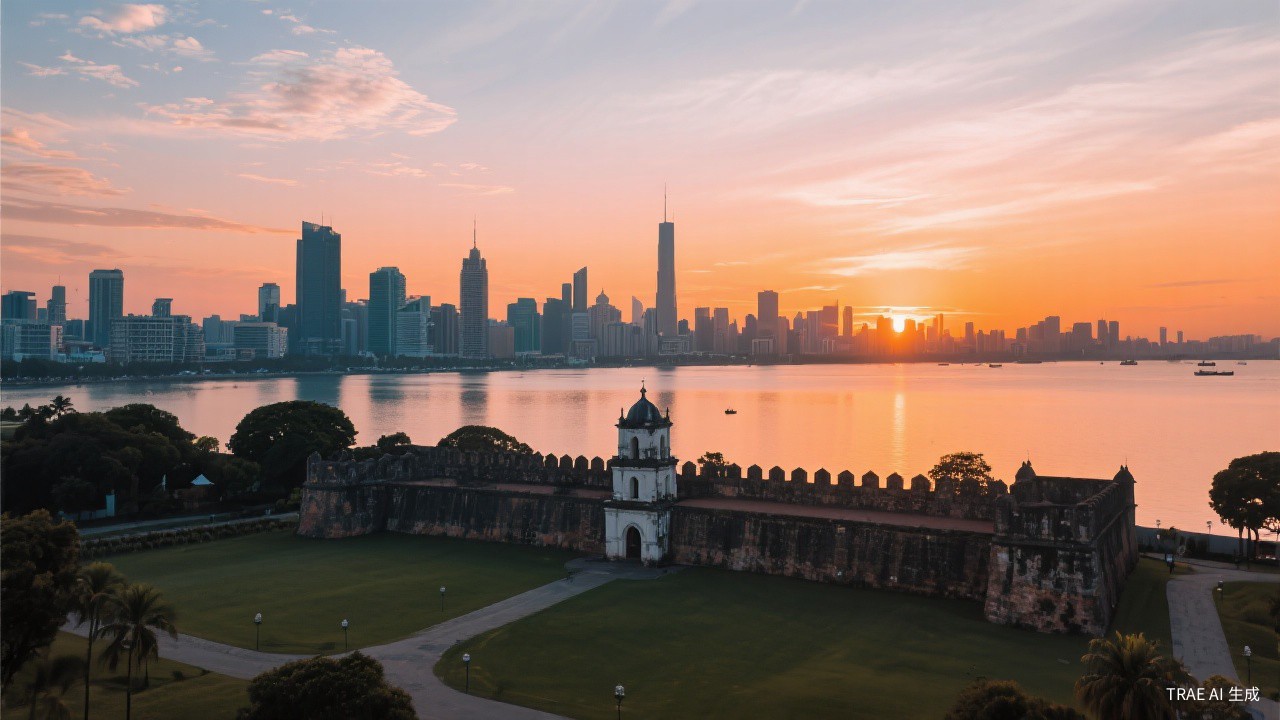
Manila is a city of layers, where Spanish-era churches, American-era government buildings, and modern skyscrapers coexist in a chaotic but compelling urban Scenery. Intramuros, the walled city built by the Spanish in 1571, contains Fort Santiago, San Agustin Church (the oldest stone church in the Philippines), and cobblestone streets shaded by acacia trees. The nearby Rizal Park honors the national hero Jose Rizal, whose execution in 1896 sparked the Philippine Revolution. Across the bay, the Mall of Asia is one of the world's largest shopping malls, with an IMAX theater and a seaside promenade.
Manila's energy is raw and unfiltered. Jeepneys—colorfully decorated jeeps leftover from World War II—are the city's iconic transport, careening through traffic with passengers hanging off the back. Local food is everywhere: isaw (grilled chicken intestines), balut (fertilized duck egg), and fish balls sold from pushcarts. The city's nightlife in Poblacion, Makati, draws a young, international crowd to rooftop bars and live music venues. Binondo, the world's oldest Chinatown (founded 1594), is a food lover's paradise with restaurants serving dumplings, noodles, and roast duck that rival anything in Hong Kong.
Two to three days is enough for most visitors. Day one: Intramuros and Rizal Park. Day two: Binondo for food, then Makati for shopping and nightlife. Day three: the National Museum complex and the Mall of Asia bay area. If you have more time, a day trip to Corregidor Island, where American and Filipino forces made their last stand against the Japanese, is a powerful historical experience.
Best Time to Go
January to April is the dry season, with temperatures between 25 and 35 degrees Celsius. The Sinulog Festival in Cebu (January) and the Ati-Atihan in Kalibo (January) are worth planning around. December brings Christmas celebrations that start in September and fill the city with lights and music.
May to October is the rainy season, with typhoons possible from July to October. The rain can be heavy but usually passes in a few hours. Hotel prices are lower during this period. November and December are transitional months with occasional rain but generally pleasant conditions.
Getting There and Around
Ninoy Aquino International Airport (MNL) is the main gateway, with direct flights from cities across Asia, the Middle East, and North America. Terminal 3 handles most international flights. A taxi from the airport to Makati costs PHP 200 to 400 (about USD 4 to 8) and takes 30 to 60 minutes depending on traffic. The airport is notorious for congestion—arrive 3 hours before international departures. Clark International Airport (CRK), 80 kilometers north, handles some budget carriers.
Jeepneys cost PHP 10 to 15 per ride and follow fixed routes—ask locals which one goes to your destination. The LRT and MRT elevated rail lines cover some corridors but are limited. Grab is the most practical option for point-to-point travel, with car rides starting at PHP 80. Taxis are cheap but often refuse short trips or demand higher fares. The Pasig River Ferry offers a scenic route between Intramuros and Makati.
Where to Stay
Makati is the most convenient base for business travelers and tourists, with hotels like the Shangri-La (USD 150 to 250 per night) and the Ascott (USD 100 to 180). The area has the best restaurants, shopping, and nightlife. Poblacion, Makati's entertainment district, has boutique hostels like the Z Hostel (USD 15 to 25 per dorm bed) and budget hotels.
Intramuros has the Bayleaf Hotel (USD 80 to 150), which puts you inside the walled city. Bonifacio Global City (BGC) is a modern planned district with hotels like the Shangri-La at the Fort (USD 180 to 300) and excellent restaurants. Ermita and Malate, near Rizal Park, have budget guesthouses from USD 15 to 30 per night, though the area is less polished.
Must-See Attractions
Intramuros (Walled City)
The 64-hectare walled city built by the Spanish in 1571 contains the oldest buildings in Manila. Fort Santiago, where Jose Rizal was imprisoned before his execution, has dungeons, a museum, and pleasant gardens. San Agustin Church, completed in 1607, has survived earthquakes, wars, and fires. The walls themselves can be walked or explored by bamboo bicycle (PHP 200 per hour).
Cost: Fort Santiago PHP 75; San Agustin PHP 100 | Hours: Daily 8 AM-6 PM
Binondo (Chinatown)
The world's oldest Chinatown, established in 1594, is a maze of narrow streets packed with restaurants, herbal shops, and bakeries. Ongpin Street is the main thoroughfare, lined with roast duck shops, dim sum houses, and gold merchants. The Minor Basilica of San Lorenzo Ruiz, built in 1596, sits at the center of the district. A food crawl here is one of Manila's best experiences.
Admission: Free | Hours: Shops 8 AM-8 PM; some restaurants open later
National Museum of the Philippines
The National Museum complex includes the Museum of the Filipino People (anthropology and archaeology), the National Art Gallery (fine arts in the old Legislative Building), and the Museum of Natural History (housed in a modern domed building). The art gallery holds Juan Luna's "Spoliarium," the Philippines' most famous painting.
Tickets: Free | Hours: Tue-Sun 10 AM-5 PM (closed Mon)
Rizal Park (Luneta)
A 58-hectare park along Manila Bay where Jose Rizal was executed by firing squad in 1896. The Rizal Monument guards the park's center, and the site of the execution is marked by a bronze sculpture. The park contains Chinese and Japanese gardens, a planetarium, and the Quirino Grandstand. The sunset over Manila Bay from the park's seawall is a local tradition.
Admission: Free | Times: Daily 5 AM-10 PM
Mall of Asia (MOA)
One of the world's largest shopping malls, with over 600 stores, an Olympic-size ice skating rink, an IMAX theater, and the MOA Eye Ferris wheel. The seaside promenade behind the mall faces Manila Bay and is the best place in the city to watch the sunset. The mall's sheer scale is overwhelming—allow at least half a day.
Entry: Free entry; IMAX PHP 350-500 | Open: Daily 10 AM-10 PM
Food and Drink
Dim sum and roast duck — Dong Bei, Binondo Chinatown. PHP 150-300.
Lechon (roast whole pig) and crispy pata — Ibay's Barbecue, Makati. PHP 200-400.
Isaw (grilled chicken intestines) and fish balls — Street vendors, University Belt, Manila. PHP 10-30.
Halo-halo (shaved ice dessert) — Razon's of Guagua, multiple branches. PHP 80-120.
Practical Tips
• Use Grab for transport—it is cheaper and more reliable than street taxis.
• Traffic in Manila can be extreme; allow double the normal travel time, especially during rush hours.
• Dress modestly when visiting churches—cover shoulders and knees.
• The National Museum complex is free—visit all three buildings if you have time.
• Carry small bills (PHP 20-100) for jeepneys and street food—vendors rarely have change.
Traveler's Tip
Take a bamboo bicycle tour of Intramuros at sunset (PHP 200 per hour, from Bambike at Plaza Roma). The old stone streets are nearly empty as the day ends, the light turns golden on the Spanish-era churches, and the walls offer views of Manila Bay. The tour guides are local youth from the community, and the stories they tell bring the old city to life.