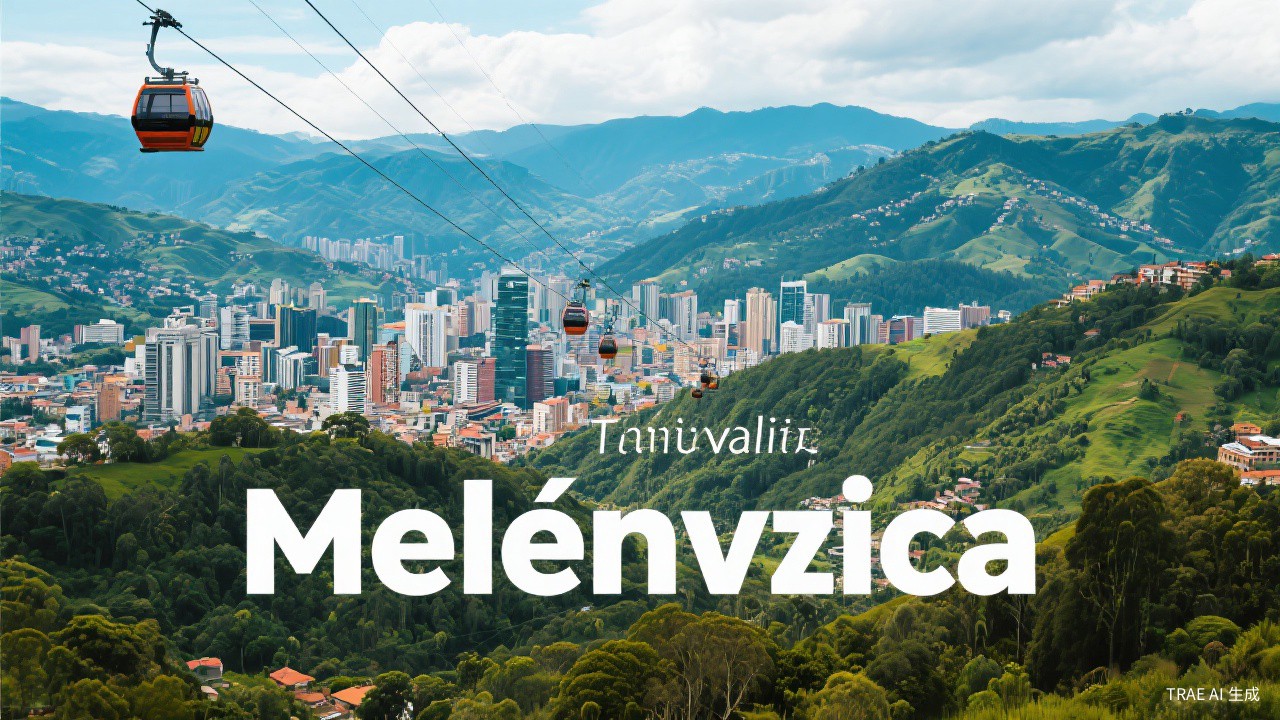
Discovering Medellin
Medellin sits in a valley of the Andes at 1,500 meters above sea level, and its climate earned it the nickname "City of Eternal Spring." Temperatures hover around 22-25°C year-round, which means you can leave your jacket at home regardless of the season. The city has undergone a remarkable transformation over the past two decades, shifting from one of the most dangerous places on Earth to one of Latin America's most innovative urban centers.
The Comuna 13 neighborhood is the most visible symbol of this change. Once a no-go zone controlled by armed groups, the hillside district is now covered in colorful street art and connected by outdoor escalators that carry residents up the steep slopes. Guided walking tours led by former residents explain the history behind the murals and how the community rebuilt itself. The tours are honest about the past without glossing over the difficulties that remain.
Medellin is also Colombia's fashion and design capital. The El Poblado neighborhood is filled with boutique hotels, craft cocktail bars, and restaurants that would not be out of place in New York or Barcelona. The city's metro system—clean, efficient, and surrounded by public art—is the pride of the city and a practical way to get around. Parque Arvi, reached by a cable car that rises above the city into cloud forest, offers hiking trails and a market selling local produce on weekends.
Best Time to Go
Medellin's climate is consistent year-round due to its elevation and proximity to the equator. Daytime temperatures are 22-25°C and nighttime temperatures drop to 14-16°C. There is no bad time to visit for weather alone.
The dry seasons are December to March and June to September. These are the most popular times to visit, with less rain and more outdoor events. The Flower Festival (Feria de las Flores) in early August is the city's biggest celebration, featuring massive flower arrangements, parades, and concerts.
The rainy seasons are April to May and October to November. Rain usually comes in afternoon downpours rather than all-day drizzle. Hotel prices are lower, and the city is less crowded. The surrounding mountains turn greener during these months, making for better views from the cable cars.
Getting There and Around
Jose Maria Cordova International Airport (MDE) is located in Rionegro, 45 minutes southeast of Medellin by car. Direct flights connect Medellin to Miami, New York, Fort Lauderdale, Madrid, and major Latin American cities. From Miami, the flight takes about 3.5 hours.
Taxis from the airport to El Poblado or Laureles cost COP 70,000-90,000 ($18-23). Official white taxis are available outside arrivals. Colectivo vans (shared shuttles) cost COP 10,000-15,000 per person but take longer.
Medellin's metro system is the most efficient way to get around. A single ride costs COP 2,800 ($0.70). The metro connects El Poblado, the city center, and the northern neighborhoods. Two cable car lines (Metrocable) extend into the hillside communities and are worth riding for the views alone. Uber and local ride-hailing apps like Tappsi are widely used and cheaper than street taxis.
Where to Stay
El Poblado is the most popular area for visitors, with the highest concentration of hotels, restaurants, and nightlife. Parque Lleras is the heart of the neighborhood's social scene. Mid-range hotels cost $40-80 per night; boutique hotels and upscale options run $80-200.
Laureles is a more local, residential neighborhood with tree-lined streets, traditional restaurants, and a relaxed atmosphere. Hotels here cost $25-60 per night. Laureles is less touristy than El Poblado and offers a more authentic experience.
Envigado, just south of El Poblado, is a quiet suburb with a growing food scene and lower prices. It is reachable by metro in 15 minutes. For budget travelers, hostels in El Poblado and Laureles charge $8-20 per bed.
Must-See Attractions
Comuna 13 (San Javier)
This hillside neighborhood was once the most dangerous area in Medellin. Today, it is an open-air gallery of street art telling stories of resilience and transformation. Outdoor escalators installed in 2011 connect the lower and upper sections of the neighborhood. Guided tours (COP 20,000-40,000, or free with tips) are led by local residents who share personal stories of the area’s history. The tours last 2-3 hours and involve walking up steep streets.
Tickets: Free to explore (tours COP 20,000-40,000) | Open: Tours depart 9 AM-2 PM daily
Museo de Antioquia and Botero Plaza
The Museum of Antioquia houses Colombia’s finest art collection, including 123 works donated by Fernando Botero, known for his oversized figures. The plaza outside the museum features 23 bronze Botero sculptures, all available for viewing free of charge. The museum also has pre-Columbian, colonial, and contemporary art galleries. Allow 2 hours.
Tickets: Museum COP 18,000 ($4.50), plaza free | Hours: Museum 10 AM-5:30 PM (closed Mondays)
Parque Arvi
This nature reserve sits above the city in the mountains east of Medellin. The Metrocable Line L connects the Santo Domingo station to Parque Arvi in a 20-minute ride that rises above the city into cloud forest. The park has hiking trails through forest and farmland, a butterfly garden, and a weekend market selling local cheese, arepas, and fruits.
Tickets: Metrocable COP 4,400 ($1.10) + park entry COP 4,000 | Open: Metrocable 6 AM-9 PM, park 8 AM-6 PM
Guatape Day Trip
The town of Guatape, 90 minutes from Medellin, is famous for its colorful buildings decorated with bas-relief panels (zocalos) depicting daily life, animals, and flowers. The Piedra del Penol, a 220-meter granite monolith, has 740 steps to the top with panoramic views of a lake dotted with islands. Boat tours of the lake cost COP 40,000-60,000.
Entry: Piedra del Penol COP 20,000 ($5), boat tours COP 40,000-60,000 | Times: Full day trip, depart by 8 AM
Jardin Botanico
Medellin’s botanical garden covers 14 hectares in the city center and contains over 4,500 plant species. The Orchid Pavilion displays 1,000 types of orchids. The garden is free to enter and is a peaceful escape from the city noise. A butterfly house, lake, and walking trails wind through the grounds.
Entry: Free | Hours: 6 AM-6 PM daily
Food and Drink
Bandeja Paisa — The signature dish of the Antioquia region: a large plate with beans, rice, ground beef, chicharron, chorizo, a fried egg, avocado, plantain, and arepa. Try it at Mondongos in El Poblado or Hacienda Junin. Budget COP 18,000-30,000 ($5-8).
Arepa con Queso — A thick corn cake, grilled until crispy on the outside and soft inside, filled with fresh cheese. Arepa stands are everywhere in Medellin. The best ones are sold from street carts for COP 2,000-4,000 ($0.50-1).
Sancocho Antioqueno — A hearty soup made with chicken, plantains, yucca, corn, and cilantro, served with rice and avocado on the side. It is a traditional Sunday lunch dish. Budget COP 15,000-22,000 ($4-6).
Fresh Fruit Juices — Colombia has an incredible variety of tropical fruits, and Medellin has juice bars on nearly every block. Try lulo, guanabana, maracuya, mora, and guayaba. A large freshly blended juice costs COP 4,000-7,000 ($1-2).
Practical Tips
• Use the metro. It is clean, safe, efficient, and costs COP 2,800 per ride.
• Take a Comuna 13 walking tour on your first or second day.
• Stay in El Poblado or Laureles for safety and convenience.
• Learn basic Spanish. English is not widely spoken, even in tourist areas.
Avoid street taxis after dark. Use Uber or Tappsi instead.
Traveler's Tip
Take the Metrocable to Santo Domingo station on a clear morning. The 15-minute ride above the city gives you a sense of Medellin's geography—how the valley holds the city and the mountains press in on all sides—that you cannot get any other way.