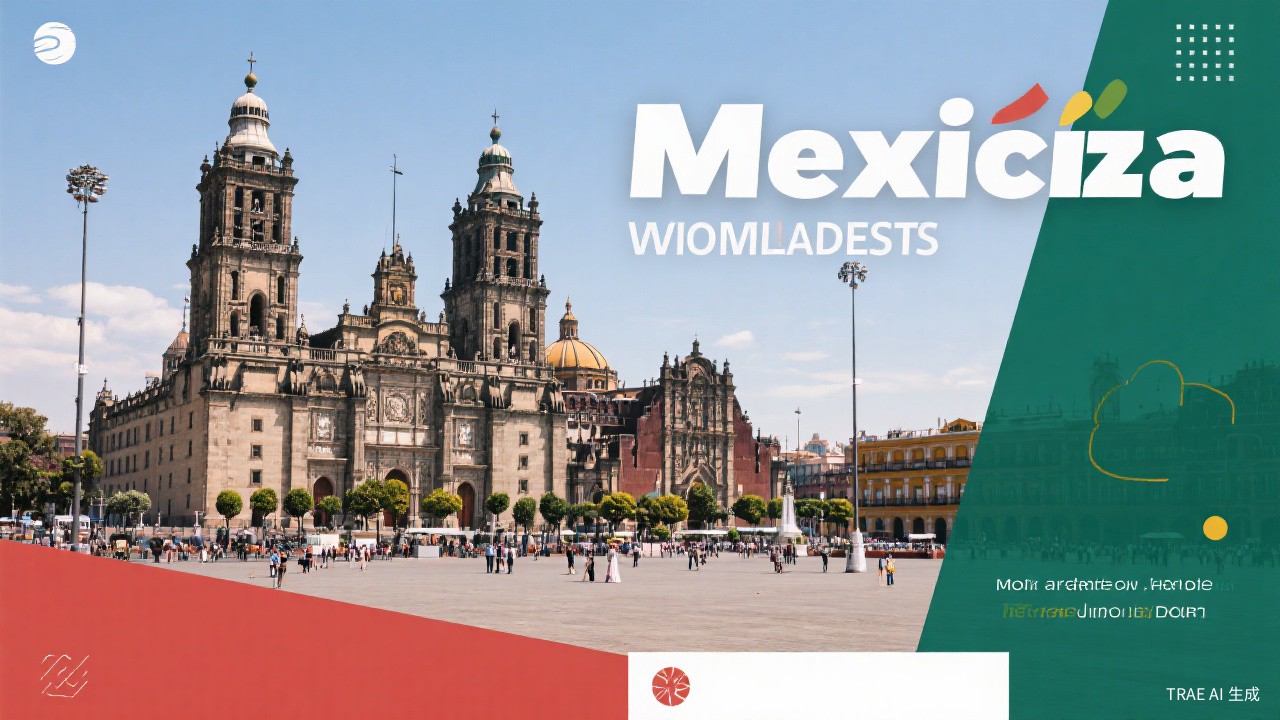
Discovering Mexico City
Mexico City is one of the largest cities in the world, with a population of over 21 million in its metropolitan area. It is also one of the oldest—founded in 1325 as Tenochtitlan, the capital of the Aztec Empire, on an island in Lake Texcoco. The ruins of the Templo Mayor, the main temple of the Aztec capital, sit in the heart of the downtown area next to the Metropolitan Cathedral, which was built from the stones of the razed temple.
The city's cultural depth is staggering. The National Museum of Anthropology in Chapultepec Park houses the most important collection of pre-Columbian artifacts in the world, including the Aztec Sun Stone and Maya tomb treasures. The Frida Kahlo Museum (Casa Azul) in the Coyoacan neighborhood preserves the home where the artist lived and worked, with her personal belongings, paintings, and the garden she loved.
Beyond museums, Mexico City is a food capital. The city has more restaurants than any other in Latin America, and its street food culture is unmatched. Tacos al pastor from a trompo (vertical spit), tlacoyos from a market stall, and churros from a cart in the historic center are meals that cost less than $2 and rival anything served in a restaurant. The neighborhoods of Roma, Condesa, and Narvarte are the current centers of the city's restaurant and bar scene.
Best Time to Go
The dry season, from November to April, is the best time to visit. Temperatures start at 15-25°C with low humidity and minimal rain. March and April can be hot (up to 30°C) before the rains return. This is peak season, with higher hotel prices.
The rainy season runs from May to October. Rain typically falls in the afternoon or evening as heavy downpours that last 1-2 hours, then the sky clears. Morning weather is usually sunny. Temperatures are 16-24°C. Hotel prices are lower, and the city is greener.
September brings Independence Day celebrations (September 16), with the president's grito (cry of independence) from the National Palace. The Day of the Dead (November 1-2) is one of Mexico's most important holidays, with altars, parades, and events throughout the city. Book early for both periods.
Getting There and Around
Benito Juarez International Airport (MEX) is in the city center, with direct flights from dozens of US cities, plus connections from Canada, Europe, and Latin America. From the US, flights take 3-5 hours.
The Mexico City Metro is one of the largest and cheapest subway systems in the world. A single ride costs MXN 5 ($0.25). It connects most tourist areas, though it can be extremely crowded during rush hours. The Metrobus (bus rapid transit) costs MXN 6 per ride and covers routes not served by the metro.
Uber and DiDi (a Chinese ride-hailing app) are widely used and cost a fraction of taxi prices. A typical ride within the city costs MXN 40-80 ($2-4). Avoid street taxis, especially at night. For day trips to Teotihuacan, buses depart from the Terminal Norte every 15 minutes (MXN 52, 1-hour ride).
Where to Stay
Roma Norte and Condesa are adjacent neighborhoods with tree-lined streets, Art Deco architecture, and the city's best restaurant and bar scene. Hotels start at $40-150 per night. These are the most popular areas for international visitors and have a safe, walkable feel.
Centro Historico puts you near the Zocalo, the Metropolitan Cathedral, and the Templo Mayor. Hotels here are cheaper ($25-80 per night) and the area is rich in history, but it is busier and grittier than Roma/Condesa.
Coyoacan is a charming neighborhood with cobblestone streets, the Frida Kahlo Museum, and a relaxed atmosphere. Hotels and B&Bs cost $30-100 per night. Polanco is the upscale district with luxury hotels ($100-400) and high-end shopping.
Must-See Attractions
Zocalo and Templo Mayor
The Zocalo (Plaza de la Constitucion) is one of the largest public squares in the world. On its north side stands the Metropolitan Cathedral, the largest cathedral in Latin America, built over 250 years beginning in 1573. Adjacent to the cathedral, the Templo Mayor archaeological site contains the ruins of the Aztec main temple, discovered in 1978 when utility workers found a massive stone disk depicting the Aztec goddess Coyolxauhqui. The museum displays artifacts excavated from the site. Allow 2-3 hours for both.
Entry: Templo Mayor MXN 80 ($4), cathedral free | Open: Templo Mayor 9 AM-5 PM (closed Mondays)
National Museum of Anthropology
Located in Chapultepec Park, this museum contains the most important collection of pre-Columbian artifacts in existence. The 23 exhibit halls cover all of Mexico’s major civilizations: Olmec, Maya, Teotihuacan, Toltec, and Aztec. The Aztec Sun Stone, the jade mask of Pakal from Palenque, and the colossal Olmec heads are among the highlights. The museum is enormous—allow at least 4 hours.
Tickets: MXN 85 ($4.25) | Times: 9 AM-5 PM (closed Mondays)
Frida Kahlo Museum (Casa Azul)
The bright blue house in Coyoacan where Frida Kahlo was born, lived, and died is now one of Mexico’s most visited museums. The rooms preserve her personal belongings, including her bed, her painting materials, her traditional Tehuana dresses, and her collection of folk art. The garden with its pyramids and fountains is peaceful. Tickets sell out quickly—book online in advance.
Cost: MXN 130 ($6.50) | Times: 10 AM-5:30 PM (closed Mondays)
Teotihuacan Pyramids
Located 50 kilometers northeast of Mexico City, Teotihuacan was one of the largest cities in the ancient world, with a population estimated at 125,000 at its peak around AD 450. The Avenue of the Dead stretches 2.4 kilometers between the Pyramid of the Moon and the Ciudadela. The Pyramid of the Sun, the third-largest pyramid in the world, rises 65 meters. You can climb both the Sun and Moon pyramids. The site is best visited early in the morning to avoid heat and crowds. Buses depart from Terminal Norte every 15 minutes.
Tickets: MXN 80 ($4) | Hours: 8 AM-5 PM daily
Chapultepec Park and Castle
At 686 hectares, Chapultepec is one of the largest urban parks in the Western Hemisphere—larger than Central Park in New York. The park contains the Anthropology Museum, the Modern Art Museum, a zoo, lakes with paddle boats, and Chapultepec Castle. The castle, on a hill in the center of the park, was the residence of Mexican emperors and presidents and offers panoramic views of the city. Allow a full day.
Entry: Castle MXN 85 ($4.25), park free | Hours: Castle 9 AM-5 PM (closed Mondays)
Food and Drink
Tacos al Pastor — Pork carved from a vertical spit (trompo), served on small corn tortillas with pineapple, onion, and cilantro. The technique was brought to Mexico by Lebanese immigrants. El Huequito and El Vilsito in the Centro Historico are legendary spots. A taco costs MXN 10-15 ($0.50-0.75). Order four or five for a meal.
Tlacoyos — Thick oval corn masa cakes stuffed with beans, requesón cheese, or chicharron, cooked on a comal and topped with salsa, nopales, and crema. They are sold at market stalls and street stands throughout the city. Try them at the Mercado de Coyoacan. Budget MXN 15-25 ($0.75-1.25).
Enchiladas Suizas — Corn tortillas filled with chicken, rolled, and covered in a creamy tomatillo sauce with cream and cheese. A Mexico City specialty. Try it at Restaurante San Angel Inn in Chapultepec Park. Budget MXN 120-180 ($6-9).
Churros con Chocolate — Long, crispy doughnuts coated in sugar, served with thick hot chocolate for dipping. El Moro in the Centro Historico has been serving churros since 1935 and is the most famous churreria in the city. A churro and chocolate costs MXN 60-80 ($3-4). Open 24 hours.
Practical Tips
• Use Uber or DiDi for transportation. They are cheap, safe, and eliminate the risk of overcharging by street taxis.
• Do not drink tap water. Use bottled water even for brushing teeth. Ice in restaurants is made from purified water and is safe.
Visit museums on free days. The Anthropology Museum is free on Sundays for residents; the Frida Kahlo Museum is free on Tuesdays.
• Be aware of altitude. Mexico City sits at 2,240 meters. Take it easy on your first day and drink plenty of water.
• Carry cash (pesos). Many small restaurants, markets, and street vendors do not accept credit cards.
Traveler's Tip
Go to the Mercado de San Juan for lunch. This market near the Centro Historico has stalls selling exotic ingredients—edible insects, unusual cheeses, imported meats—alongside excellent small restaurants. The tortas at Tacos Hola are outstanding and cost less than $3.