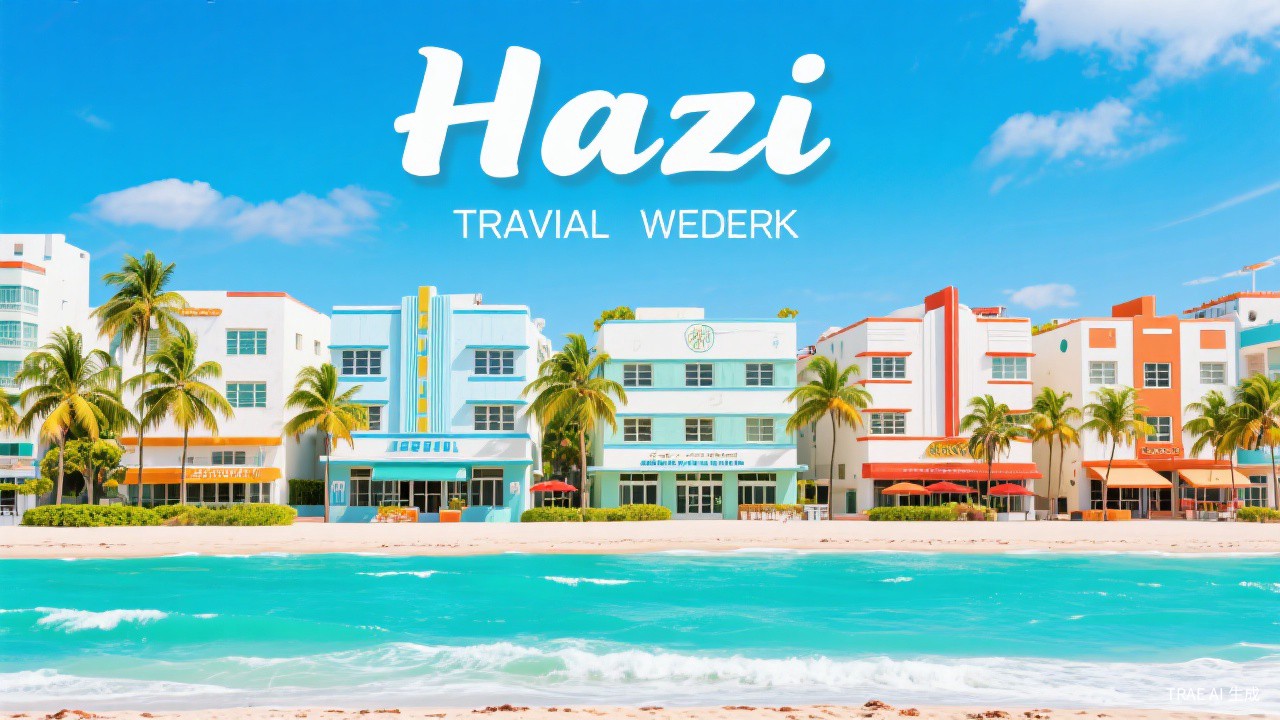
First Impressions of Miami
Miami is a city defined by water. Biscayne Bay separates the mainland from Miami Beach, a barrier island with white sand and turquoise water that feels more Caribbean than American. The city sits at the southern tip of Florida, where the climate is tropical, the culture is Latin, and the pace is faster than most places in the American South.
South Beach, at the southern end of Miami Beach, is where the city's image is most concentrated. The Art Deco Historic District along Ocean Drive contains the largest concentration of Art Deco buildings in the world—pastel-colored hotels with curved facades, neon signs, and terrazzo floors built between the 1920s and 1940s. The beach itself is wide and public, with warm water year-round.
Beyond the beach, Miami has depth. Wynwood, a neighborhood northwest of downtown, has become one of the most important street art districts in the world. Wynwood Walls, a curated outdoor museum of murals by international artists, draws visitors from around the globe. Little Havana, just west of downtown, preserves Cuban culture with cigar shops, coffee windows, and the Domino Park where older Cuban men play dominoes daily. The Everglades, 45 minutes west, offer a subtropical wilderness of mangroves, alligators, and birds that exists nowhere else in the United States.
Best Time to Go
Winter (December to April) is the best time to visit. Temperatures start at 18-26°C with low humidity and minimal rain. This is peak season, with the highest hotel prices and largest crowds. Art Basel Miami Beach, a major international art fair, takes place in early December and fills every hotel in the city.
Spring (March to May) is warm (22-30°C) and increasingly humid. Spring Break in March brings large crowds to South Beach. Hotel prices begin to drop after Easter.
Summer (June to September) is hot (28-34°C), humid, and rainy. Afternoon thunderstorms are daily but brief. This is hurricane season. Hotel prices drop 30-50%, and the city is less crowded. The water is warmest for swimming.
Getting There and Around
Miami International Airport (MIA) is 8 miles northwest of downtown, with direct flights from virtually every major city in the Americas and Europe. Fort Lauderdale-Hollywood International Airport (FLL), 30 miles north, is an alternative with budget airline options.
The Miami Metromover is a free automated train that connects downtown Miami and Brickell. The Metrorail costs $2.25 per ride and connects downtown to the airport and some southern neighborhoods. That said, public transit is limited compared to other major cities.
Renting a car is the most practical option for reaching the Everglades, Key Biscayne, and neighborhoods beyond the beach. Expect to pay $40-70 per day. Uber and Lyft are widely available. Parking in South Beach is expensive ($20-30 per day). The free trolley connects South Beach neighborhoods.
Where to Stay
South Beach is the most popular area, with the Art Deco district, the beach, and nightlife all within walking distance. Hotels start at $100-500 per night depending on proximity to the beach and season. Collins Avenue and Ocean Drive have the most famous hotels.
Mid-Beach (between South Beach and Bal Harbour) has larger resort hotels with more space and pools, at $150-400 per night. It is quieter than South Beach but still on the beach.
Downtown Miami and Brickell are on the mainland, with high-rise hotels ($100-300 per night) and easy access to museums, Little Havana, and Wynwood. Coconut Grove, south of downtown, has a more relaxed atmosphere with boutique hotels ($80-200 per night).
Must-See Attractions
Art Deco Historic District
This 30-block district along Ocean Drive, Collins Avenue, and Washington Avenue contains over 800 Art Deco buildings from the 1920s-1940s. The pastel-colored hotels with their geometric facades, neon signs, and porthole windows are the visual signature of Miami Beach. The Miami Design Preservation League offers 90-minute walking tours ($25) that explain the architecture and history. The district is best explored on foot in the early morning or at sunset.
Cost: Free to explore (walking tour $25) | Hours: Always open (tour 10:30 AM Thu-Sun)
Wynwood Walls
This outdoor street art museum in the Wynwood neighborhood features large-scale murals by artists from around the world. The walls change periodically as new artists are commissioned. The surrounding neighborhood has galleries, restaurants, bars, and coffee shops. Allow 1-2 hours for the walls and neighborhood.
Admission: $12 general, $10 students | Hours: Mon-Wed 10:30 AM-11:30 PM, Thu-Sun 10:30 AM-12 AM
Little Havana
Calle Ocho (SW 8th Street) is the main thoroughfare of Little Havana. Domino Park, at 15th Avenue, is where Cuban men gather daily to play dominoes. Cigar shops hand-roll cigars, and coffee windows (ventanitas) serve cortaditos (Cuban espresso with steamed milk) for $2. Ball & Chain, a live music venue, has been operating since 1935. Viernes Culturales (Cultural Fridays), held on the last Friday of each month, feature street performances and gallery openings.
Tickets: Free | Hours: Best during the day, Viernes Culturales 7-11 PM
Everglades National Park
The largest subtropical wilderness in the United States, covering 1.5 million acres of mangrove forests, sawgrass prairies, and cypress swamps. Alligators, manatees, roseate spoonbills, and dozens of other species are commonly seen. The Shark Valley entrance, 45 minutes west of Miami, has a 15-mile paved trail and a 65-foot observation tower. Airboat tours ($25-50) are a popular way to explore the wetlands. Anhinga Trail, at the park’s main entrance, is a boardwalk through alligator habitat.
Entry: $30 per vehicle (7-day pass) | Times: Year-round, visitor centers 9 AM-5 PM
Vizcaya Museum and Gardens
This Italian Renaissance-style villa on Biscayne Bay was built in 1916 as the winter estate of industrialist James Deering. The 34 rooms are filled with European furniture, tapestries, and decorative arts from the 15th to 19th centuries. The 10 acres of formal gardens feature fountains, sculptures, and a waterfront terrace with views of the bay.
Admission: $22 adult | Times: 9:30 AM-4:30 PM (closed Tuesdays)
Food and Drink
Cuban Sandwich — Pressed Cuban bread filled with roast pork, ham, Swiss cheese, pickles, and mustard. Versailles Restaurant in Little Havana has been serving them since 1971 and is the most famous Cuban restaurant in Miami. A sandwich costs $8-12.
Stone Crab Claws — Florida stone crab season runs from October to May. The claws are served cold with mustard sauce. Joe’s Stone Crab in Miami Beach has been the iconic spot since 1913. Claws cost $40-70 per order depending on size.
Ceviche — Fresh fish or shrimp marinated in lime juice with onions, tomatoes, and cilantro. The Latin American influence in Miami means excellent ceviche is easy to find. Try it at Cvi.che 105 in the Design District. Budget $15-22 per portion.
Arepa — A Venezuelan corn cake split and filled with meats, cheeses, and beans. The Arepa Lady in Wynwood serves over 20 varieties. An arepa costs $7-12. La Latina in Midtown is another popular spot.
Practical Tips
Visit South Beach early in the morning. By 10 AM, the beach and Ocean Drive start filling up.
• Use rideshare instead of renting a car if you plan to stay mainly on Miami Beach. Parking is expensive and scarce.
Bring mosquito repellent for the Everglades and any outdoor evening activities.
• Budget for high prices. Miami costs a fortune cities in the US.
Check the weather for hurricanes between June and November. Have a flexible itinerary and travel insurance.
Traveler's Tip
Rent a kayak and paddle through the mangroves at Matheson Hammock Park. The winding waterways feel completely removed from the city, manatees and rays are sometimes spotted, and the effort level is minimal.