The Real Nepal Trekking
Nepal is home to eight of the world's fourteen 8,000-meter peaks, including Everest (8,849 meters), and its trekking routes are among the most celebrated on Earth. The Everest Base Camp trek (12 to 14 days round trip) passes through Sherpa villages, suspension bridges over deep gorges, and Buddhist monasteries with views of Ama Dablam and Everest itself. The Annapurna Circuit (18 to 21 days) crosses the 5,416-meter Thorong La Pass and descends into the world's deepest gorge, the Kali Gandaki. Shorter treks, like the Langtang Valley (7 to 10 days) and the Ghorepani Poon Hill trek (4 to 5 days), offer accessible mountain experiences without the time commitment.
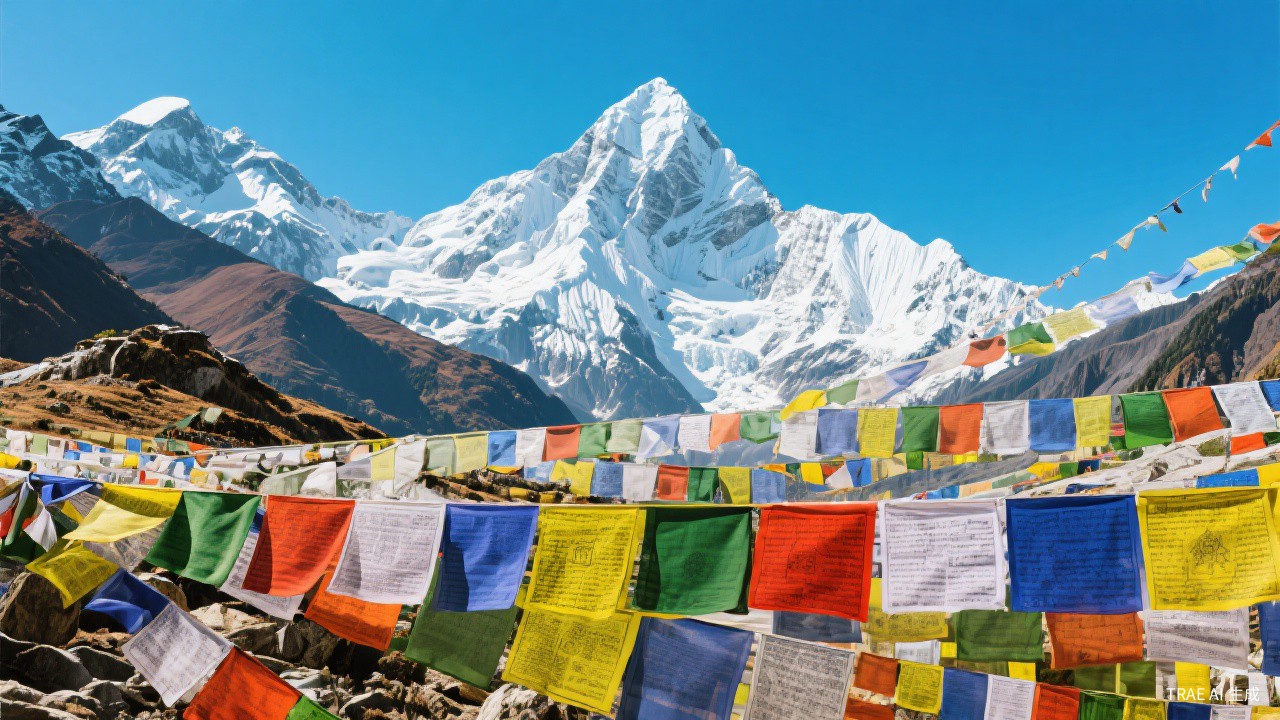
Trekking in Nepal is as much a cultural experience as a physical one. Tea houses along the trails provide basic accommodation and meals, run by local families who have hosted trekkers for generations. The trails pass through Hindu and Buddhist villages, past prayer flags strung across mountain passes, and alongside yaks carrying supplies to remote settlements. The Annapurna region is home to the Gurung and Magar peoples, while the Everest region is the heartland of the Sherpa community. The Langtang region is home to Tamang communities with strong Tibetan cultural ties.
Plan your trek based on available time. For a first visit, the Ghorepani Poon Hill trek (4 to 5 days) offers the best views-to-effort ratio. The Annapurna Base Camp trek (7 to 10 days) reaches the heart of the Annapurna sanctuary. The Everest Base Camp trek requires 12 to 14 days minimum. Allow two to three days in Kathmandu before and after your trek for permits, gear, and recovery.
Best Time to Go
October to November and March to May are the main trekking seasons. Autumn offers the clearest skies and the best mountain views after the monsoon washes away the haze. Spring brings rhododendron forests in bloom (March to April at lower elevations) and warmer temperatures. These are peak seasons—trails and tea houses can be crowded.
December to February is cold, especially at altitude, with some high passes closed by snow. June to September is the monsoon, with leeches, muddy trails, and clouds that obscure mountain views. The rain shadow areas of Upper Mustang and Dolpo can be trekked during the monsoon. Some trekkers prefer the quieter winter and monsoon seasons for the solitude.
Getting There and Around
Tribhuvan International Airport (KTM) in Kathmandu is the main entry point. For Everest treks, flights to Lukla (30 minutes, USD 180 to 220) are the standard approach—these flights are weather-dependent and sometimes delayed for days. For Annapurna treks, take a bus or flight to Pokhara (bus 7 hours, USD 10 to 15; flight 25 minutes, USD 100). The bus from Kathmandu to Syabrubesi (Langtang) takes 8 hours.
Trekking in Nepal requires a guide or porter. Licensed guides cost USD 25 to 35 per day; porters cost USD 15 to 25 per day. The TIMS card (USD 20) and area permits (Annapurna Conservation Area: USD 30; Sagarmatha National Park: USD 34) are required. Tea house accommodation costs USD 5 to 15 per night; meals cost USD 5 to 10. Budget USD 30 to 50 per day for a guided trek.
Where to Stay
Kathmandu's Thamel district is the trekking gear hub of Nepal, with dozens of shops selling and renting sleeping bags, down jackets, and trekking boots. Hotels like the Kathmandu Guest House (USD 30 to 60) cater to trekkers. Spend at least two nights here before your trek to arrange permits and gear.
Pokhara, the gateway to the Annapurna region, has lakeside hotels like the Hotel Barahi (USD 50 to 100) and budget guesthouses from USD 10 to 20. The Lakeside area is pleasant and a good place to rest before or after a trek. On the trail, tea houses provide basic rooms (shared bathrooms, no heating) for USD 5 to 15 per night.
Must-See Attractions
Everest Base Camp
The 12 to 14-day trek from Lukla to Everest Base Camp (5,364 meters) passes through Namche Bazaar, Tengboche Monastery, and the village of Gorak Shep. The final approach to Base Camp follows the Khumbu Glacier. The trek requires good fitness and acclimatization days. Kala Patthar (5,545 meters), near Gorak Shep, offers the best views of Everest.
Tickets: Guide USD 25-35/day; permits USD 54 | Open: Trekking season Oct-Nov, Mar-May
Annapurna Base Camp
The 7 to 10-day trek from Pokhara reaches the Annapurna Sanctuary (4,130 meters), a natural amphitheater surrounded by Annapurna I, Machhapuchhre (Fishtail), and Hiunchuli. The trail passes through rhododendron forests, terraced villages, and bamboo groves. The sunrise from ABC, when the peaks turn gold, is one of Nepal's most iconic moments.
Admission: Guide USD 25-35/day; permits USD 44 | Open: Trekking season Oct-Nov, Mar-May
Ghorepani Poon Hill
A 4 to 5-day trek from Pokhara or Nayapul, reaching Poon Hill (3,210 meters) for sunrise views of Dhaulagiri, Annapurna South, and Machhapuchhre. The trail passes through Magar and Gurung villages and rhododendron forests. This is the best short trek in Nepal—moderate difficulty with extraordinary views.
Entry: Guide USD 25-35/day; permits USD 44 | Open: Trekking season Oct-Nov, Mar-May
Langtang Valley Trek
A 7 to 10-day trek north of Kathmandu into a valley that runs parallel to the Tibetan border. The trail passes through Tamang villages, oak and rhododendron forests, and yak pastures. The valley was heavily affected by the 2015 earthquake but has since been rebuilt. The views of Langtang Lirung (7,227 meters) are constant companions.
Admission: Guide USD 25-35/day; permits USD 34 | Times: Trekking season Oct-Nov, Mar-May
Upper Mustang Trek
A restricted-area trek into the former Kingdom of Lo, in the rain shadow of the Annapurna range. The Scenery is desert-like, with red rock canyons, cave dwellings, and Tibetan Buddhist villages little changed for centuries. The walled city of Lo Manthang, the former capital, contains monasteries and a royal palace. A special permit (USD 500 for 10 days) is required.
Entry: Permit USD 500; guide USD 30-40/day | Hours: Accessible year-round (rain shadow area)
Food and Drink
Dal bhat (lentil soup, rice, vegetables) — Tea houses along all trekking routes. USD 5-8.
Momos (steamed dumplings) and thukpa (noodle soup) — Namche Bazaar bakeries, Everest region. USD 3-6.
Apple pie and Tibetan bread — Bakeries in Namche and ABC. USD 3-5.
Sherpa stew and raksi (local millet wine) — Tea houses in Tengboche and Dingboche. USD 5-10.
Practical Tips
• Acclimatize properly—ascend no more than 300 to 500 meters per day above 3,000 meters.
• Drink at least 3 liters of water per day at altitude to prevent dehydration and altitude sickness.
Bring a good quality sleeping bag rated to -10 degrees Celsius—tea houses provide blankets but they can be thin.
• Carry cash (Nepali Rupees) on the trail—there are no ATMs and credit cards are not accepted.
• Travel insurance that covers helicopter evacuation above 5,000 meters is essential.
Traveler's Tip
If you are trekking the Annapurna region, add a day to visit the hot springs at Jhinu Danda (a 2-hour descent from ABC). After days of cold mountain air, soaking in the natural hot pools beside the Modi Khola river, with views of the surrounding hills, stands out as relaxing experiences in Nepal.