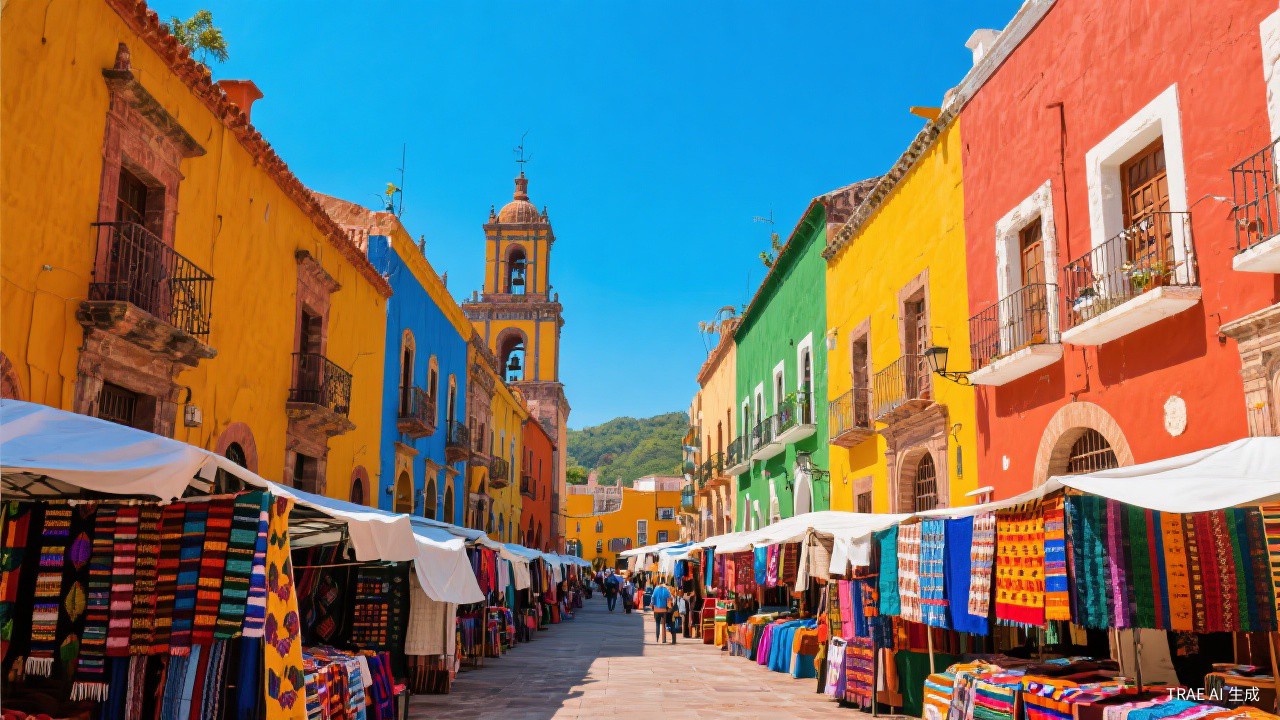
First Impressions of Oaxaca
Oaxaca City, in southern Mexico, is the culinary and cultural heart of one of Mexico's most indigenous states. More than half the population of Oaxaca state identifies as indigenous, primarily Zapotec and Mixtec, and this cultural depth is visible in the markets, the textiles, the festivals, and especially the food. Oaxaca is known as the "land of the seven moles"—complex sauces made with dozens of ingredients including chiles, nuts, spices, and chocolate.
The city itself is a UNESCO World Heritage site, with a colonial center built around the Zocalo and the Santo Domingo church, whose baroque interior is covered in gold leaf. The surrounding streets are filled with artisan workshops producing black pottery, hand-woven textiles, alebrijes (fantastical carved wooden figures), and mezcal. The Mercado de Benito Juarez and Mercado 20 de Noviembre are the commercial heart of the city.
Outside the city, the archaeological site of Monte Alban sits on a mountaintop 10 kilometers away—the former capital of the Zapotec civilization, occupied for over 1,000 years. Further afield, Hierve el Agua, a petrified waterfall formation in the mountains, looks like a frozen cascade of white mineral deposits pouring over a cliff edge.
Best Time to Go
The dry season, from October to April, is the best time to visit. Temperatures are mild (18-28°C) with cool nights (10-14°C). Day of the Dead (October 31-November 2) is extraordinary in Oaxaca, with elaborate altars, comparsas (parades), and cemetery vigils throughout the city and surrounding villages.
The rainy season runs from May to September. Afternoon and evening rain is common but rarely lasts all day. The countryside turns green and lush. This is a good time for lower prices and fewer visitors.
October and November are particularly special months. The mezcal harvest happens in the fall, and many palenques (mezcal distilleries) offer tastings and tours.
Getting There and Around
Oaxaca’s Xoxocotlan International Airport (OAX) is 20 minutes south of the city center, with direct flights from Mexico City (1 hour), Houston, and a few other US cities. Most international visitors connect through Mexico City.
First-class buses from Mexico City (ADO and ADO GL) take 6-7 hours and cost MXN 600-900 ($30-45). The buses are comfortable with reclining seats, air conditioning, and onboard movies.
Within Oaxaca, the historic center is compact and walkable. Taxis within the city cost MXN 30-50 ($1.50-2.50). Colectivos (shared taxis) run to nearby villages for MXN 10-20 per person. For Monte Alban, colectivos depart from the Mercado de Abastos for MXN 25 each way.
Where to Stay
The Historic Center is the most convenient area, within walking distance of the Zocalo, Santo Domingo, and the main markets. Boutique hotels in restored colonial buildings cost $30-100 per night.
Jalatlaco and Xochimilco are adjacent neighborhoods with cobblestone streets, colorful facades, and a more local feel. Small hotels and guesthouses here cost $20-60 per night.
San Felipe del Agua, north of the center, is a quiet residential area with a few boutique hotels ($40-80 per night). For budget travelers, hostels in the center charge $8-15 per bed.
Must-See Attractions
Monte Alban
This Zapotec archaeological site sits on a flattened mountaintop 400 meters above the valley floor, 10 kilometers from Oaxaca City. The site was occupied from 500 BC to AD 800 and contains pyramids, a ball court, an astronomical observatory (Building J), and hundreds of carved stone monuments known as danzantes (dancers). The views of the surrounding valleys are exceptional. Allow 2-3 hours.
Cost: MXN 90 ($4.50) | Hours: 8 AM-5 PM daily
Santo Domingo Church and Cultural Center
The Templo de Santo Domingo stands out as elaborate baroque churches in Mexico. The interior is an overwhelming display of gold leaf, carved plaster, and painted saints covering every surface. The adjoining former convent now houses the Cultural Center of Oaxaca, which includes the Museum of Oaxacan Cultures with exhibits on the region’s indigenous civilizations.
Cost: Church free, museum MXN 75 ($3.75) | Hours: Church 7 AM-1 PM, 4-8 PM; museum 10 AM-6 PM
Mercado 20 de Noviembre
This market is Oaxaca’s food destination. The Pasillo de Humo (Smoke Alley) is a row of stalls grilling meats—tasajo (dried beef), cecina (pork), and chorizo—over charcoal. You choose your meat, and it is served with tortillas, salsa, and guacamole. A meal at the Pasillo de Humo costs MXN 60-100 ($3-5).
Entry: Free to enter | Hours: 7 AM-7 PM daily
Hierve el Agua
This natural site, 70 kilometers southeast of Oaxaca, features petrified mineral waterfalls—white travertine rock formations that look like frozen water cascading over cliff edges. There are two main falls and natural pools where you can swim. The trip takes about 1.5 hours on winding mountain roads. Tours from Oaxaca cost MXN 300-500 ($15-25) including transportation.
Admission: MXN 50 ($2.50) + tour transportation | Open: 7 AM-6 PM daily
Mezcal Distilleries (Palenques)
Oaxaca produces 90% of Mexico’s mezcal, and visiting a palenque (traditional distillery) is one of the best experiences in the region. The process—roasting agave hearts in an underground pit, crushing them by horse-drawn stone, fermenting in wooden vats, and distilling in copper or clay pots—has changed little in centuries. Many palenques near Santiago Matatlan (45 minutes from Oaxaca) offer tours and tastings for free or a small tip.
Tickets: Free-$10 (tastings) | Times: Varies by palenque
Food and Drink
Mole Negro — The most complex of Oaxaca’s seven moles, made with over 30 ingredients including multiple dried chiles, nuts, spices, chocolate, and plantain. It is dark, rich, and slightly bitter. Try it at Los Danzantes or Casa Oaxaca. A mole plate costs MXN 120-200 ($6-10).
Tlayuda — A large, thin crispy tortilla (up to 14 inches across) topped with asiento (unrefined pork lard), black bean paste, quesillo, lettuce, and salsa. Try it at the Tlayuda stalls near the Mercado 20 de Noviembre. Budget MXN 50-80 ($2.50-4).
Chapulines — Grasshoppers toasted with garlic, lime, and chile. They are a traditional Oaxacan snack and a source of protein. The taste is crunchy and tangy. You will find them at every market in Oaxaca. A small bag costs MXN 10-20 ($0.50-1).
Hot Chocolate and Pan de Yema — Oaxacan hot chocolate is made from cacao, cinnamon, almonds, and sugar, mixed with water or milk and frothed with a wooden whisk called a molinillo. Pan de yema (egg yolk bread) is a sweet, dense roll that pairs perfectly. Try it at Mayordomo chocolate shop. A cup and bread cost MXN 30-40 ($1.50-2).
Practical Tips
Visit the markets in the morning. Mercado 20 de Noviembre and Mercado de Benito Juarez are most active and have the freshest food before noon.
• Drink mezcal responsibly. It is stronger than tequila (typically 45-55% ABV) and the small tasting cups add up quickly.
Bring cash (pesos). Many markets, street food stalls, and rural palenques do not accept credit cards.
• Hire a guide for Monte Alban. The site has limited signage, and a guide (MXN 200-300) brings the ruins to life.
• Be cautious with chapulines if you have a shellfish allergy.
Traveler's Tip
Take a cooking class. Several schools in Oaxaca, including Seasons of My Heart and La Cocina Oaxaquena, offer half-day classes that start with a market visit and end with a meal you prepared yourself. You will leave knowing how to make mole from scratch.