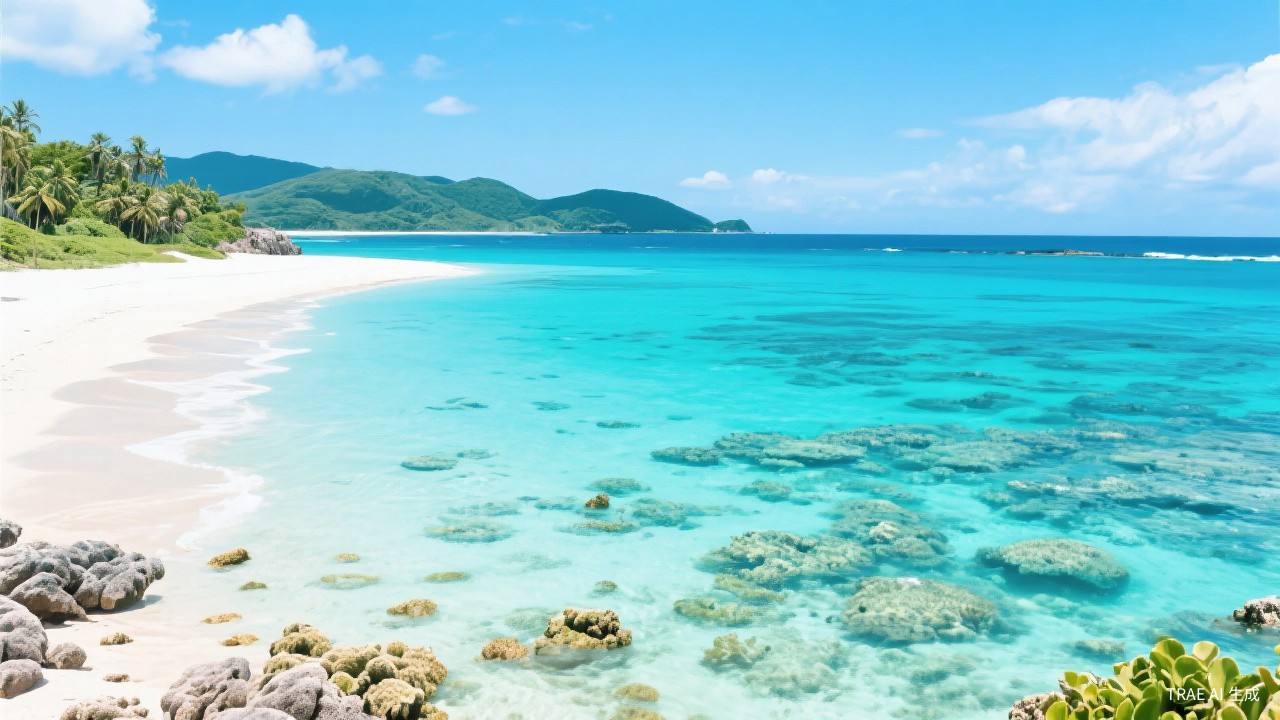
First Impressions of Okinawa
Okinawa is Japan's southernmost prefecture, a chain of 160 islands stretching between Kyushu and Taiwan. The main island's distinct culture reflects centuries of trade with China, Southeast Asia, and the Pacific, producing a Ryukyuan identity separate from mainland Japan. Shuri Castle in Naha, the former seat of the Ryukyu Kingdom, was rebuilt after WWII and again after a 2019 fire. The island's beaches—Emerald Beach, Manza Beach, and the remote beaches of the northern Yambaru region—offer some of Japan's best tropical swimming and snorkeling. Beneath the surface, Okinawa's coral reefs rival those of Southeast Asia.
Okinawan culture is visible in everything from the local language (Uchinaguchi) to the diet, which features goya (bitter melon), tofu, and seaweed—believed to contribute to the island's extraordinary number of centenarians. The traditional eisa dance, performed during the Obon festival in August, features drummers and dancers in colorful costumes. American military bases occupy about 18 percent of the main island, creating a unique cultural mix where American-style diners sit next to Okinawan soba shops. The island's pottery, textiles, and glass crafts are among Japan's finest.
Plan seven to ten days. Spend three days in the south (Naha, Shuri Castle, and the Peace Memorial Park). Dedicate three days to the central coast (Beach resorts, American Village, and the Churaumi Aquarium). Two days in the north for the Yambaru forest and the remote beaches. If time allows, take a ferry to one of the smaller islands—Ishigaki or Taketomi for a more traditional Ryukyuan experience.
Best Time to Go
April to June and October to December offer the best weather. Spring brings cherry blossoms (Okinawa's bloom in January and February, the earliest in Japan) and comfortable temperatures (22 to 28 degrees). The rainy season (May to June) is brief. October and November are typhoon season but also bring clear days between storms. Summer (July to September) is hot (30 to 35 degrees) and humid, with the peak typhoon months.
Winter (December to February) is mild by Japanese standards (15 to 22 degrees) and the quietest season. The water is too cold for swimming but fine for sightseeing. Hotel prices drop significantly. The Naha Tug-of-War Festival in October features a 200-meter rope and 15,000 participants.
Getting There and Around
Naha Airport (OKA) receives direct flights from Tokyo (2.5 hours), Osaka (2 hours), Seoul, Taipei, Shanghai, and Hong Kong. The monorail connects the airport to Naha city center in 15 minutes for JPY 330. Ferries from Kagoshima (25 hours) and Osaka (36 hours) serve Okinawa but are time-consuming. Within the main island, rental cars are essential (JPY 4,000 to 6,000 per day). The Okinawa Expressway connects Naha to the north in about 2 hours (tolls JPY 1,500 to 2,000).
The Yui Rail monorail in Naha covers 15 stations from the airport to Shuri Castle. Buses connect major towns but are slow. Rental cars are the best option for exploring the island—the roads are well-maintained and traffic is light outside Naha. An international driving permit is required. Taxis are expensive for long distances.
Where to Stay
Naha has the widest range of accommodation, from business hotels like the JAL City (JPY 8,000 to 15,000 per night) to the Hilton Okinawa Sesoko Resort (JPY 25,000 to 40,000). Kokusai-dori (International Street) is the main hotel and restaurant strip. The area is convenient for sightseeing but not on the beach.
The central west coast (Onna Village, Chatan) has the best beach resorts: the Ritz-Carlton Okinawa (JPY 40,000 to 70,000), the Hilton (JPY 25,000 to 40,000), and mid-range options like the Beach Tower (JPY 12,000 to 20,000). American Village in Chatan offers a lively atmosphere with bars, restaurants, and surf shops. The northern Yambaru area has guesthouses from JPY 5,000 to 10,000 for a quieter, nature-focused stay.
Must-See Attractions
Churaumi Aquarium
One of the world's largest aquariums, Churaumi is famous for its Kuroshio Tank, which holds whale sharks and manta rays in a tank so large it required a custom-built acrylic panel. The aquarium also features coral reef exhibits, deep-sea creatures, and a dolphin show. The surrounding Ocean Expo Park includes a tropical beach, a botanical garden, and a traditional Okinawan village.
Tickets: JPY 1,880 | Hours: Daily 8:30 AM-6:30 PM (Oct-Feb 8:30 AM-5:30 PM)
Shuri Castle Park
The former palace of the Ryukyu Kingdom, originally built in the 14th century and rebuilt after WWII. A devastating fire in 2019 destroyed the main hall, which is currently being reconstructed (completion expected 2026). The castle walls, gates, and surrounding park remain open and offer views over Naha. The nearby Shureimon Gate is one of Okinawa's most photographed structures.
Tickets: JPY 400 (castle area) | Times: Daily 8 AM-6 PM
Peace Memorial Park
This park in southern Okinawa commemorates the Battle of Okinawa (1945), one of WWII's bloodiest battles. The Cornerstone of Peace lists the names of over 240,000 people who died, including both military and civilian casualties from all nationalities. The underground Navy Headquarters, where Japanese officers committed suicide as the battle ended, can be toured.
Tickets: Free | Times: Daily 9 AM-5 PM
Cape Manzamo
A dramatic coastal cliff on the west coast of central Okinawa, shaped like an elephant's trunk. The cliff drops 20 meters into the turquoise East China Sea. On clear days, the view extends to the Kerama Islands. The site is particularly popular at sunset, when the cliff face turns orange and the sea glows gold.
Tickets: Free | Times: Always open
Yambaru National Park
Covering the northern third of Okinawa Island, Yambaru is a subtropical forest home to endemic species including the Okinawa rail (a flightless bird), the Iriomote cat, and giant ferns. The forest contains hiking trails, waterfalls, and traditional villages. In 2021, the area was designated a UNESCO World Heritage Site for its biodiversity.
Cost: Free | Times: Always open; visitor center 9 AM-5 PM
Food and Drink
Okinawa soba (wheat noodles in pork broth) — Makishi Public Market, Naha. JPY 600-1,000.
Goya champuru (bitter melon stir-fry with tofu and egg) — Shuri Soba, near Shuri Castle. JPY 800-1,200.
Taco rice (Tex-Mex influenced dish) — King Tacos, American Village, Chatan. JPY 700-1,000.
Okinawan awamori (distilled rice spirit) and Orion beer — Kokusai-dori bars, Naha. JPY 500-1,500.
Practical Tips
• Rent a car for exploring Okinawa—public transport is limited outside Naha.
• The Okinawa monorail does not go to the beaches or the north; a car is essential.
• Typhoon season is July to October—check forecasts and have indoor backup plans.
• Many restaurants close between 2 PM and 5 PM; eat lunch early or plan for a late dinner.
• The Peace Memorial Park is a sobering but essential visit—allow at least 2 hours.
Traveler's Tip
Go to Cape Zanpa at the western tip of central Okinawa just before sunset. The lighthouse at the cape offers 360-degree views of the East China Sea, and the nearby Zanpa Beach has tide pools perfect for exploring at low tide. The Okinawa Sunset Beach bar at the base of the lighthouse serves cold Orion beer and grilled seafood as the sun drops below the horizon.