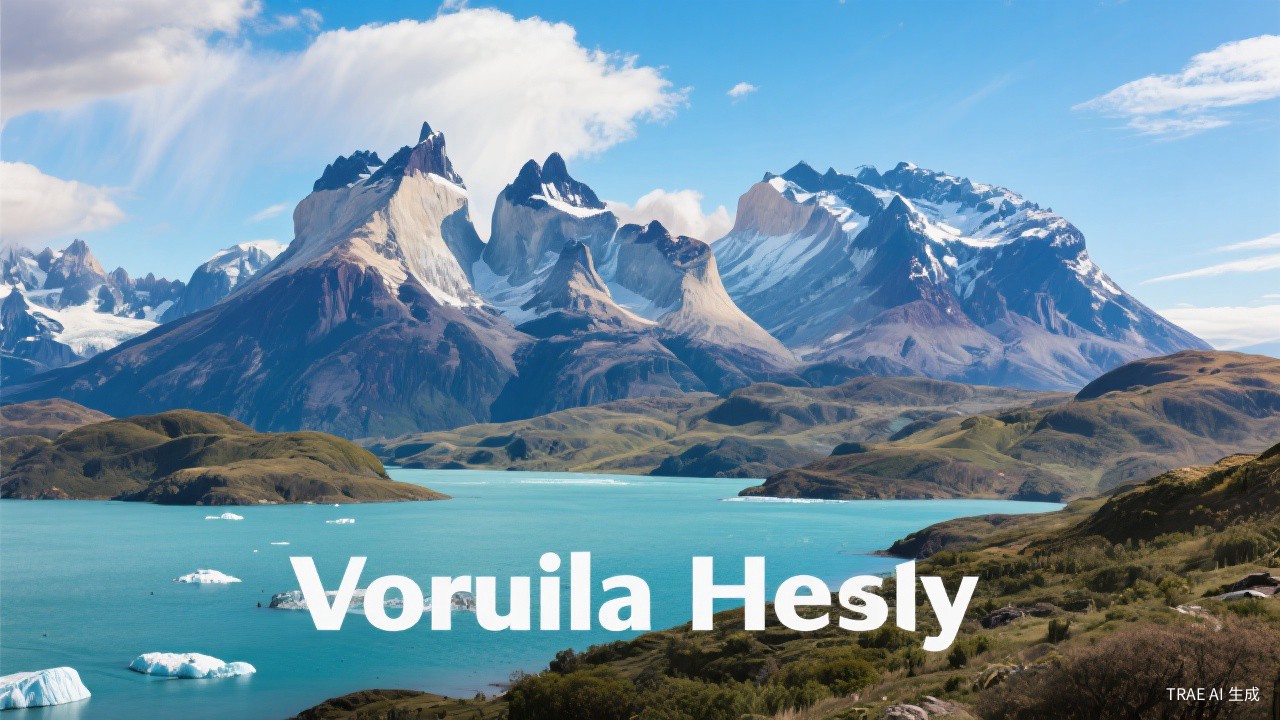
Discovering Patagonia
Patagonia is the southern end of South America, a region of glaciers, mountains, and open steppe shared by Argentina and Chile. The name alone evokes a sense of remoteness—this is one of the least populated areas on Earth, with vast distances between towns and terrain that feel untouched by human activity. The wind is constant, the skies are enormous, and the scale of the scenery is difficult to absorb from photographs.
Torres del Paine National Park, in Chile, contains the region's most iconic scenery: granite towers rising above a turquoise lake, the Grey Glacier calving icebergs into Lago Grey, and the French Valley with its hanging glaciers. The park's W Trek and O Circuit are among the most famous multi-day hikes in the world. On the Argentine side, the Perito Moreno Glacier is one of the few advancing glaciers on the planet—a wall of ice 5 kilometers wide and 60 meters tall that periodically calves massive chunks into Lake Argentino with a thunderous crash.
El Chalten, a small town in Argentina, is the gateway to Mount Fitz Roy, a jagged granite peak that inspired the Patagonia clothing logo. The hike to the Fitz Roy base camp viewpoint stands out as rewarding day hikes in South America. El Calafate, on the shores of Lake Argentino, is the base for visiting Perito Moreno and other glaciers. Further south, Tierra del Fuego and Ushuaia—the southernmost city in the world—mark the end of the road.
Best Time to Go
The southern hemisphere summer, November to March, is the only practical time to visit. Daytime temperatures reach 10-18°C, and the days are long (up to 17 hours of daylight in December). January and February are the warmest and busiest months.
November and March offer the best balance of weather, fewer crowds, and lower prices. November brings wildflowers and snow on the peaks. March offers fall colors in the southern beech forests.
April to October is winter. Temperatures drop well below freezing, daylight is short, and many roads and accommodations close. Only experienced, well-equipped travelers should attempt winter visits.
Getting There and Around
The main gateways are Punta Arenas (Chile) and El Calafate (Argentina). Both have airports with flights from Santiago (Chile, 3.5 hours) and Buenos Aires (Argentina, 3 hours).
Regular buses connect Punta Arenas to Puerto Natales (2.5 hours, CLP 5,000) and on to Torres del Paine. Buses also connect El Calafate to El Chalten (3 hours, ARS 8,000) and to Perito Moreno Glacier (1.5 hours). The border crossing between Chile and Argentina is straightforward but can take time.
Renting a car gives flexibility but is expensive (CLP 40,000-60,000 per day in Chile, ARS 30,000-50,000 in Argentina). Gravel roads are common. Fuel is available in towns but not in the parks.
Where to Stay
Puerto Natales (Chile) is the base for Torres del Paine. Hotels and hostels start at CLP 20,000-80,000 per night ($25-100). The town has restaurants, gear shops, and tour operators.
Inside Torres del Paine, refugios (dormitory lodges) cost CLP 30,000-60,000 per night and must be booked months in advance. Luxury lodges like Explora Patagonia ($800-1,200 per night, all-inclusive) offer a high-end experience.
El Calafate (Argentina) has hotels from ARS 15,000-60,000 per night ($50-200). El Chalten is smaller, with hostels and lodges from ARS 10,000-30,000 per night ($35-100).
Must-See Attractions
Torres del Paine National Park
This UNESCO Biosphere Reserve covers 242,000 hectares of mountains, glaciers, lakes, and steppe in southern Chile. The W Trek (4-5 days) passes the three granite towers, the French Valley, and Grey Glacier. Day hikes to the base of the Torres (8-10 hours round trip) are also possible. Park entry costs CLP 35,000 for foreigners and must be reserved online. Wind is the defining challenge—gusts can exceed 100 km/h.
Entry: CLP 35,000 per day (foreigners) | Times: October to April (full services)
Perito Moreno Glacier
This 5-kilometer-wide, 60-meter-tall glacier in Los Glaciares National Park (Argentina) stands out as accessible and active glaciers in the world. Viewing walkways on the south side bring you within 300 meters of the ice face. Calving events—when chunks of ice break off and crash into the lake—happen regularly and sound like cannon fire. Mini-trekking tours ($80-100) put crampons on your feet and take you onto the ice for 1.5 hours.
Tickets: Park entry ARS 800, mini-trekking $80-100 | Open: 8 AM-6 PM (walkways), tours depart 7-9 AM
Mount Fitz Roy (El Chalten)
The 3,405-meter granite peak stands out as photographed mountains in South America. The hike to Laguna de los Tres, the base camp viewpoint, takes about 3 hours each way (12 km round trip) and climbs 700 meters in the final kilometer. On clear days, the view of Fitz Roy reflected in the lagoon is extraordinary. Start early—clouds can engulf the peak by afternoon.
Tickets: Free | Hours: Trail accessible November to April
Tierra del Fuego National Park
Located 12 kilometers west of Ushuaia, this park contains sub-Antarctic forests, peat bogs, and coastline along the Beagle Channel. The End of the World train runs 8 kilometers into the park along a historic narrow-gauge railway. Hiking trails lead to Lapataia Bay, where the Pan-American Highway ends.
Tickets: ARS 500 ($3.50), train ARS 1,500 ($10) | Times: 9 AM-5 PM (summer)
Lago Grey
This glacial lake in Torres del Paine is filled with icebergs calved from Grey Glacier at its far end. Boat tours ($60-80) take visitors among the icebergs and close to the glacier face. Kayaking tours ($100-150) offer a more active experience. The beach along the lake has views of floating ice chunks against a backdrop of mountains.
Admission: Boat tours $60-80, kayaking $100-150 | Hours: Tours depart 8-10 AM (summer)
Food and Drink
Patagonian Lamb (Cordero) — Whole lamb slow-roasted over an open fire on an iron cross (asado al palo). The meat is tender and smoky. It is a traditional gaucho dish and the centerpiece of any Patagonian celebration. Try it at La Tablita in El Calafate. A portion costs ARS 8,000-15,000 ($25-50).
Centolla (King Crab) — Southern king crab is a Patagonian specialty, served hot in its shell with melted butter or cold in salads. The crab is caught in the cold waters of the Beagle Channel and the Strait of Magellan. Budget ARS 8,000-15,000 ($25-50) per serving.
Calafate Berry Desserts — The calafate is a small purple berry that grows wild in Patagonia. Legend says that eating calafate guarantees you will return to Patagonia. It is served in jams, ice cream, and liqueurs. Try calafate ice cream at any heladeria in El Calafate or Puerto Natales. A scoop costs ARS 1,500-2,500 ($5-8).
Trout — Freshwater trout is abundant in Patagonian lakes and rivers. It is typically grilled or pan-fried and served with potatoes and salad. Try it at a restaurant overlooking Lago Argentino in El Calafate. Budget ARS 5,000-10,000 ($15-35) per portion.
Practical Tips
• Reserve everything months in advance. Torres del Paine refugios, Perito Moreno tours, and accommodations in El Chalten sell out quickly.
• Pack for extreme wind and weather changes. A windproof/rainproof outer layer, warm mid-layers, and sun protection are all essential.
• Carry Chilean pesos and Argentine pesos separately. You cannot use one country’s currency in the other.
Bring your own hiking gear if possible. Rental gear in Puerto Natales and El Calafate is available but limited.
• Allow extra time for travel between destinations. Distances are large, buses run on limited schedules.
Traveler's Tip
If you are doing the W Trek in Torres del Paine, book the refugios as early as possible—ideally 6 months ahead. The most popular ones (Las Torres, Chileno, Francés, Paine Grande) sell out first.