What You Will Find in Quebec City
Quebec City is the only walled city north of Mexico and one of the oldest European settlements in North America. Founded in 1608 by Samuel de Champlain, the city retains its French colonial architecture, language, and culture to a degree unmatched anywhere else in Canada or the United States. Old Quebec (Vieux-Quebec), a UNESCO World Heritage site, is divided into Upper Town (Haute-Ville) and Lower Town (Basse-Ville), connected by steep streets and a funicular.
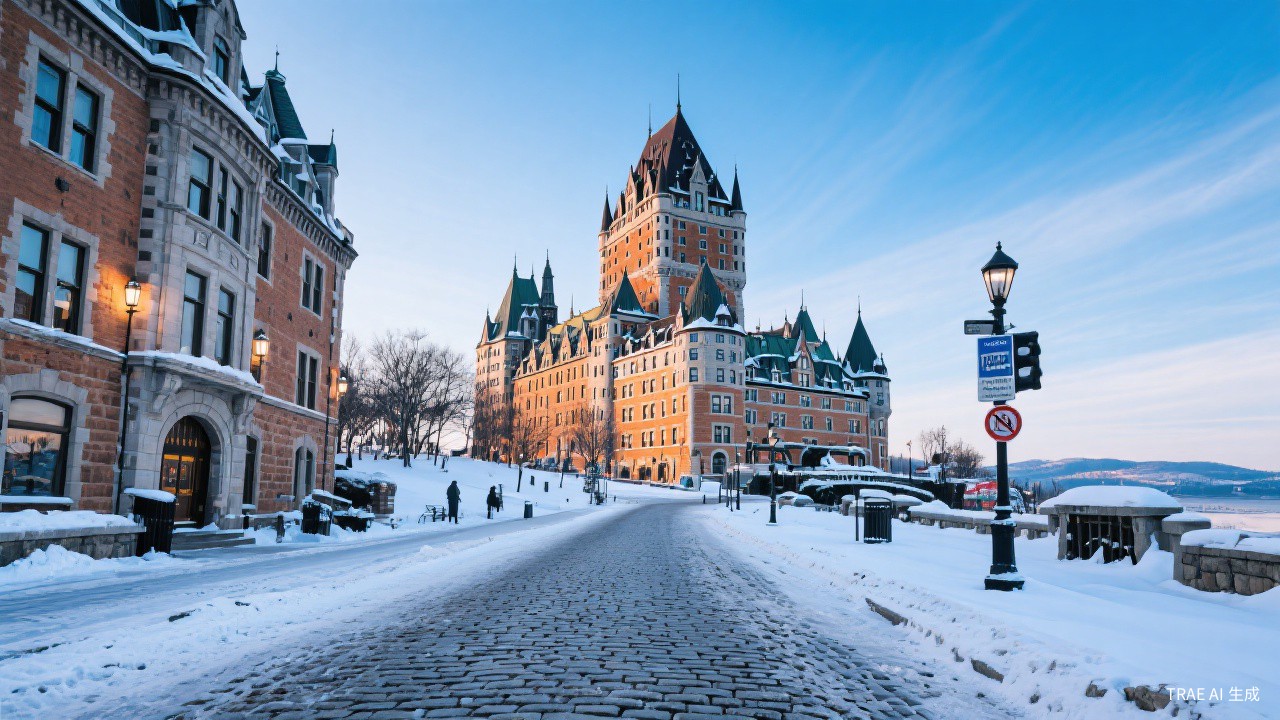
The Chateau Frontenac, a grand hotel with copper turrets that dominates the skyline, is the most photographed hotel in the world and the visual symbol of Quebec City. The Dufferin Terrace, a boardwalk in front of the hotel, offers views of the St. Lawrence River and the Lower Town. In winter, the terrace becomes a toboggan run.
Beyond the old city, Quebec City has a thriving food scene rooted in French-Canadian traditions. Poutine (fries with cheese curds and gravy), tourtiere (meat pie), and sugar pie are local staples, but the city also has excellent fine dining, craft breweries, and a growing number of innovative restaurants. The nearby Ile d'Orleans, a rural island in the St. Lawrence, produces maple syrup, cider, and cheese that supply the city's markets and restaurants.
Best Time to Go
Summer (June to August) is the warmest and busiest season. Temperatures start at 15-28°C, and the city comes alive with festivals, outdoor dining, and terrace culture. The Festival d'Ete de Quebec (July) is one of Canada's largest music festivals.
Fall (September to November) brings spectacular foliage colors to the surrounding countryside. Temperatures drop to 5-15°C. This is a beautiful time to visit Ile d'Orleans and the Montmorency Falls area.
Winter (December to March) is cold (-10 to -20°C) but Quebec City embraces the season. The Carnaval de Quebec (February) is the world's largest winter carnival, with ice sculptures, night parades, and a snow slide. The Hotel de Glace (ice hotel) is open January to March.
Getting There and Around
Jean Lesage International Airport (YQB) is 20 minutes west of downtown, with direct flights from Toronto, Montreal, Ottawa, New York, Chicago, and a few other cities. Most international visitors connect through Montreal or Toronto.
VIA Rail connects Quebec City to Montreal (3 hours, C$50-80) and Ottawa (5 hours). The train station is in the Lower Town, within walking distance of the old city.
The city is compact and walkable, especially the Old City. The RTC bus system covers the greater Quebec City area (C$3.50 per ride). Taxis and Uber are available but rarely needed within the old city.
Where to Stay
Old Quebec (Upper Town) is the most atmospheric area, with boutique hotels in historic buildings. Expect C$150-350 per night. The Fairmont Le Chateau Frontenac itself costs C$300-600 per night.
Old Quebec (Lower Town) has a more intimate feel with narrow streets, small squares, and the Place Royale. Hotels and B&Bs here cost C$120-250 per night.
Saint-Roch, west of the old city, is a trendy neighborhood with restaurants, bars, and more affordable hotels (C$80-180 per night). For budget travelers, hostels in the old city charge C$30-50 per bed.
Must-See Attractions
Old Quebec (UNESCO World Heritage Site)
The walled old city contains over 400 years of French colonial history. Upper Town has the Chateau Frontenac, the Citadelle (a still-active military fort), and the Notre-Dame de Quebec Basilica. Lower Town has Place Royale (the site of the original settlement), the Quartier Petit Champlain (narrow streets with shops and restaurants), and the Old Port. The city walls, built by the French and British between 1608 and 1871, can be walked for panoramic views. Allow a full day.
Cost: Free to explore (Citadelle tour C$16) | Times: Always open (museums 10 AM-5 PM)
Montmorency Falls
These falls, 12 kilometers northeast of Quebec City, are 83 meters high—30 meters higher than Niagara Falls. A suspension bridge crosses the crest of the falls, and a cable car descends to the base. A staircase of 487 steps leads from the base to the top. In winter, the spray freezes into a massive ice formation at the base called the "sugar loaf."
Cost: C$5.25 per vehicle (summer), free in winter | Open: 9 AM-5 PM (summer), 9 AM-4 PM (winter)
Ile d’Orleans
This island in the St. Lawrence River, 15 minutes east of Quebec City, has been farmed for over 300 years. The 67-kilometer perimeter road passes through six small villages, each with its own character. Farms sell apples, strawberries, maple products, and cider directly from roadside stands. Cideries, wineries, and cheese producers offer tastings. The island is especially beautiful in fall.
Entry: Free (tastings C$5-15) | Open: Farms and shops generally 10 AM-5 PM
Place Royale and Quartier Petit Champlain
Place Royale is the site where Samuel de Champlain established his settlement in 1608, making it the birthplace of French civilization in North America. The square is surrounded by stone buildings from the 17th and 18th centuries. The nearby Quartier Petit Champlain is a narrow pedestrian street with boutiques, restaurants, and cafes.
Tickets: Free | Open: Always open (shops 10 AM-6 PM)
Musee de la Civilisation
This museum in the Lower Town is one of Quebec’s most engaging museums, with interactive exhibits on human history and culture. Permanent exhibits cover Quebec’s history and indigenous cultures. The museum is well-designed for families and is one of the few museums in the city with extensive English-language content. Allow 2-3 hours.
Tickets: C$17 adult | Open: 10 AM-5 PM (closed Mondays, open daily in summer)
Food and Drink
Poutine — French fries topped with fresh cheese curds and brown gravy. Quebec is the birthplace of poutine. Chez Ashton is a local chain known for excellent poutine. Try it at Ma Poule Mouillee or Aux Anciens Canadiens. Budget C$8-14 for a generous portion.
Tourtiere — A meat pie made with ground pork, beef, or game, seasoned with cinnamon, cloves, and allspice. It is a traditional French-Canadian Christmas dish but available year-round. Try it at Aux Anciens Canadiens in a 17th-century building. Budget C$14-20.
Maple Syrup Products — Quebec produces 70% of the world’s maple syrup. Maple taffy (hot syrup poured on snow and rolled onto a stick), maple butter, and maple sugar pie are local specialties. Visit a cabane a sucre (sugar shack) on Ile d’Orleans for the full experience. A maple pie costs C$8-12.
Crepes — Breton-style crepes are a Quebec City staple, reflecting the French heritage. Both sweet (butter and sugar, Nutella, fruit) and savory (ham and cheese, spinach and egg) crepes are available. Casse-Crepe Breton on Rue Saint-Jean has been serving them since 1958. A crepe costs C$8-14.
Practical Tips
• Speak French if you can. Quebec City is French-speaking, and while most people in the tourist industry speak English, making an effort in French is appreciated.
• Dress in layers in winter. Temperatures can drop below -20°C with wind chill. A warm coat, hat, gloves, and insulated boots are essential.
• Walk the city walls. The 4.6-kilometer circuit around the old city walls offers views and historical perspective.
Visit Ile d’Orleans by car or bike. The island is best explored at your own pace.
• Take the ferry across the St. Lawrence to Levis. The 10-minute ride offers the best view of the Quebec City skyline and costs only C$4.
Traveler's Tip
Walk the Promenade des Gouverneurs, a boardwalk that starts behind the Chateau Frontenac and follows the clifftop to the Citadelle. The views of the river, the bridge, and the Lower Town are the best in the city, and most tourists never find it.