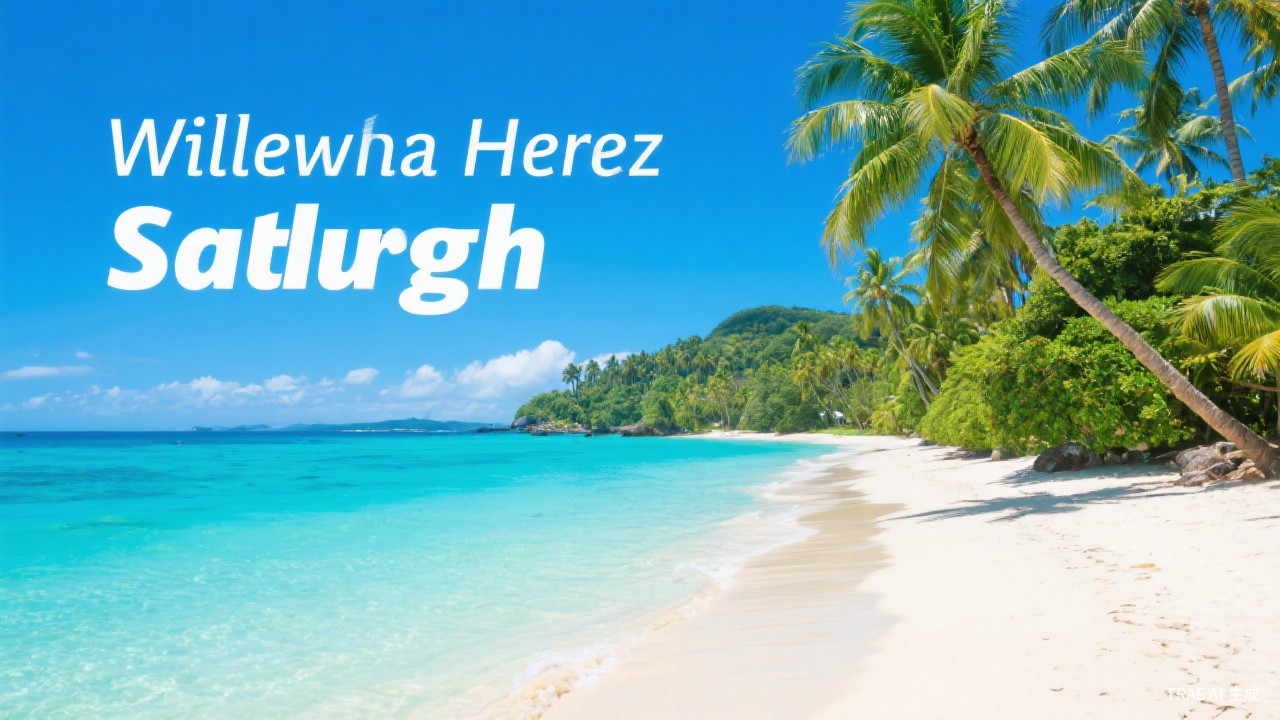
Discovering Samoa
Samoa, an independent nation in the South Pacific, consists of two main islands—Upolu and Savai'i—plus several smaller islands. The country has a population of about 200,000 and retains a strong traditional Polynesian culture. Samoan society is organized around extended families (aiga), and the fa'a Samoa (the Samoan way) governs daily life, from village governance to social etiquette.
Upolu, the smaller but more populated island, contains the capital Apia, the international airport, and most of the tourist infrastructure. The south coast of Upolu has some of the most beautiful beaches in the Pacific, including Lalomanu Beach, with its white sand and calm turquoise water. The To Sua Ocean Trench, a massive sinkhole filled with turquoise seawater connected to the ocean by an underwater tunnel, stands out as photographed natural features in the Pacific.
Savai'i, the larger island to the west, is less developed and more traditional. The Saleaula lava fields, where a volcanic eruption in 1905 buried villages under lava, are a stark reminder of the islands' geologic activity. The Alofaaga Blowholes, where waves force water through lava tubes and shoot it 30 meters into the air, are another natural attraction. Savai'i has a slower pace and fewer tourists, making it ideal for travelers seeking an authentic Pacific experience.
Best Time to Go
Samoa has a tropical climate with warm temperatures (24-30°C) year-round. The dry season, May to October, is the best time to visit. Humidity is lower, rainfall is minimal, and temperatures are comfortable. This is peak season, especially July and August.
The wet season from November to April brings heavier rainfall and warmer temperatures (27-33°C). February is typically the wettest month. Samoa sits outside the main cyclone belt, so storms are less frequent than in Fiji or Vanuatu. The humidity is high but trade winds provide some relief. Accommodation prices drop during these months.
The water is clearest from June to September, making this the best time for snorkeling. The Teuila Festival, Samoa's largest cultural festival, takes place in September and features traditional dance, music, and sports competitions.
Getting There and Around
Faleolo International Airport (APW), on Upolu, has direct flights from Auckland (3.5 hours), Sydney (5 hours), Brisbane (4.5 hours), Nadi (3 hours), and Honolulu (5 hours). Fiji Airways, Air New Zealand, and Samoa Airways are the main carriers.
On Upolu, rental cars (WST 80-120 per day) are the most practical option. The island can be traveled around in 3-4 hours. Local buses (WST 2-5 per ride) are cheap but slow and crowded. Taxis are available in Apia (WST 10-20 for short rides).
The ferry to Savai'i departs from Mulifanua wharf on Upolu and arrives at Salelologa on Savai'i (1-1.5 hours, WST 12-15 per person plus WST 60-80 for a car). The ferry runs 3-4 times daily.
Where to Stay
South Coast (Upolu) has the best beaches and tourist facilities. Beach fales (traditional open-air huts) cost WST 60-150 per night and include meals. Resorts like Sinalei Reef Resort and Coconuts Beach Club offer more comfort (WST 300-600 per night).
Apia, the capital, has hotels and guesthouses (WST 60-200 per night) and is the best base for exploring the north coast of Upolu. The city has restaurants, markets, and cultural sites.
Savai'i has fewer accommodation options. Beach fales (WST 50-120 per night) and small guesthouses are the main options. The island is quieter and more traditional than Upolu.
Must-See Attractions
To Sua Ocean Trench
This massive sinkhole on the south coast of Upolu is 30 meters wide and 20 meters deep, filled with turquoise seawater connected to the ocean by an underwater tunnel. A long wooden ladder descends to a wooden platform where you can swim. The water is clear and cool. The surrounding gardens are designed with tropical plants. The trench stands out as photographed natural features in the Pacific.
Admission: WST 20 per person | Times: 8 AM-5 PM daily
Lalomanu Beach
This white-sand beach on the south coast of Upolu is consistently rated one of the best beaches in the Pacific. The water is calm, clear, and warm, with a coral reef just offshore for snorkeling. The beach was devastated by the 2009 tsunami but has been rebuilt. Several beach fales and small resorts line the shore.
Tickets: Free | Open: Always open
Papaseea Sliding Rocks
These natural rock slides, 10 minutes from Apia, are formed by water flowing over smooth volcanic rock. You can slide down the rocks into natural pools below. The slides are safe for children and adults. The site also has a waterfall and a swimming hole. It is a popular spot with local families on weekends.
Admission: WST 10 per person | Hours: 8 AM-5 PM daily
Saleaula Lava Fields (Savaii)
The 1905 eruption of Mt Matavanu buried villages, churches, and farmland under lava flows up to 100 meters thick. The Virgin Mary’s Grave, where a lava flow stopped just short of a church, and the Lava Church, where the walls of a church are visible within the solidified lava, are the most poignant sites. The lava fields extend for several kilometers along the coast.
Cost: WST 5 per person | Open: Always open
Alofaaga Blowholes (Savaii)
These blowholes on the west coast of Savaii force water through lava tubes and shoot it 30 meters into the air when waves crash into the shore. The blowholes are most active at high tide and when the sea is rough. Local guides throw coconuts into the blowholes to demonstrate their power. The site has a small market selling handicrafts.
Cost: WST 5 per person | Hours: Always open (best at high tide)
Food and Drink
Palusami — A traditional Samoan dish of taro leaves filled with coconut cream and onions, wrapped in banana leaves and baked in an umu (earth oven). It is rich, creamy, and vegetarian. Try it at any beach fale or local restaurant. Budget WST 8-12 per serving.
Oka (Raw Fish) — Similar to ika mata in the Cook Islands—raw fish marinated in lime juice and coconut cream with onions, tomatoes, and chili. It is Samoa’s most popular seafood dish. Try it at the Apia Fish Market or at a beach fale. Budget WST 10-15 per serving.
Umu (Earth Oven Feast) — A traditional Samoan feast where pork, chicken, fish, taro, breadfruit, and other foods are cooked in an earth oven using hot stones and banana leaves. Many resorts and beach fales offer umu nights. The food is tender and smoky. Budget WST 30-50 per person.
Fresh Coconut — Coconuts are everywhere in Samoa. Green coconuts (for drinking) and brown coconuts (for eating) are sold at roadside stalls for WST 1-3 each. The coconut water is refreshing, and the flesh is sweet.
Practical Tips
• Respect local customs. Samoa is a conservative society. Cover your shoulders and knees when visiting villages. Sunday is a day of rest—most businesses are closed.
• Stay in beach fales for the most authentic experience. These open-air huts on the beach are Samoa’s signature accommodation and include meals.
Bring cash (Samoan tala). Credit cards are accepted at resorts and larger businesses, but small vendors and beach fales are cash-only.
• Take the ferry to Savai’i for at least 2 nights. The island is less developed and more traditional than Upolu, and the lava fields and blowholes are unique.
• Learn a few Samoan words. "Talofa" (hello), "Fa’afetai" (thank you), and "Tofa" (goodbye) will be appreciated by locals.
Traveler's Tip
Spend a Sunday in a Samoan village. Attend a church service in the morning (the singing is extraordinary), share a traditional Sunday to’onai (feast) with a family, and spend the afternoon resting by the beach. Sunday is sacred in Samoa, and experiencing it is the most authentic way to understand the culture.