What Makes San Francisco Worth Visiting
San Francisco occupies the tip of a peninsula surrounded by the Pacific Ocean, San Francisco Bay, and the Golden Gate strait. The city's 49 square miles contain an extraordinary density of neighborhoods, each with its own character: the Mission's murals and taquerias, Haight-Ashbury's hippie legacy, Chinatown's bustling markets, and the Castro's role as a center of LGBTQ culture. The hills—more than 40 of them—create constant changes in elevation and views that appear around every corner.
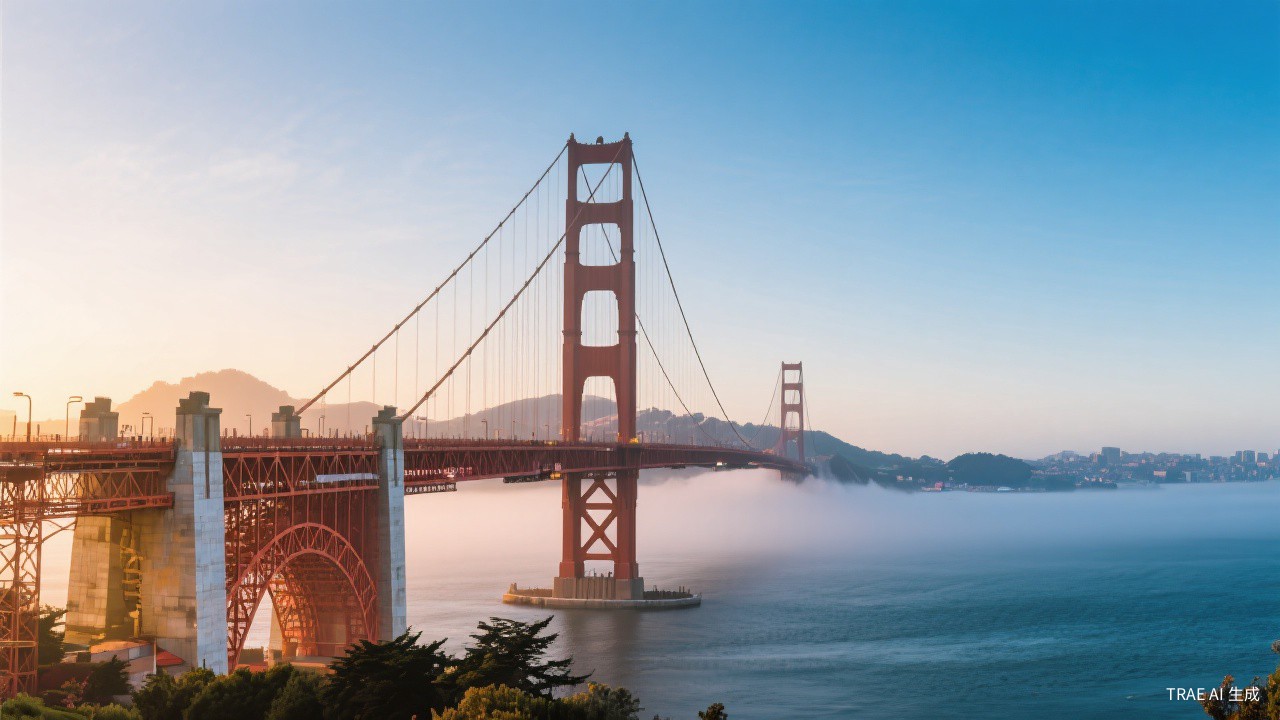
The Golden Gate Bridge, finished in 1937, is the city's most recognizable landmark. The 1.7-mile span, painted in its signature International Orange, connects San Francisco to Marin County and is visible from dozens of points around the bay. Alcatraz Island, the former federal penitentiary in the middle of the bay, draws over a million visitors per year who take the short ferry ride to tour the cellblocks where Al Capone and Robert Stroud were imprisoned.
San Francisco's food culture runs deep. The city invented sourdough bread, and Boudin Bakery has been baking it since 1849. The Ferry Building marketplace along the Embarcadero houses artisan food producers, coffee roasters, and a farmers' market that is one of the best in the country. The Mission district has the best Mexican food north of the border.
Best Time to Go
September to November is the best time to visit. San Francisco's late summer and fall are the warmest and driest months, with temperatures of 15-22°C and minimal fog. October is often the warmest month.
Summer (June to August) is surprisingly cool and foggy. The famous Karl the Fog rolls through the Golden Gate in the afternoon, and temperatures in the city rarely exceed 18°C. Bring layers regardless of the month.
Winter (December to February) is mild (8-15°C) and rainy. The hills turn green, and the city is quietest. Spring (March to May) brings gradually warming temperatures and wildflowers.
Getting There and Around
San Francisco International Airport (SFO) is 13 miles south of downtown, with direct flights from virtually everywhere. Oakland (OAK) and San Jose (SJC) are alternatives. BART connects SFO to downtown in 30 minutes for about $10.
Public transit in San Francisco includes BART (trains connecting the city to the East Bay and airports), Muni (buses and streetcars within the city), and the cable cars ($8 per ride). A Muni 3-day pass costs $35.
Uber and Lyft are widely available. A typical ride within the city costs $8-15. Parking is expensive and difficult—renting a car is not recommended for city exploration.
Where to Stay
Union Square and Nob Hill are the most central areas, with major hotels ranging from $150-400 per night. Union Square is the shopping district, and Nob Hill has grand historic hotels like the Fairmont and Mark Hopkins.
The Mission is a active neighborhood with excellent restaurants, murals, and a more local atmosphere. Hotels and vacation rentals here cost $100-250 per night.
Fisherman’s Wharf and North Beach are tourist-heavy but convenient for first-time visitors. Hotels start at $120-300 per night. For budget travelers, hostels in Union Square and the Mission charge $30-50 per bed.
Must-See Attractions
Golden Gate Bridge
The 1.7-mile suspension bridge, completed in 1937, connects San Francisco to Marin County. The pedestrian walkway is on the east side, offering views of the city skyline, Alcatraz, and the bay. Walking the full span takes about 45 minutes each way. The bridge is often shrouded in fog in the afternoon—morning offers the clearest views. Bike rentals ($10-15 per hour) let you cross and continue into Marin Headlands.
Tickets: Free (toll for vehicles $8.75) | Hours: Walkway open daily, 5 AM-6:30 PM (varies)
Alcatraz Island
The former federal penitentiary operated from 1934 to 1963 and housed Al Capone, "Machine Gun" Kelly, and Robert Stroud. The 45-minute audio tour, narrated by former guards and inmates, is excellent and covers the cellblocks, the dining hall, and the isolation units. Ferries depart from Pier 33. Tickets sell out 1-2 weeks ahead—book online.
Cost: $41 adult (includes ferry) | Times: Ferries depart 8:45 AM-6:15 PM (varies by season)
Golden Gate Park
This 1,017-acre park is larger than Central Park in New York. It contains the de Young Museum (fine arts), the California Academy of Sciences (aquarium, planetarium, rainforest dome), the Japanese Tea Garden, the Conservatory of Flowers, and bison paddocks. The park stretches 3 miles from the Haight-Ashbury neighborhood to the Pacific Ocean.
Tickets: Park free (museums $15-35) | Open: Park always open, museums 9:30 AM-5 PM
Chinatown
San Francisco’s Chinatown is the oldest in North America and the most densely populated neighborhood in the city. Grant Avenue is the tourist main street, but the real action is on the side streets—Stockton Street with its produce markets, herbal shops, and seafood stalls. Dim sum restaurants, bakeries, and tea shops line the streets. Allow 2-3 hours.
Entry: Free to explore | Hours: Always open (shops 10 AM-8 PM)
Fisherman’s Wharf and Pier 39
The waterfront area between Pier 39 and Ghirardelli Square is the most tourist-heavy part of the city. Pier 39 has shops, restaurants, and a colony of sea lions that has occupied the adjacent docks since 1989. The Musée Mécanique at Pier 45 has a collection of vintage arcade games and mechanical instruments. Ghirardelli Square, a former chocolate factory, has shops and restaurants with bay views.
Tickets: Free (arcade games $0.25-1) | Open: 10 AM-9 PM (varies by shop)
Food and Drink
Sourdough Bread — San Francisco sourdough, made with a wild yeast starter, has a tangy flavor and chewy texture unlike any other bread. Boudin Bakery at Fisherman’s Wharf has been baking since 1849 and offers tours. A sourdough bread bowl filled with clam chowder costs $9-12.
Mission-Style Burrito — A large flour tortilla wrapped around rice, beans, meat, salsa, and cheese. The Mission district is the birthplace of this style. La Taqueria (Mission Street) is the most famous, winning a James Beard award. A burrito costs $10-14.
Dim Sum — San Francisco’s Chinatown has dozens of dim sum restaurants. Yank Sing, with locations near the Embarcadero, is widely considered the best. Steamer carts circulate with dumplings, buns, and other small plates. A meal costs $20-40 per person.
Ghirardelli Chocolate — The Ghirardelli Chocolate Company, founded in San Francisco in 1852, has a flagship store and soda fountain at Ghirardelli Square. The hot fudge sundae is the signature item. A sundae costs $10-14.
Practical Tips
• Dress in layers. San Francisco weather changes rapidly and varies by neighborhood.
Book Alcatraz tickets online as early as possible. They sell out 1-2 weeks ahead.
• Use Muni and BART instead of taxis or rental cars. Public transit is cheaper and avoids parking headaches.
• Explore beyond Fisherman’s Wharf. The Mission, Castro, Haight-Ashbury, and Richmond districts offer more authentic experiences.
Bring comfortable walking shoes. The hills are steep, and you will walk more than you expect.
Traveler's Tip
Take the ferry from the Ferry Building to Sausalito on a weekday. The 30-minute ride across the bay costs $13 and offers views of the city skyline, Alcatraz, and the Golden Gate Bridge. Sausalito itself is a charming waterfront town with restaurants and galleries.