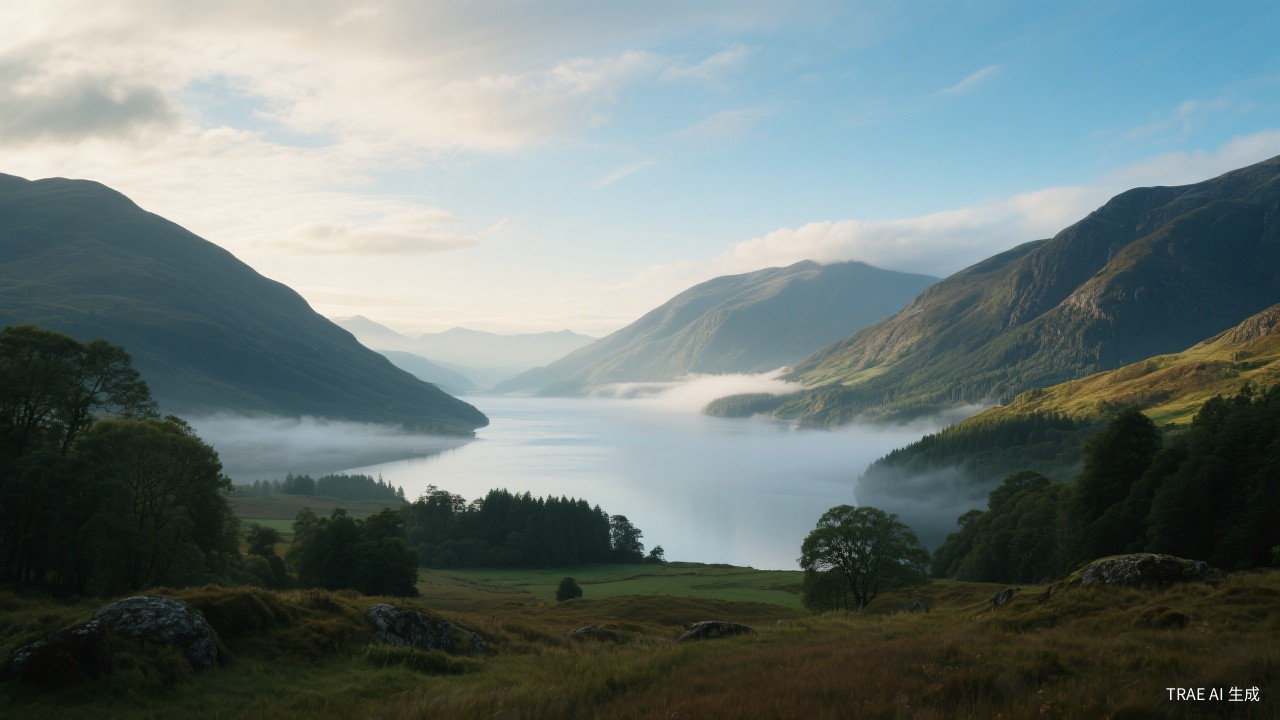
First Impressions of Scottish Highlands
The Scottish Highlands cover the northern half of Scotland and contain some of the most dramatic and empty terrain in Europe. Glencoe, a deep valley between towering mountains, is where the MacDonald clan was massacred in 1692—the mountains seem to carry the weight of that history. Loch Ness, 37 kilometers long and 230 meters deep, is the most famous of Scotland's lochs, though Loch Maree and Loch Lomond are arguably more beautiful. The Isle of Skye, connected to the mainland by bridge, has the Cuillin mountains, the Old Man of Storr rock formation, and the Fairy Pools—cascading waterfalls in a rocky gorge.
Highland culture is distinct from Lowland Scotland. Gaelic is still spoken in parts of the west, and the clan system—though no longer politically powerful—remains a source of identity. The Scenery is dotted with castles (Eilean Donan is the most photographed), ruined crofts (farmhouses abandoned after the Clearances), and whisky distilleries. The food is hearty: venison, salmon, haggis, and Cullen skink (smoked haddock soup). The whisky trail through Speyside visits distilleries producing some of the world's finest single malts.
Allow at least a week. A classic route: Edinburgh to Inverness (via the Cairngorms), Inverness to Loch Ness and Urquhart Castle, then to Skye (two days), and south through Glencoe to Fort William. A car is essential—distances are large and public transport is limited. The North Coast 500, a 500-mile circular route starting from Inverness, is one of the world's great road trips.
Best Time to Go
May to September offers the best weather, with temperatures from 12 to 20 degrees and long daylight hours (sunset after 10 PM in June). The heather blooms purple in August and September, covering the hills in color. The Highland Games take place at various locations through summer. Midges (tiny biting insects) are worst in July and August.
Winter (November to March) is cold (0 to 7 degrees) and dark, but the mountains are snow-capped and the atmosphere is moody. The whisky distilleries are less crowded. Spring (April to May) has fewer midges, greener terrain, and lambing season. The weather is unpredictable year-round—expect rain at any time.
Getting There and Around
Inverness Airport (INV) is the main gateway to the Highlands, with flights from London, Manchester, and other UK cities. Edinburgh Airport (EDI) and Glasgow Airport (GLA) are alternatives, with good road and rail connections north. The train from Edinburgh to Inverness takes 3.5 hours and passes through the Cairngorms.
A car is essential for exploring the Highlands. Rental costs from £30 per day. The North Coast 500 is 516 miles and takes at least seven days. Fuel stations are sparse in remote areas—fill up when you can. Citylink buses connect major towns but run infrequently. ScotRail operates some scenic routes, including the West Highland Line from Glasgow to Mallaig.
Where to Stay
Inverness, the Highland capital, is the most convenient base. Hotels start at £60 to £180 per night. The town has good restaurants, a castle, and access to Loch Ness. It is a good starting point for day trips.
The Isle of Skye has accommodation ranging from £50 to £200 per night. Portree, the main town, has the most options. Broadford and Uig are quieter alternatives. Book well in advance for summer—Skye is extremely popular.
Fort William, at the foot of Ben Nevis, is a good base for outdoor activities. Hotels start at £50 to £150 per night. The town has the West Highland Museum and is the terminus of the Jacobite Steam Train (the Hogwarts Express). Glencoe village has a few hotels and a dramatic setting.
Must-See Attractions
Isle of Skye: Old Man of Storr
A 55-meter rock pinnacle on the Trotternish ridge, reached by a steep one-hour hike from the car park. The walk passes through a Scenery of geological oddities—the ridge was formed by a massive ancient landslide. The views over the Sound of Raasay and the Scottish mainland are extraordinary. Go early to avoid the crowds.
Cost: Free; parking £5 | Hours: Always open
Glencoe
A deep, glacial valley between three mountains: Bidean nam Bian, Buachaille Etive Mor, and the Three Sisters. The A82 road runs through the valley and offers some of Scotland's most dramatic scenery. Stop at the Glencoe Visitor Centre for the history of the 1692 massacre. The Hidden Valley (Coire Gabhail) hike takes two hours and rewards with a hidden plateau between the mountains.
Entry: Free; visitor centre £4 | Times: Visitor centre 9 AM to 5 PM
Eilean Donan Castle
Scotland's most photographed castle, sitting on a small island at the confluence of three lochs. The original 13th-century castle was destroyed in 1719 and rebuilt in the 20th century. The interior has period rooms with clan artifacts and weapons. The setting—reflected in the water with mountains behind—is extraordinary.
Tickets: £12 | Times: 10 AM to 5 PM, April to October
Fairy Pools, Skye
A series of cascading waterfalls and rock pools on the Allt Coir' a' Mhadaidh river, reached by a 40-minute walk from the car park. The pools range in color from clear to deep blue, and the rock formations create natural slides and diving spots. The water is extremely cold even in summer. The walk is flat and suitable for most abilities.
Cost: Free; parking £6 | Open: Always open
Cairngorms National Park
The largest national park in the UK, covering 4,528 square kilometers of mountainous terrain. The Cairngorm Mountain Railway takes visitors to 1,095 meters for views over the surrounding plateau. The park contains reindeer herds, red squirrels, and golden eagles. The town of Aviemore is the main base, with hiking, skiing, and mountain biking.
Tickets: Mountain railway £18 return | Times: Railway 10 AM to 4 PM, weather permitting
Food and Drink
Cullen Skink at The Ship Inn — A thick soup of smoked haddock, potatoes, and onions, originally from the fishing village of Cullen. The Ship Inn in Elgin serves an excellent version. It is warming, filling, and the best thing to eat on a cold Highland day.
Haggis, Neeps, and Tatties — Scotland's national dish: sheep's offal mixed with oatmeal and spices, served with mashed turnips and potatoes. Try it at the Clachaig Inn in Glencoe, a legendary pub with live music and a fireplace that has been warming climbers since 1911.
Whisky Tasting at Talisker Distillery — The only distillery on the Isle of Skye, producing a peaty single malt since 1830. The distillery tour (£14) ends with a tasting of the core range. The 10-year-old is the classic—smoky with a sweet finish. The 18-year-old is more complex. The distillery sits on the shore of Loch Harport with views of the Cuillin mountains.
Fresh Salmon at The Three Chimneys — One of Scotland's most celebrated restaurants, on the Waternish peninsula of Skye. The menu features local seafood, game, and produce. The smoked salmon with dill cream is outstanding. The restaurant has a Michelin star and prices to match, but the setting—overlooking Loch Dunvegan—is unforgettable.
Practical Tips
• Scotland uses the British pound (£). Credit cards are widely accepted.
• Midges are worst in July and August. Bring Smidge repellent or cover up.
• Fuel stations are sparse in the Highlands. Fill up in towns, not on the open road.
• The weather changes rapidly. Carry waterproof layers and warm clothing at all times.
Book accommodation well in advance for summer, especially on Skye.
Traveler's Tip
travel the single-track road from Uig to the Quiraing on Skye. The road passes through some of the most otherworldly scenery in Britain—green hills folded like origami, rock pinnacles, and views over the sea to the Outer Hebrides. Stop at every layby and walk a few hundred meters from the road. The Scenery gets better the further you walk.