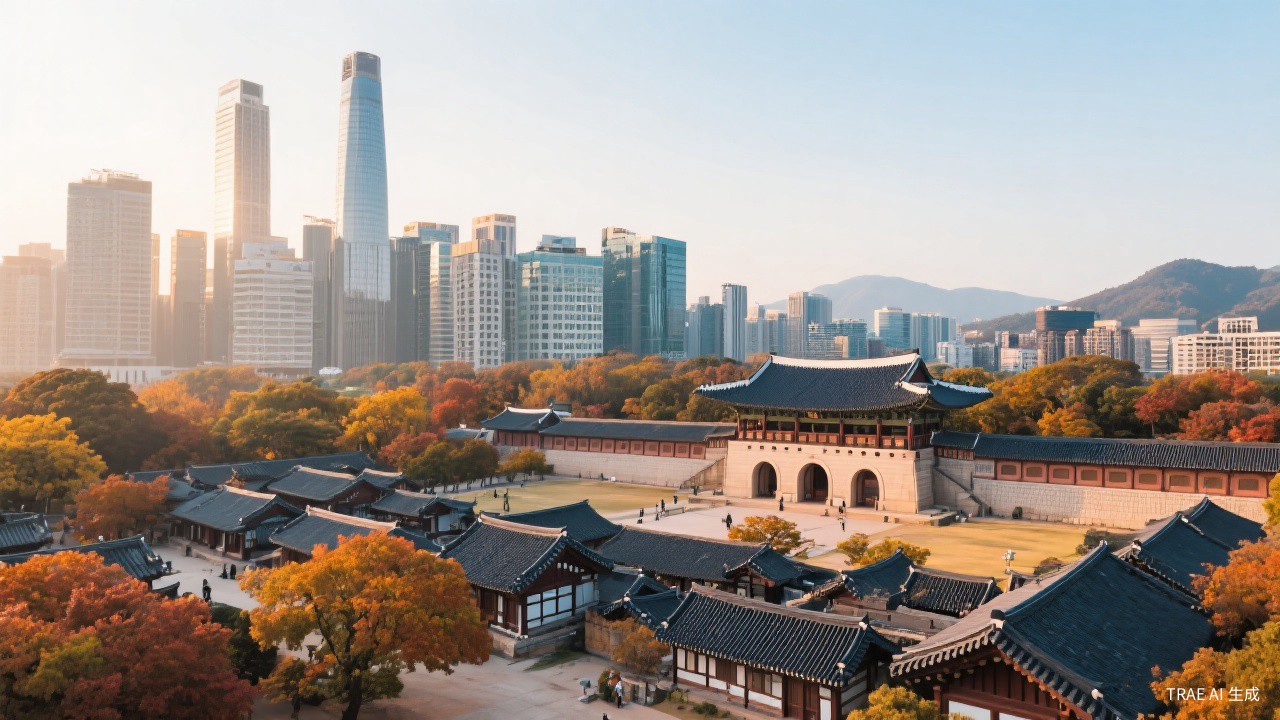
Seoul is a city where 600-year-old palaces stand beside gleaming skyscrapers, where traditional markets sell handmade goods next to malls with the latest K-pop fashion, and where you can eat at a Michelin-starred restaurant or a street stall cooking the same dish for 50 years. This Korean capital moves at a relentless pace—Korea's "ppalli ppalli" (hurry hurry) culture means everything is fast, from WiFi to subway transfers—but also preserves its past with surprising care.
What defines Seoul special is the depth of experiences packed into a relatively compact area. You can start your day at Gyeongbokgung Palace watching the changing of the guard in traditional costume, spend the afternoon shopping in Myeongdong's cosmetic stores, and end the night at a rooftop bar in Gangnam or a street food stall in Hongdae. The city has more than 20 mountains within its boundaries, offering hiking trails with city views.
The food scene is extraordinary. Korean cuisine has gone global, but eating it in Seoul is different—kimchi aged for years, barbecue grilled at your table, street food you've never heard of. The city has more than 200,000 restaurants for 10 million people. Coffee culture is huge, with themed cafes for everything from sheep to recycling. And at night, the pocha (street tent bars) serve soju and snacks until dawn.
Cherry Blossoms & Fall
Visit during Seoul is spring (April to May) or autumn (September to November). Spring brings cherry blossoms and mild temperatures (10-20°C). The Yeouido Cherry Blossom Festival in April draws crowds. Autumn offers comfortable weather, clear skies, and fall foliage in the mountains surrounding the city.
Summer (June to August) is hot and humid (25-35°C), with a monsoon season in July. It's uncomfortable for sightseeing, though air conditioning is everywhere. Hotel rates are lower, and you can experience summer festivals. Winter (December to February) is cold (-7 to 5°C) but dry and clear. It's perfect for skiing at nearby resorts and experiencing Korean winter foods.
Major holidays affect travel. Lunar New Year (January/February) and Chuseok (September/October) see many businesses close as Koreans travel to their hometowns. Accommodation is harder to book, but you'll experience traditional celebrations. Check dates as they shift each year.
T-Money Card & Subway
Incheon International Airport (ICN) is about 50km west of Seoul and consistently ranks among the world's best airports. The AREX express train reaches Seoul Station in 43 minutes (₩9,500). The all-stops train takes 53 minutes (₩4,150). Taxis cost ₩60,000-80,000 to central Seoul. Gimpo Airport (GMP) handles domestic and some Asian flights.
Seoul's subway system is one of the world's best—clean, efficient, and complete. Nine lines cover the city, with English signage and announcements. A single ride costs ₩1,250-2,000 depending on distance. Get a T-money card (₩2,500 plus credit) for tap-and-go convenience on all transport.
Taxis are affordable and metered. A typical ride within the city costs ₩5,000-15,000. Some drivers don't speak English, so have your destination written in Korean or use a translation app. Ride-hailing apps like Kakao T are popular. Buses cover areas the subway doesn't reach, but can be confusing for non-Korean speakers.
Myeongdong vs Hongdae
Myeongdong is popular with tourists for its shopping, street food, and central location. Hotels start at ₩80,000-300,000/night. It's convenient but crowded. Insadong offers a more traditional atmosphere with art galleries, tea houses, and boutique hotels. It's quieter at night and close to palaces.
Hongdae is the university district with budget accommodations, hostels, and a youthful vibe. It's known for nightlife, live music, and creative energy. Hotels cost ₩50,000-150,000/night. Gangnam is the upscale business district made famous by the song. It has luxury hotels (₩200,000-500,000+) and high-end shopping.
Itaewon is the international district with diverse restaurants and nightlife. It's popular with expats and has a range of accommodations. Jongno is the historic center near palaces and traditional markets, with mid-range hotels and guesthouses. For budget travelers, hostels and guesthouses throughout the city cost ₩25,000-50,000/night.
Palaces, K-Beauty & DMZ
Gyeongbokgung Palace
The largest of Seoul's five grand palaces, built in 1395. The changing of the guard ceremony happens every hour from 10 AM-3 PM. Rent a hanbok (traditional dress) for free entry and great photos. The National Palace Museum and National Folk Museum are on the grounds. Allow 2-3 hours.
Entry: ₩3,000 | Times: 9 AM-6 PM (closed Tuesdays)
Bukchon Hanok Village
This traditional neighborhood has hundreds of hanok (traditional Korean houses) dating from the Joseon Dynasty. Many are private residences, so be respectful. Some offer cultural experiences like tea ceremonies. The narrow lanes are atmospheric, especially early morning before tour groups arrive.
Admission: Free | Times: Always open (respect residents)
N Seoul Tower
This landmark on Namsan Mountain offers 360-degree views of Seoul. Take the cable car or hike up. The observation deck costs ₩21,000. The "love locks" fence has thousands of padlocks left by couples. Visit at sunset for the best photos. The tower is illuminated at night.
Cost: Observatory ₩21,000 | Hours: 11 AM-10 PM
Myeongdong Shopping Street
This pedestrian shopping area is famous for Korean cosmetics, fashion, and street food. Major brands like Etude House and Innisfree have flagship stores here. Street food stalls open in the afternoon, selling everything from Korean fried chicken to hotteok (sweet pancakes). It's crowded but essential.
Admission: Free to browse | Open: 10 AM-10 PM
Changdeokgung Palace
This UNESCO World Heritage palace is considered the most beautiful of Seoul's palaces. The Secret Garden (Huwon) requires a separate ticket and timed entry—it's a peaceful oasis of pavilions and ponds. Book ahead for garden tours. The palace is less crowded than Gyeongbokgung.
Entry: ₩3,000 (garden ₩5,000) | Open: 9 AM-6 PM (closed Mondays)
Noryangjin Fish Market
This wholesale fish market operates 24/7. Buy fresh seafood on the first floor, then take it to restaurants on the second floor to have it prepared. Try hoe (raw fish), grilled fish, or live octopus. It's an authentic Korean experience. Go early morning for the wholesale auction.
Entry: Fish market prices + ₩10,000 prep | Hours: 24 hours (best 3 AM-9 AM)
Korean BBQ & Street Food
Korean BBQ — Grill beef, pork, or chicken at your table. Hanwoo (Korean beef) is premium but expensive (₩50,000+ per portion). Samgyeopsal (pork belly) is more affordable (₩15,000-25,000). Wrap in lettuce with ssamjang, garlic, and kimchi.
Bibimbap — Rice topped with vegetables, meat, egg, and gochujang (chili paste). Mix it all together before eating. Jeonju-style is most famous. A bowl costs ₩8,000-15,000. Try it at Gogung in Myeongdong.
Street Food — Tteokbokki (spicy rice cakes), hotteok (sweet pancakes), gimbap (seaweed rice rolls), and Korean fried chicken are essential. Myeongdong and Gwangjang Market have the best selections. Budget ₩2,000-5,000 per item.
Kimchi Jjigae — Kimchi stew with pork or tuna, served bubbling hot with rice and side dishes. It's a Korean comfort food staple. Any neighborhood restaurant serves a good version for ₩8,000-12,000.
Korean Fried Chicken — Double-fried for extra crispiness, then coated in sauce (yangnyeom) or served plain. A whole chicken costs ₩18,000-25,000. Pair with beer (chimaek culture). Try Kyochon or BB.Q Chicken chains.
Wi-Fi & Apps
• Get a T-money card at any convenience store. It works on all public transport and even at some vending machines.
• Learn to use chopsticks. Korean metal chopsticks are flatter and more slippery than Chinese or Japanese versions.
• Remove shoes when entering homes, some restaurants, and temple buildings.
• Don't tip. It's not expected and can cause confusion.
• Download Naver Map or Kakao Map. Google Maps doesn't work well in Korea due to security restrictions.
Traveler's Tip
Visit a jjimjilbang (Korean sauna). It is a cultural experience — hot baths, saunas, and sleeping rooms. Dragon Hill Spa is foreigner-friendly and open 24 hours.