The Real Siem Reap
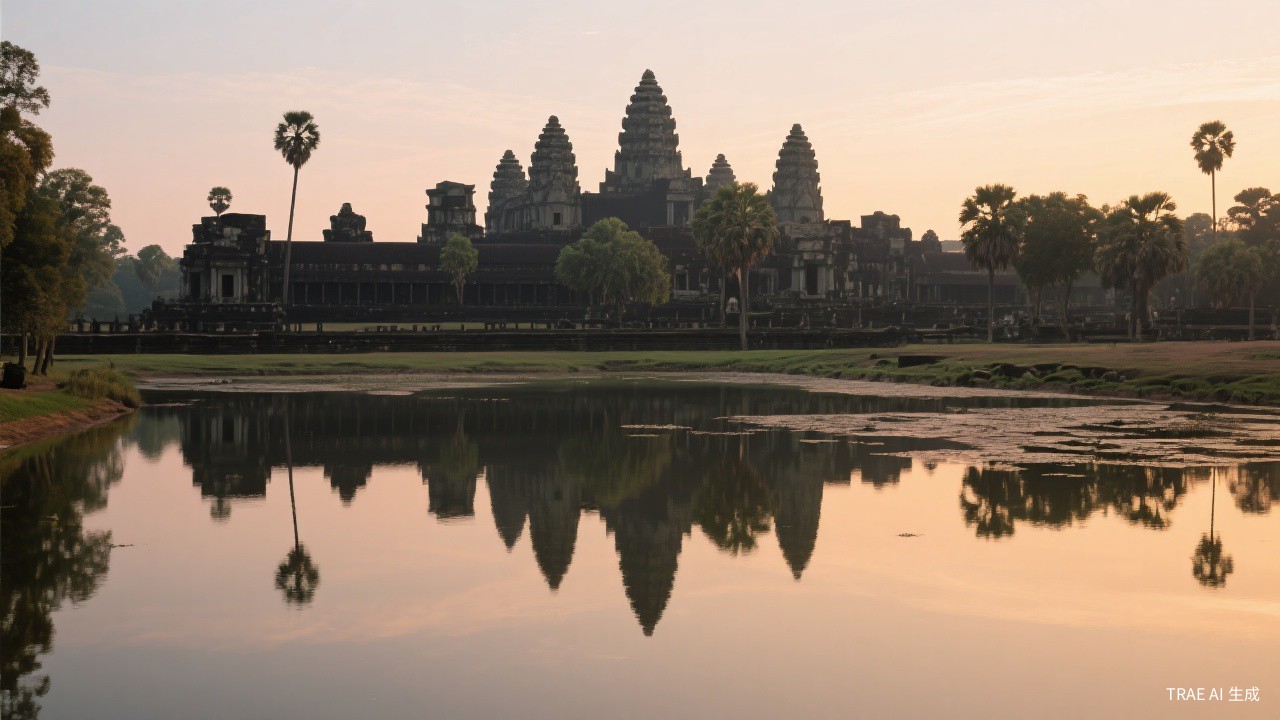
Siem Reap is the gateway to Angkor, the capital of the Khmer Empire from the 9th to 15th centuries and home to the largest religious monument ever built. Angkor Wat, with its five lotus-bud towers and 800-meter-long bas-relief galleries, is the most famous temple, but the complex contains over 1,000 structures spread across 400 square kilometers. Bayon Temple, with its 216 stone faces, and Ta Prohm, where giant silk-cotton tree roots consume the stonework, are equally extraordinary. The Tonle Sap Lake, Southeast Asia's largest freshwater lake, sits south of the city and supports floating villages where families live on houseboats.
Siem Reap has evolved from a quiet provincial town into Cambodia's most visited destination, but it retains a relaxed charm. The Old Market (Phsar Chas) area is the center of tourist life, with restaurants, bars, and the Angkor Night Market. The town's food scene blends Khmer cuisine (amok curry, fish cakes, and lok lak beef) with international options. The Cambodian Circus (Phare) performs nightly shows that blend acrobatics, theater, and storytelling without animals. The countryside around Siem Reap offers rice paddies, silk farms, and bird-watching at the Prek Toal Biosphere Reserve.
Plan four to five days. Spend three days exploring the Angkor complex: day one for Angkor Wat and Angkor Thom (including Bayon), day two for the outer temples (Banteay Srei, Ta Prohm), day three for sunrise at Angkor Wat and any temples you missed. Dedicate a half-day to the Tonle Sap floating villages. Leave one evening for the Phare Circus and Pub Street.
Best Time to Go
November to February is the dry season, with temperatures between 22 and 32 degrees and minimal rain. This is peak season, with the largest crowds at Angkor Wat. The Angkor Wat International Half Marathon in December and the Khmer New Year (Choul Chnam Thmey) in April are notable events.
March to May is hot (35 to 40 degrees) and increasingly dry. June to October is the green season, with afternoon rain showers that cool things off and fill the moats around the temples. The green season offers fewer tourists, lower hotel prices, and the most photogenic conditions—the moss-covered stones of Ta Prohm are at their most atmospheric after rain.
Getting There and Around
Siem Reap International Airport (REP) receives direct flights from Bangkok (1 hour), Singapore (2.5 hours), Ho Chi Minh City (1.5 hours), and several Chinese cities. A taxi from the airport to the Old Market area costs USD 7 to 10. The airport is only 8 kilometers from the city center. Buses from Phnom Penh (6 hours, USD 12 to 15) and Bangkok (8 hours, USD 25 to 30) are also available.
Tuk-tuks are the most practical way to get around—hire one for the day for USD 15 to 20 to visit the temples. The Angkor Pass (USD 37 for 1 day, USD 62 for 3 days, USD 72 for 7 days) is required for all temple visits. Bicycles rent for USD 2 to 3 per day and are a pleasant way to explore the closer temples. Motorbike taxis cost USD 1 to 3 per trip within the city.
Where to Stay
The Old Market area (around Pub Street) has the widest range of accommodation. Boutique hotels like the Belmond La Residence (USD 150 to 300 per night) and the Viroth's Hotel (USD 80 to 150) offer luxury within walking distance of the market. Mid-range options like the Onederz Hostel (USD 10 to 20) and the Golden Temple Villa (USD 30 to 60) are plentiful.
The Wat Bo area, east of the river, is quieter with similar pricing and a more local feel. The Sok San Road area has several well-reviewed guesthouses in the USD 20 to 40 range. For luxury, the Raffles Grand Hotel d'Angkor (USD 300+) is a colonial-era property adjacent to the Royal Gardens.
Must-See Attractions
Angkor Wat
Built in the early 12th century by King Suryavarman II, Angkor Wat is the largest religious structure ever built, covering 162 hectares. The five lotus-bud towers represent Mount Meru, the Hindu home of the gods. The bas-relief galleries depict scenes from Hindu mythology and Khmer history. Sunrise behind the temple, reflected in the moat, is one of the world's most iconic sights.
Cost: Included in Angkor Pass (USD 37-72) | Open: Daily 5 AM-6 PM
Bayon Temple
The state temple of King Jayavarman VII, built in the late 12th century, features 216 massive stone faces carved into 54 towers. The faces, thought to represent the king himself or the bodhisattva Avalokiteshvara, smile down from every angle. The temple sits at the center of Angkor Thom, the walled city that served as the Khmer capital.
Entry: Included in Angkor Pass | Open: Daily 7:30 AM-5:30 PM
Ta Prohm
Built in 1186 as a Buddhist monastery, Ta Prohm has been left largely in its natural state, with giant silk-cotton and strangler fig trees growing over and through the stone structures. The interplay of nature and architecture creates one of the most atmospheric temple sites in the world. The temple was featured in the film "Tomb Raider."
Admission: Included in Angkor Pass | Hours: Daily 7:30 AM-5:30 PM
Banteay Srei
Located 25 kilometers from the main Angkor complex, Banteay Srei ("Citadel of Women") is a 10th-century temple renowned for the finest stone carvings in the Angkor region. The pink sandstone walls feature detailed depictions of Hindu deities, scenes from the Ramayana, and decorative motifs of extraordinary detail. The small scale of the temple makes the carvings feel intimate.
Tickets: Included in Angkor Pass | Hours: Daily 7:30 AM-5 PM
Tonle Sap Lake and Kampong Phluk
Southeast Asia's largest freshwater lake expands and contracts with the seasons, supporting a vast ecosystem and floating communities. Kampong Phluk, a village of stilted houses 16 kilometers from Siem Reap, offers boat tours through the flooded forest and a glimpse of life on the water. The village school, pagoda, and fish farms are all accessible by boat.
Cost: Boat tour USD 20-25 | Times: Daily 7 AM-4 PM
Food and Drink
Fish amok (steamed fish curry in banana leaf) — Chamkar Restaurant, Siem Reap. USD 5-8.
Beef lok lak (stir-fried beef with lime and pepper) — Khmer Kitchen, Old Market area. USD 4-7.
Nom banh chok (Khmer noodles with green curry) — Street vendors near Psar Chas. USD 1-2.
Grilled frog and snake — Angkor Night Market food stalls. USD 3-5.
Practical Tips
• Buy the 3-day Angkor Pass (USD 62)—one day is not enough to see the main temples properly.
• Sunrise at Angkor Wat is crowded; arrive by 5 AM to secure a good spot by the reflecting pool.
• Dress modestly at the temples—cover shoulders and knees, or you may be denied entry.
• Tuk-tuk drivers can be hired for USD 15-20 per day for temple visits—agree on the price in advance.
• Drink bottled water only and use sunscreen—the temples offer almost no shade.
Traveler's Tip
Visit the Cambodia Landmine Museum and Relief Center (USD 5), 30 minutes north of Siem Reap. Founded by Aki Ra, a former child soldier who spent years clearing landmines, the museum displays defused ordnance and tells the stories of landmine victims. It is sobering but essential for understanding Cambodia's recent history.