What You Will Find in Sri Lanka
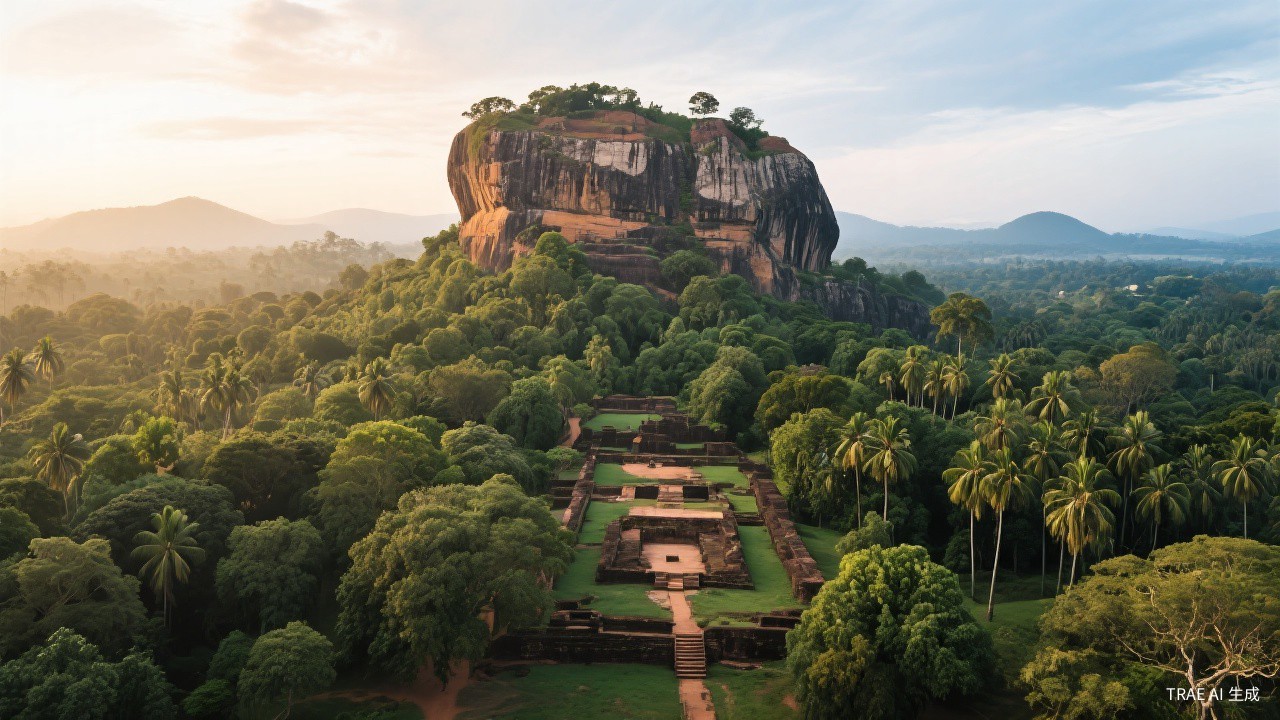
Sri Lanka packs an extraordinary range of experiences into a small island. The Cultural Triangle in the north contains the ancient cities of Anuradhapura (with its 2,000-year-old stupas), Polonnaruwa (with its colossal Buddha statues), and Sigiriya (a 200-meter rock fortress with frescoes and panoramic views). The hill country rises to 2,524 meters at Pidurutalagala, with tea plantations carpeting the slopes around Nuwara Eliya and Ella. The south coast has some of Asia's best beaches—Unawatuna, Mirissa, and Tangalle—along with the colonial fort city of Galle. Yala National Park has one of the world's highest densities of leopards.
Sri Lanka's cultural diversity is reflected in its festivals, food, and daily life. The Kandy Esala Perahera (July or August) is a spectacular procession of elephants, dancers, and fire-breathers honoring the Sacred Tooth Relic. The country's cuisine features rice and curry, hoppers (bowl-shaped pancakes), kottu roti (chopped roti with vegetables), and fresh seafood along the coast. The Tamil Hindu communities of the north maintain temples and traditions distinct from the Sinhalese Buddhist majority. The trains, particularly the route from Kandy to Ella through the tea country, are among the most scenic rail trips in the world.
Plan 14 to 21 days for a complete tour. A classic route: Colombo (1 day), Sigiriya and Dambulla (2 days), Kandy (2 days), train to Ella (1 day), Ella and tea country (2 days), Yala National Park (2 days), south coast beaches (3 days), Galle (1 day). Internal flights and private drivers can help cover distances efficiently.
Best Time to Go
December to March is the dry season on the west and south coasts and in the Cultural Triangle, with temperatures between 25 and 32 degrees. This is peak season for beach holidays. The Kandy Esala Perahera in July or August is the country's biggest festival. April and September are inter-monsoon periods with brief showers.
The southwest monsoon from May to September brings rain to the west and south coasts, but the east coast (Trincomalee, Arugam Bay) is dry. The northeast monsoon from October to February reverses the pattern. Year-round, some part of the island has good weather. The hill country is cooler (15 to 25 degrees) and can receive rain at any time.
Getting There and Around
Bandaranaike International Airport (CMB) near Colombo is the main entry point, with direct flights from London, Frankfurt, Dubai, Singapore, Bangkok, Mumbai, and several other cities. Mattala Airport (HRI) in the south handles some flights but is less convenient. The airport express bus connects to Colombo Fort for LKR 300. A taxi costs LKR 3,500 to 5,000. The scenic train from Colombo to Kandy (3 hours) and Kandy to Ella (6 hours) is highly recommended.
Private drivers cost USD 35 to 50 per day and are the most practical way to explore the island. Trains are cheap (second class from Colombo to Kandy is LKR 450) and scenic but can be slow and crowded. Intercity buses are the cheapest option (LKR 200 to 500) but not for the faint-hearted. Domestic flights between Colombo and Hambantota or Trincomalee save time. Tuk-tuks within cities cost LKR 100 to 300 per trip.
Where to Stay
Colombo has the widest range, from the Shangri-La (USD 200+) to the Colombo Court Hotel (USD 100 to 150). Galle Fort has boutique hotels like the Fort Printers (USD 80 to 150). The south coast beach areas (Unawatuna, Mirissa) have beachfront properties from USD 30 to 200. Ella has guesthouses with mountain views from USD 15 to 50. In the Cultural Triangle, the Habarana area has the best selection, from the Cinnamon Lodge (USD 100 to 200) to budget guesthouses (USD 20 to 40).
The tea country around Nuwara Eliya has colonial-era properties like the Grand Hotel (USD 80 to 150) and tea estate bungalows (USD 100 to 300). For a beach splurge, the Amanwella in Tangalle (USD 500+) and the Cape Weligama (USD 300+) are among Asia's finest coastal resorts. Budget travelers can find clean guesthouses throughout the island for USD 15 to 30 per night.
Must-See Attractions
Sigiriya Rock Fortress
A 200-meter volcanic rock rising from the plains, topped with the ruins of a 5th-century palace built by King Kashyapa. The climb to the summit takes about 45 minutes via 1,200 steep steps, passing the famous frescoes of celestial maidens and the mirror wall with its ancient graffiti. The summit views across the Cultural Triangle are extraordinary.
Entry: USD 30 (foreigners) | Hours: Daily 7 AM-5:30 PM
Temple of the Sacred Tooth Relic, Kandy
Sri Lanka's most sacred Buddhist temple houses a tooth relic of the Buddha, brought to Sri Lanka in the 4th century. The temple sits within the Royal Palace complex beside Kandy Lake. Puja ceremonies are held three times daily, when the casket containing the tooth is displayed. The temple is the focal point of the annual Esala Perahera festival.
Cost: LKR 1,500 (foreigners) | Hours: Daily 5:30 AM-8 PM; puja 5:30 AM, 9:30 AM, 6:30 PM
Ella to Kandy Train Ride
The 6-hour train ride from Ella to Kandy (or the reverse) passes through tea plantations, cloud forests, and mountain villages, crossing 30+ bridges and passing through 15 tunnels. The view from the open train doors as the train descends from the hill country stands out as photographed rail scenes in the world. Second class reserved seats cost LKR 450.
Admission: LKR 450 (second class) | Times: Departs 6:05 AM (Ella to Kandy)
Yala National Park
Sri Lanka's second-largest national park has one of the world's highest densities of leopards, along with elephants, sloth bears, crocodiles, and over 200 bird species. Safari drives (3 to 4 hours) depart at dawn and in the afternoon. The park's varied Scenery includes coastal lagoons, scrub jungle, and rocky outcrops.
Entry: Safari USD 40-60 (including park entry) | Open: Daily 6 AM-6 PM; safaris 5:30 AM and 3 PM
Galle Fort
A UNESCO World Heritage Site, Galle Fort is a 17th-century Dutch colonial walled city on the south coast. The ramparts enclose cobblestone streets, colonial-era churches, boutique hotels, art galleries, and cafes. The lighthouse at the southern end of the fort offers views of the Indian Ocean. The fort comes alive in the evening when locals and tourists walk the ramparts.
Cost: Free | Hours: Always open; shops 9 AM-7 PM
Food and Drink
Rice and curry (multiple dishes with rice) — The Commons, Colombo. LKR 800-1,500.
Hoppers (appa) with egg and sambol — Barefoot Garden Cafe, Galle Fort. LKR 400-600.
Kottu roti (chopped roti stir-fry) — Hotel de Pilawoos, Galle Road, Colombo. LKR 400-600.
Fresh seafood (crab, prawns, fish) — Ministry of Crab, Colombo. LKR 3,000-8,000.
Practical Tips
• The train from Kandy to Ella is one of the world's most scenic—book second-class reserved seats at least a week ahead.
• Yala National Park is closed on the full moon day each month—check the schedule before visiting.
• A private driver is the most practical way to explore Sri Lanka—expect to pay USD 35-50 per day including fuel.
• Sri Lanka runs on 230V with Type D sockets—bring an adapter if your devices use different plugs.
• The Cultural Triangle is hot and dry—carry water and sunscreen when visiting Sigiriya and Polonnaruwa.
Traveler's Tip
Take the afternoon train from Kandy to Ella and sit on the right side of the carriage. As the train descends from Nanu Oya station (near Nuwara Eliya), the track passes along the edge of tea plantations with views stretching to the plains below. The open train doors provide the best photo opportunities—hold on tight and enjoy one of the world's great rail trips.