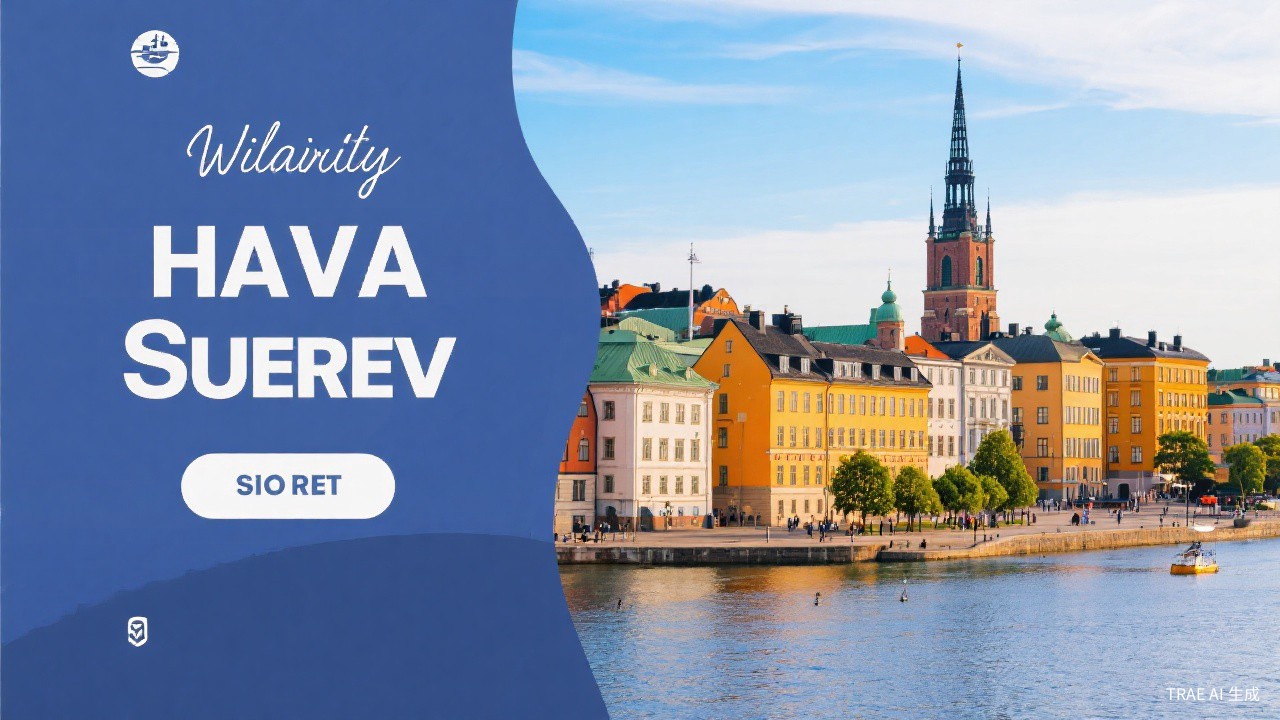
What Makes Stockholm Worth Visiting
Stockholm is built on 14 islands connected by 57 bridges, earning it the nickname "Venice of the North." The Gamla Stan (Old Town) is one of the best-preserved medieval city centers in Europe, with the Royal Palace, Storkyrkan Cathedral, and the Nobel Museum on a compact island. The Vasa Museum houses a 17th-century warship that sank on its maiden voyage in 1628 and was salvaged in 1961—the ship is 95 percent original and the largest object ever preserved. The city's design heritage is visible everywhere, from the tube stations (many designed as underground caves) to the furniture and glassware shops on Sodermalm.
Stockholm's island geography shapes daily life. Locals commute by ferry, boat, and tunnelbana (metro) between the islands. The archipelago, with 30,000 islands stretching into the Baltic, is a summer playground—Stockholders keep boats at marinas and spend weekends at summer cabins. The food scene has grown enormously: the Ostermalms Saluhall food market is a temple of Swedish produce, and restaurants like Frantzen have earned Michelin stars. Swedish traditions like fika (coffee and pastry break) are observed religiously.
Three to four days is ideal. Day one: Gamla Stan and the Royal Palace. Day two: the Vasa Museum, Skansen open-air museum, and Djurgarden island. Day three: Sodermalm for design, vintage shops, and food. Day four: an archipelago boat trip or a visit to Drottningholm Palace. Stockholm is walkable and well-connected by metro and ferry.
Best Time to Go
May to September offers the best weather, with temperatures from 15 to 25 degrees and very long days (sunset after 9 PM in June). Midsummer (late June) is Sweden's biggest holiday—Stockholm empties as people head to summer cabins. The archipelago is at its best in summer. The Stockholm Culture Festival fills the city with free events in August.
Winter (December to February) is cold (-5 to 5 degrees) and dark, but the Christmas markets, the ice skating rink on Kungstradgarden, and the warmth of Swedish cafes make it appealing. The Northern Lights are occasionally visible from Stockholm. Spring (March to April) is brightening but cool. The cherry blossoms in Kungstradgarden bloom in late April.
Getting There and Around
Stockholm Arlanda Airport (ARN) is 40 kilometers north. The Arlanda Express train connects to Central Station in 20 minutes for 299 SEK (€26). The Flygbussarna coach costs 119 SEK (€10). Taxis cost about 500 SEK (€44). Bromma Airport (BMA) handles domestic flights.
Stockholm's tunnelbana (metro) has three color-coded lines. A single ticket is 39 SEK (€3.40), and a 72-hour pass is 230 SEK (€20). The SL card covers metro, buses, trams, and ferries. The Djurgarden ferry from Slussen is included in the SL ticket and stands out as scenic commuter routes in Europe.
Where to Stay
Gamla Stan (Old Town) is the most atmospheric base. Hotels start at 1,200 to 3,500 SEK (€105 to €305) per night. The narrow streets and medieval buildings are beautiful, but the area is small and can feel crowded. Stay on the quieter eastern side of the island.
Sodermalm, south of Gamla Stan, is Stockholm's trendiest neighborhood. Hotels start at 900 to 2,500 SEK (€79 to €218) per night. The area has vintage shops, design stores, and excellent restaurants. Gotgatan and Hornsgatan are the main streets.
Ostermalm, northeast of the center, is the most upscale area. Hotels start at 1,500 to 4,000 SEK (€131 to €349) per night. The Ostermalms Saluhall food market is here. The area is elegant and quiet. Kungsholmen, west of the center, offers a more residential feel with rooms from 800 to 2,000 SEK (€70 to €175) per night.
Must-See Attractions
Vasa Museum
The world's only preserved 17th-century ship, raised from Stockholm harbor in 1961 after 333 years on the seabed. The Vasa sank on its maiden voyage in 1628—it was top-heavy and capsized within minutes. The museum houses the nearly complete ship along with artifacts recovered from the wreck: cannons, clothing, tools, and even human remains. The scale of the ship is overwhelming.
Tickets: 170 SEK (€15) | Hours: 10 AM to 5 PM daily; until 8 PM Wednesdays
Gamla Stan (Old Town)
One of Europe's best-preserved medieval city centers, dating to the 13th century. The Royal Palace (the official residence of the Swedish king), Storkyrkan Cathedral (where royal weddings take place), and the Nobel Museum are all here. Stortorget, the main square, has colorful merchant houses and the site of the Stockholm Bloodbath (1520). The narrow alleys are perfect for wandering.
Admission: Free to explore; Royal Palace 160 SEK (€14) | Hours: Always open; palace 10 AM to 4 PM
Skansen Open-Air Museum
The world's oldest open-air museum, founded in 1891, containing over 150 historic buildings from across Sweden—farmhouses, manor houses, churches, and a Sami camp. The museum also has a zoo with Nordic animals including elk, wolves, lynx, and brown bears. It occupies a hilltop on Djurgarden island with views over Stockholm.
Admission: 220 SEK (€19) | Times: 10 AM to 5 PM daily
Drottningholm Palace
The private residence of the Swedish royal family, on an island in Lake Malaren. The palace, built in the 17th century, is often called the Versailles of Sweden. The Chinese Pavilion and the Court Theater (still using its original 18th-century stage machinery) are in the extensive gardens. The palace is a UNESCO World Heritage Site. Reachable by commuter boat from City Hall.
Admission: 180 SEK (€16) | Times: 10 AM to 4:30 PM, May to August
Stockholm Archipelago
Over 30,000 islands stretch from Stockholm into the Baltic. The closest islands are reachable by public ferry in 30 to 60 minutes. Vaxholm, the "capital of the archipelago," has a fortress and waterfront restaurants. Sandhamn, two hours by boat, has sailing clubs and a remote feel. Waxholmsbolaget ferries run year-round from Stromkajen.
Admission: Ferry from 85 SEK (€7.40) one way | Times: Ferries from Stromkajen, multiple daily departures
Food and Drink
Swedish Meatballs at Meatballs for the People — Swedish meatballs (kottbullar) served with lingonberry jam, cream sauce, and pickled cucumber. This Sodermalm restaurant serves several varieties—moose, wild boar, and classic beef—with craft beer. It is a modern take on a Swedish classic.
Smorgasbord at Ostermalms Saluhall — Sweden's most famous food market, dating to 1888. The upstairs restaurant Lisa Elmqvist serves a traditional smorgasbord with herring, gravlax, meatballs, and Jansson's Temptation (potato and anchovy casserole). The market also has stalls selling cheese, bread, and prepared foods.
Cinnamon Bun (Kanelbulle) — Sweden's favorite pastry: a cardamom-spiced bun swirled with cinnamon sugar and pearl sugar. The best ones come from small bakeries—Fabrique on Sodermalm makes excellent versions. Swedes eat them during fika, the daily coffee break that is almost sacred.
Gravlax at Kajsas Fisk — Cured salmon with mustard-dill sauce on dark bread, sold at this legendary seafood stall in Ostermalms Saluhall. The salmon is cured for 48 hours with sugar, salt, and dill. It is fresh, simple, and perfect. Eat it standing at the counter like the locals.
Practical Tips
• Sweden uses the Swedish krona (SEK). Credit cards are accepted almost everywhere.
• Stockholm is expensive. Budget at least 800 to 1,200 SEK (€70 to €105) per day for food.
• The SL 72-hour pass (230 SEK) covers all public transport including archipelago ferries.
• Fika is a daily ritual. Take time for coffee and a pastry at least once a day.
• Many restaurants close on Sundays. Book ahead for dinner, especially on weekends.
Traveler's Tip
Take the ferry from Stromkajen to Vaxholm (85 SEK, 50 minutes), walk around the fortress and harbor, have lunch at a waterfront restaurant, then take the ferry back. The boat ride through the archipelago is beautiful, and Vaxholm is a charming introduction to island life without committing to a full day trip.