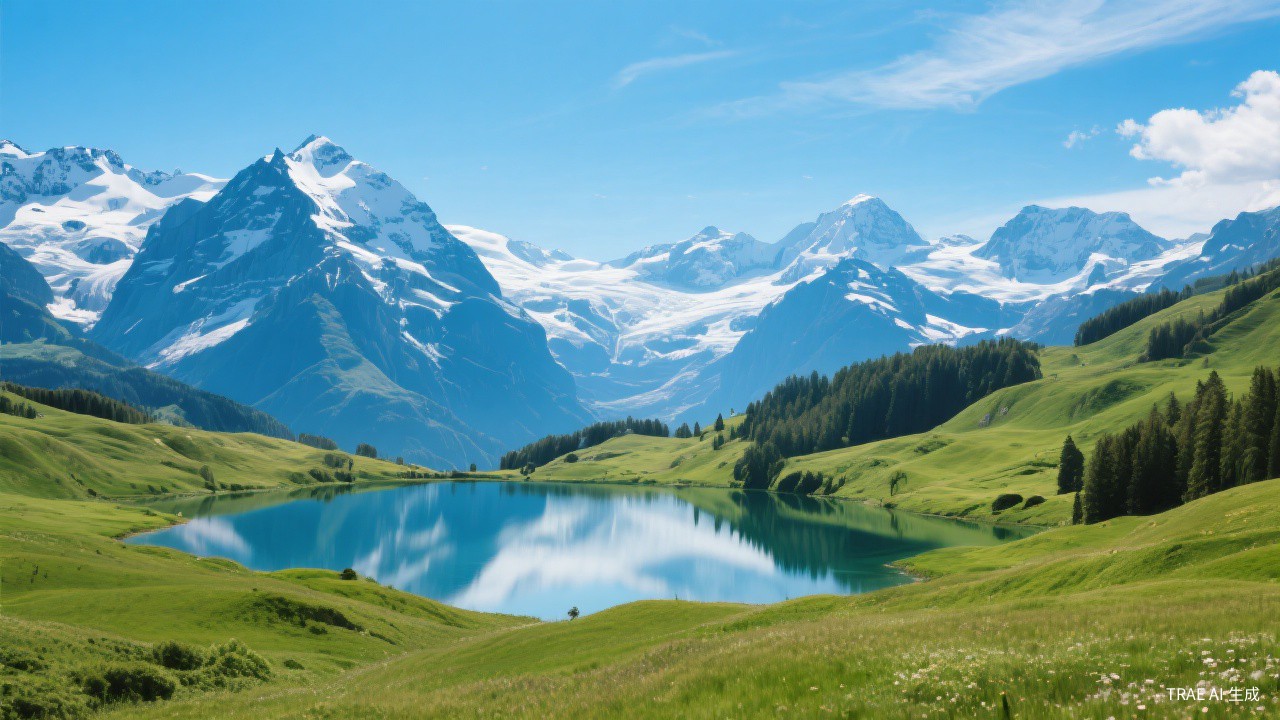
Discovering Swiss Alps
The Swiss Alps contain some of the most dramatic mountain scenery in Europe—4,000-meter peaks, glaciers, alpine meadows, and crystal-clear lakes. The Matterhorn, Switzerland's most iconic mountain, rises 4,478 meters above the car-free village of Zermatt. The Jungfrau region, with the Eiger, Monch, and Jungfrau peaks, offers some of the most spectacular mountain railways in the world. The Bernese Oberland, with its wooden chalets and flower-filled meadows, looks like the Switzerland of postcards.
Switzerland's mountain infrastructure is unmatched. The Glacier Express train connects Zermatt to St. Moritz in eight hours, crossing 291 bridges and through 91 tunnels. The Jungfraujoch railway climbs to 3,454 meters—the highest railway station in Europe. The Gornergrat cogwheel railway above Zermatt offers views of the Matterhorn and 29 other 4,000-meter peaks. These engineering marvels make the mountains accessible to everyone, not just mountaineers.
Allow at least a week. Spend two to three days in the Jungfrau region (Interlaken, Grindelwald, or Lauterbrunnen), two to three days in Zermatt, and one to two days in Lucerne or Bern. The Swiss Travel Pass covers trains, buses, and boats and includes free entry to many museums. Switzerland is expensive—budget accordingly.
Best Time to Go
June to September offers the best hiking weather, with temperatures from 15 to 25 degrees in the valleys and wildflowers in the meadows. The mountain railways and cable cars operate at full capacity. July and August are warmest but also most crowded.
December to March is ski season. The major resorts (Zermatt, St. Moritz, Verbier) have reliable snow and extensive lift systems. The Jungfraujoch is open year-round. Spring (April to May) brings wildflowers and melting snow—the waterfalls in Lauterbrunnen are at their most powerful. Autumn (October to November) has fewer tourists and golden foliage.
Getting There and Around
Zurich (ZRH) and Geneva (GVA) are the main international airports. Zurich is the better base for the Jungfrau region and eastern Switzerland; Geneva is closer to the Alps of Valais. Swiss Federal Railways (SBB) connects both airports to the entire country. Zurich to Interlaken takes 2 hours 15 minutes (from CHF 55).
The Swiss Travel Pass (from CHF 232 for three days) covers trains, buses, and boats nationwide. The Half Fare Card (CHF 120) gives 50 percent off all tickets for one month. Mountain railways and cable cars are only partially covered by the pass. The Jungfrau Travel Pass covers regional transport in the Jungfrau area.
Where to Stay
Interlaken, between Lake Thun and Lake Brienz, is the most convenient base for the Jungfrau region. Hotels start at CHF 120 to 350 (€125 to €365) per night. The town has good restaurants and transport connections. Grindelwald and Lauterbrunnen are quieter mountain villages with rooms from CHF 100 to 300 (€105 to €313) per night.
Zermatt is car-free and accessible only by train. Hotels start at CHF 150 to 500 (€157 to €521) per night. The village has direct views of the Matterhorn. Rooms with Matterhorn views are expensive but worth the splurge. Tasch, down the valley, offers cheaper accommodation with a 12-minute train ride to Zermatt.
Lucerne, with its medieval wooden bridge and lake setting, makes a good base for central Switzerland. Hotels start at CHF 100 to 400 (€105 to €417) per night. The city is connected to Mount Pilatus and Mount Rigi by cogwheel railways.
Must-See Attractions
Matterhorn and Gornergrat Railway
The Gornergrat cogwheel railway climbs from Zermatt to 3,089 meters in 33 minutes, passing through pine forests and alpine meadows. The summit offers a 360-degree panorama of the Matterhorn, Monte Rosa, and 29 other 4,000-meter peaks. The view of the Matterhorn reflected in the Riffelsee lake (at the Rotenboden stop) stands out as photographed in Switzerland.
Tickets: CHF 92 (€96) round trip | Times: First train 7:35 AM; last descent varies by season
Jungfraujoch
The highest railway station in Europe at 3,454 meters, reached by cogwheel train from Grindelwald or Lauterbrunnen via Kleine Scheidegg. The complex includes the Ice Palace (sculptures carved into the glacier), the Sphinx Observatory (with viewing terrace), and the Plateau (a snow-covered walkway). On clear days, you can see the Aletsch Glacier, the longest in the Alps.
Tickets: CHF 220 (€230) round trip from Interlaken | Open: Trains from 8 AM; last return varies by season
Lauterbrunnen Valley
A deep glacial valley with 72 waterfalls cascading from the cliff faces. The Staubbach Falls, dropping 297 meters, are visible from the village. The Trummelbach Falls, inside the mountain, are accessible by lift. The valley floor is flat and perfect for walking, with views of the Eiger, Monch, and Jungfrau rising above. The village itself has wooden chalets and a church dating to the 15th century.
Cost: Staubbach free; Trummelbach CHF 14 (€15) | Hours: Trummelbach April to October, 9 AM to 5 PM
Glacier Express
The eight-hour train ride from Zermatt to St. Moritz crosses 291 bridges and passes through 91 tunnels. The route climbs over the Oberalp Pass (2,033 meters) and passes through the Rhine Gorge, a UNESCO-designated Scenery. Large panoramic windows provide constant views. First-class seats include meals served at your seat.
Cost: From CHF 149 (€155) one way, half fare card | Times: One daily departure each direction, 8:13 AM
Lake Brienz and Giessbach Falls
Lake Brienz is a turquoise glacial lake surrounded by mountains. The paddle steamer Lotte (operating since 1931) crosses the lake to the Giessbach Falls, a 14-step waterfall cascading 500 meters into the lake. The Grandhotel Giessbach, a 19th-century castle hotel, overlooks the falls. The combination of boat ride and waterfall makes a perfect half-day trip from Interlaken.
Tickets: Boat from CHF 35 (€37) one way | Open: Boats April to October, multiple departures
Food and Drink
Rosti at Restaurant Baren — Switzerland's national dish: grated potatoes fried until crispy, topped with cheese and often served with a fried egg. Restaurant Baren in Interlaken serves a generous portion with a side salad. It is simple, filling, and delicious.
Swiss Cheese Fondue at Restaurant Whymper-Stube — Melted Gruyere and Emmental cheese with white wine and garlic, served in a communal pot with bread cubes for dipping. The Whymper-Stube in Zermatt has been serving fondue since 1853. Order the half portion unless you are very hungry—Swiss portions are enormous.
Swiss Chocolate at Laderach — Swiss chocolate is among the best in the world. Laderach, a Swiss chocolatier since 1849, has shops throughout the country. The Frisch Schoggi (fresh chocolate bark) with nuts and dried fruit is their signature product. Buy it at the factory shop in Broc or at any Laderach store.
Raclette at Chuchi vom Pfistern — Half a wheel of raclette cheese melted and scraped onto a plate with boiled potatoes, pickles, and onions. This Bernese restaurant in the old town serves raclette in the traditional way. The cheese is local and the atmosphere is warm and rustic.
Practical Tips
• Switzerland is extremely expensive. Budget CHF 100 to 150 (€105 to €157) per day per person minimum.
• The Swiss Travel Pass is almost always worth buying if you plan to take multiple trains.
• Mountain weather changes rapidly. Check webcams before heading up—clouds can obscure views completely.
• Buy food at Coop or Migros supermarkets—they are much cheaper than restaurants.
Book the Glacier Express and Jungfraujoch trains in advance, especially in summer.
Traveler's Tip
Take the early train from Lauterbrunnen to Kleine Scheidegg, then hike the Eiger Trail to Alpiglen (about two hours). The trail runs along the base of the Eiger's North Face—the most feared wall in mountaineering history. You look straight up at 1,800 meters of vertical rock. The trail is well-marked and not technical, but the exposure is thrilling.