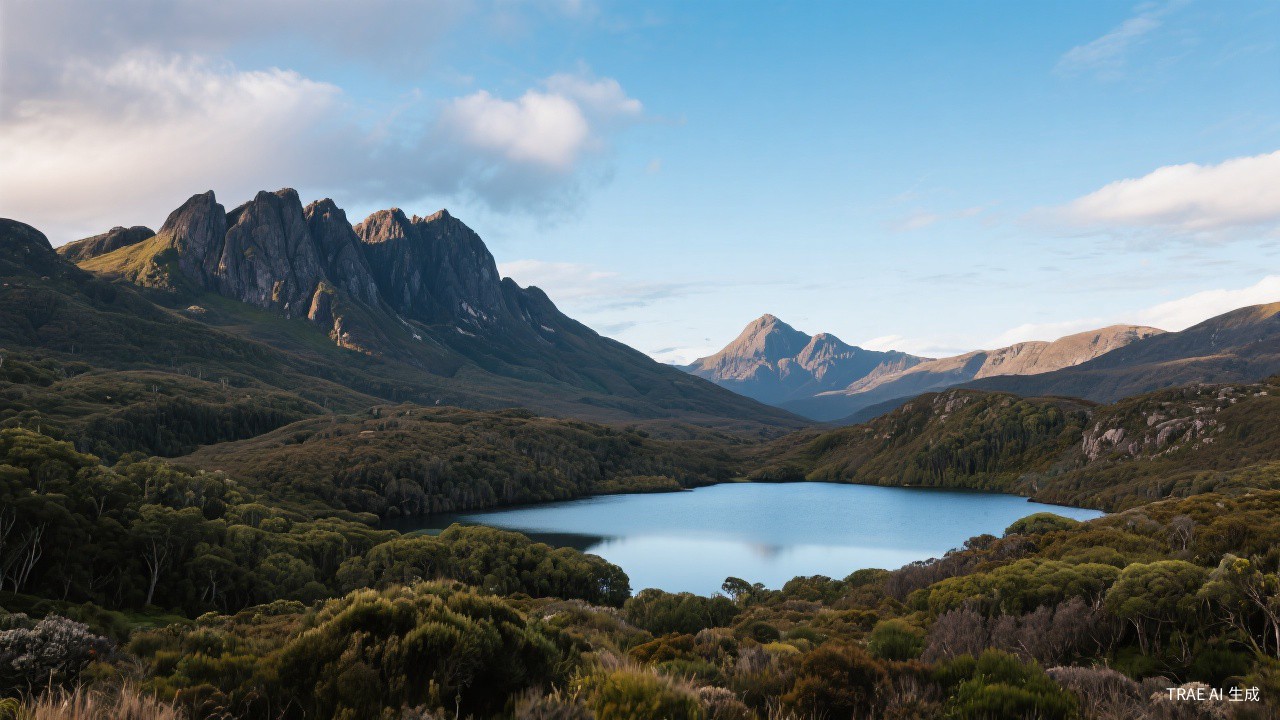
The Real Tasmania
Tasmania, Australia's island state, sits 240 kilometers south of the mainland across Bass Strait. The island is about the size of Ireland, with a population of just 540,000. Tasmania is famous for its wilderness—over 40% of the island is protected as national park or World Heritage area—and for a food and drink scene that punches well above its weight.
Cradle Mountain, in the central highlands, is Tasmania's most iconic natural attraction. The jagged dolerite peaks rise above Dove Lake, and the surrounding rainforest contains ancient pines, moss-covered boulders, and wombats. The Overland Track, a 65-kilometer hiking trail from Cradle Mountain to Lake St Clair, is one of Australia's most famous multi-day walks (6 days, permits required December-April).
Hobart, the capital, has a food scene anchored by the Salamanca Market (every Saturday), the Museum of Old and New Art (MONA), and a growing number of excellent restaurants using local produce—Tasmanian salmon, oysters, cheese, and whisky. The Freycinet National Park, 2.5 hours northeast of Hobart, contains Wineglass Bay, often ranked among the top 10 beaches in the world for its crescent of white sand and turquoise water.
Best Time to Go
Tasmania has a cool, temperate climate. Summer (December to February) is the warmest season (15-25°C) and the best time for hiking and outdoor activities. This is peak season, especially January.
Autumn (March to May) is particularly beautiful, with fall foliage in the valleys and mild temperatures (10-18°C). The weather can be unpredictable—"four seasons in one day" is a local saying.
Winter (June to August) is cold (3-12°C) with snow on the mountains. This is the quietest season, with lower prices. Spring (September to November) brings wildflowers and gradually warming temperatures. Tasmania can be visited year-round, but pack layers regardless of season.
Getting There and Around
Hobart Airport (HBA) has direct flights from Sydney (2 hours), Melbourne (1 hour), Brisbane (2.5 hours), and Adelaide (2 hours). Launceston Airport (LST), in the north, has flights from Melbourne (1 hour) and Sydney (2 hours).
Renting a car is the best way to explore Tasmania. Rental cars cost A$50-80 per day. The island is compact enough to travel from Hobart to Cradle Mountain (2.5 hours) or to Freycinet (2.5 hours) in a day. The roads are generally good but winding.
Redline Coaches and Tassielink operate bus services between major towns, but schedules are limited. A car gives you the flexibility to explore at your own pace.
Where to Stay
Hobart has hotels and guesthouses ranging from A$100-300 per night. The waterfront area (Sullivans Cove) is the most convenient for restaurants and MONA. Battery Point, a historic neighborhood, has boutique B&Bs (A$120-250 per night).
Cradle Mountain area has lodges and cabins from A$100-300 per night. The Cradle Mountain Hotel and Peppers Cradle Mountain Lodge are the main options.
Freycinet area has accommodations from A$80-300 per night. Freycinet Lodge and Saffire Freycinet (luxury, A$800+) are the main options. For budget travelers, hostels in Hobart and Launceston charge A$25-40 per bed.
Must-See Attractions
Cradle Mountain and Dove Lake
Cradle Mountain-Lake St Clair National Park is Tasmania’s most famous natural area. Dove Lake, at the base of Cradle Mountain, has a 6-kilometer circuit track that passes through rainforest, button grass plains, and glacial moraine. The view of Cradle Mountain reflected in Dove Lake is one of Australia’s most photographed scenes. Wombats, pademelons, and Tasmanian devils are commonly seen. Park entry costs A$25 per person (valid for 2 months).
Entry: A$25 per person (park entry) | Open: Always open (visitor center 8:30 AM-5 PM)
Wineglass Bay (Freycinet National Park)
This crescent-shaped beach in Freycinet National Park is consistently ranked among the world’s most beautiful beaches. The walk from the car park to the Wineglass Bay Lookout takes about 45 minutes (steep in places). Continuing down to the beach adds another 30 minutes. The water is turquoise and the sand is white. The beach faces east, making it a spectacular spot at sunrise.
Cost: A$25 per person (park entry) | Times: Always open
MONA (Museum of Old and New Art)
This privately owned museum in Hobart, opened in 2011, houses one of the most controversial and talked-about art collections in Australia. The museum is built into the cliffside above the Derwent River, with three levels of underground galleries. Exhibits start at ancient Egyptian artifacts to contemporary installations—many are provocative and some are explicit. The museum also has a brewery, winery, and restaurant. Allow 3-4 hours.
Cost: A$35 adult | Times: 10 AM-5 PM (Thu-Tue, closed Wednesdays)
Salamanca Market
Held every Saturday in Salamanca Place, Hobart, this market is one of Australia’s best outdoor markets. Over 300 stalls sell local produce, artisan crafts, clothing, jewelry, and food. The market has live music and a festive atmosphere. Go early (before 9 AM) for the best selection and to avoid crowds. The surrounding Salamanca Place has galleries, restaurants, and cafes in converted sandstone warehouses.
Admission: Free to enter | Open: 8:30 AM-3 PM Saturdays
Port Arthur Historic Site
This former convict settlement, 90 minutes southeast of Hobart, operated from 1830 to 1877 and was one of the most brutal penal colonies in the British Empire. The site includes the penitentiary, the Separate Prison (where prisoners were kept in total silence), the church, and the Isle of the Dead cemetery. A guided tour (included in admission) provides historical context. The site is large—allow 3-4 hours.
Tickets: A$40 adult | Times: 9 AM-5 PM (varies by season)
Food and Drink
Tasmanian Salmon — Tasmania produces some of the world’s finest Atlantic salmon, raised in the cold, clean waters of the Tasman Sea. It is served smoked, grilled, or as sashimi. Try it at Franklin Restaurant in Hobart or at any seafood restaurant. Budget A$25-40 for a main course.
Tasmanian Oysters — Pacific oysters are farmed in several Tasmanian bays and are prized for their clean, briny flavor. Try them at Barilla Bay Oyster Farm (near Hobart) or at the Salamanca Market. A dozen oysters cost A$18-25.
Tasmanian Cheese — Tasmania has several excellent cheese producers. Ashgrove Farm, Bruny Island Cheese, and Pyengana Dairy all produce award-winning cheeses. Try them at the Salamanca Market or at the farm gates. A cheese platter costs A$15-25.
Scallop Pies — A Tasmanian specialty—a pastry filled with scallops in a creamy white sauce. Try them at the Salamanca Market or at any bakery in Tasmania. Budget A$7-10 per pie.
Practical Tips
• Rent a car. Tasmania is best explored by car, as public transport is limited and the best attractions are spread across the island.
• Pack for all weather conditions. Tasmania’s weather changes rapidly—bring layers, a rain jacket, and warm clothing even in summer.
Book Cradle Mountain accommodations well in advance. The area has limited capacity and fills up quickly during peak season (December-February).
Visit the Salamanca Market on Saturday morning. It is the best place to experience Hobart’s food and culture.
• Allow at least 5-7 days for Tasmania. The island is larger than most visitors expect, and rushing through it means missing the best parts.
Traveler's Tip
Travel the road from Strahan to Queenstown (the "Wild West Coast") on a clear day. The road passes through rainforest, past old mining towns, and along the edge of the World Heritage area. The Scenery is raw and dramatic in a way that the rest of Tasmania is not. Stop at Nelson Falls for a short walk to a beautiful waterfall.