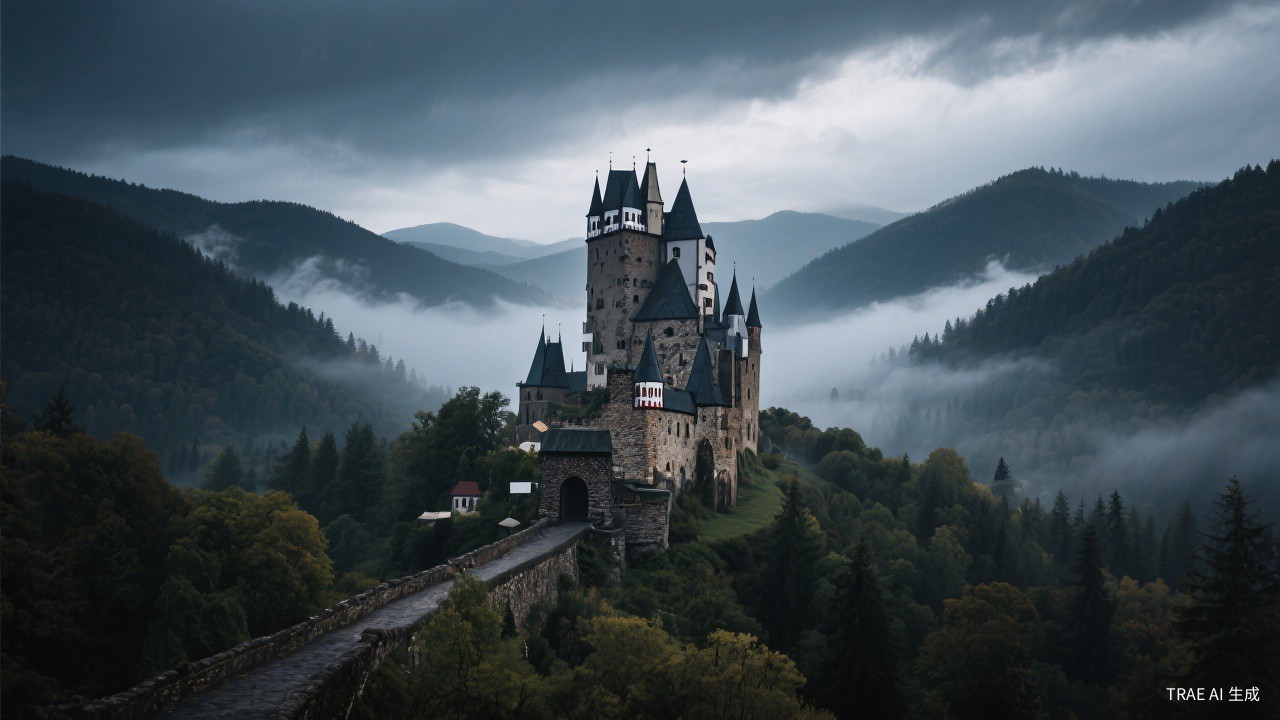
Discovering Transylvania
Transylvania is a region of central Romania surrounded by the Carpathian Mountains, known for its medieval towns, fortified churches, and castles. Bran Castle, perched on a cliff between Bucegi and Piatra Craiului mountains, is popularly associated with Dracula (though the historical Vlad the Impaler had limited connection to it). The real architectural treasures are the Saxon fortified churches of southern Transylvania—Biertan, Viscri, and Prejmer are UNESCO World Heritage Sites, built by German settlers in the 12th to 16th centuries to defend against Ottoman and Tatar invasions.
Transylvania's towns feel like they belong to an earlier century. Sibiu, with its colored houses and rooftop windows that look like eyes, was European Capital of Culture in 2007. Sighisoara is the best-preserved medieval town in Romania—its citadel, clock tower, and covered stairway are virtually unchanged since the 15th century. Brasov, surrounded by mountains, has the largest Gothic church between Vienna and Istanbul. The countryside is a patchwork of hayfields, forests, and villages where horse-drawn carts are still common.
Allow at least a week. Spend two days in Sibiu, one in Sighisoara, two in Brasov (with day trips to Bran Castle and Rasnov Fortress), and one to two exploring the Maramures region in the north. A car gives the most flexibility, but trains and buses connect the main towns. Romania is one of Europe's most affordable destinations.
Best Time to Go
May to September offers the best weather, with temperatures from 18 to 28 degrees. The countryside is green and the mountain roads are open. June brings the Sibiu International Theatre Festival. August has the Medieval Arts Festival in Sighisoara. September is harvest season—a good time for wine tasting.
Winter (December to February) is cold (-5 to 5 degrees) and the mountains get heavy snow. Bran Castle takes on a more atmospheric quality in winter. The Christmas markets in Brasov and Sibiu are charming. Spring (March to April) brings wildflowers and fewer tourists. The Transfagarasan Highway, one of the world's most dramatic roads, is only open from July to October.
Getting There and Around
Sibiu (SBZ) and Bucharest (OTP) are the main airports. Sibiu has flights from several European cities. Bucharest, 270 kilometers south of Brasov, has the most international connections. The train from Bucharest to Brasov takes 2.5 hours (from 45 RON, about €9). Wizz Air and Ryanair serve both airports.
CFR (Romanian railways) connects the main towns. Bucharest to Brasov is 45 to 70 RON (€9 to €14). Sibiu to Sighisoara takes about 3 hours. Renting a car costs from 150 RON (€30) per day and gives access to villages and fortified churches. Roads are generally good but mountain roads require care.
Where to Stay
Sibiu's Old Town is the most atmospheric base. Hotels and guesthouses start at 150 to 400 RON (€30 to €80) per night. The area around the Great Square (Piata Mare) is the most central. The ASTRA Museum hotel, on the museum grounds, is unique.
Brasov's Old Town, with its Gothic Black Church and medieval walls, has hotels from 120 to 350 RON (€24 to €70) per night. The Schei district, just outside the old walls, is quieter and cheaper. For a unique experience, stay in a converted Saxon house in a village like Viscri or Crit (from 100 RON or €20 per night).
Sighisoara's citadel has guesthouses from 100 to 250 RON (€20 to €50) per night. Staying inside the citadel walls is special—the buildings date to the 15th century. The town is small and everything is within walking distance.
Must-See Attractions
Bran Castle
Perched on a 60-meter cliff between two mountain ranges, this 14th-century fortress is popularly known as "Dracula's Castle." The rooms contain period furniture, armor, and art collections. The connection to Vlad the Impaler is tenuous—he may have been held prisoner here briefly. The castle has narrow staircases, secret passages, and views over the surrounding countryside.
Admission: 50 RON (€10) | Times: 9 AM to 6 PM, Tuesday to Sunday
Sighisoara Citadel
A UNESCO World Heritage Site and the best-preserved medieval citadel in Romania. The 64-meter clock tower, built in 1556, dominates the citadel and contains a museum. The covered wooden staircase connects the upper town to the lower town. The house where Vlad the Impaler was born in 1431 still stands. The citadel has nine surviving towers, each built by a different guild.
Cost: Clock tower 20 RON (€4) | Times: 10 AM to 6 PM, Tuesday to Sunday
Sibiu Old Town
A beautifully preserved medieval town with three historic squares: Piata Mare (Great Square), Piata Mica (Small Square), and Huet Square. The buildings have distinctive roof windows that look like "eyes" watching the streets below. The Brukenthal National Museum houses Romanian and European art. The ASTRA Museum of Traditional Folk Civilization, on the edge of town, has over 300 traditional buildings in an open-air setting.
Entry: Old Town free; Brukenthal 25 RON (€5); ASTRA 35 RON (€7) | Hours: Museums 10 AM to 6 PM, Tuesday to Sunday
Transfagarasan Highway (DN7C)
One of the world's most dramatic roads, connecting Transylvania to Wallachia across the Fagaras Mountains. The 90-kilometer road climbs to 2,042 meters at its highest point, passing glacial lakes, waterfalls, and hairpin bends. The road was built by Ceausescu in the 1970s and is open only from July to October. The views from the top are extraordinary.
Cost: Free | Times: Open July to October, weather permitting
Viscri Fortified Church
A UNESCO World Heritage Site and one of the best-preserved Saxon fortified churches in Transylvania. The church, built in the 13th century, is surrounded by thick walls with towers. The village of Viscri itself is a time capsule of Saxon rural life—blue-painted houses, horse-drawn carts, and a population of about 400. Prince Charles owns a house here and has been instrumental in preservation efforts.
Cost: 15 RON (€3) | Times: 10 AM to 6 PM, Tuesday to Sunday
Food and Drink
Sarmale at Crama Sibiul Vechi — Cabbage rolls filled with pork and rice, slow-cooked in tomato sauce. This is Romania's national dish and appears on every traditional menu. Crama Sibiul Vechi in Sibiu serves an excellent version alongside other Transylvanian specialties. The portions are large and the prices are low.
Mici (Skinless Sausages) at Hanul lui Manuc — Small grilled sausages made from a mixture of beef, lamb, and pork with garlic and spices. They are served with mustard and bread and are the most popular street food in Romania. Try them at any grill (gratar) stand—they cost about 2 RON (€0.40) each.
Papanași at Sergiana — Doughnuts filled with sour cream and jam (usually blueberry or strawberry), served warm. This Romanian dessert is indulgent and delicious. Sergiana in Brasov serves some of the best. A portion of three papanași costs about 20 RON (€4).
Transylvanian Wine at Crama Jidvei — Romania is one of Europe's largest wine producers, and Transylvania has several notable wine regions. Jidvei, in the Tarnave valley, produces excellent white wines—try the Feteasca Regala (Royal Maiden) variety. The winery offers tours and tastings in a beautiful setting.
Practical Tips
• Romania uses the leu (RON). It is one of Europe's most affordable destinations.
• A car gives the most flexibility, especially for visiting villages and fortified churches.
• The Transfagarasan is only open July to October. Check conditions before driving.
• English is widely spoken in tourist areas. German is common in Saxon villages.
• ATMs are available in towns but scarce in villages. Carry cash.
Traveler's Tip
Go from Brasov to Sighisoara via the Transfagarasan (in summer) or via the Olt Valley. Stop at the Rupea Fortress (recently restored) and at a roadside grill for mici. Arrive in Sighisoara in the late afternoon, climb the clock tower for sunset views over the citadel, then have dinner at a restaurant inside the walls. The citadel is magical at dusk.