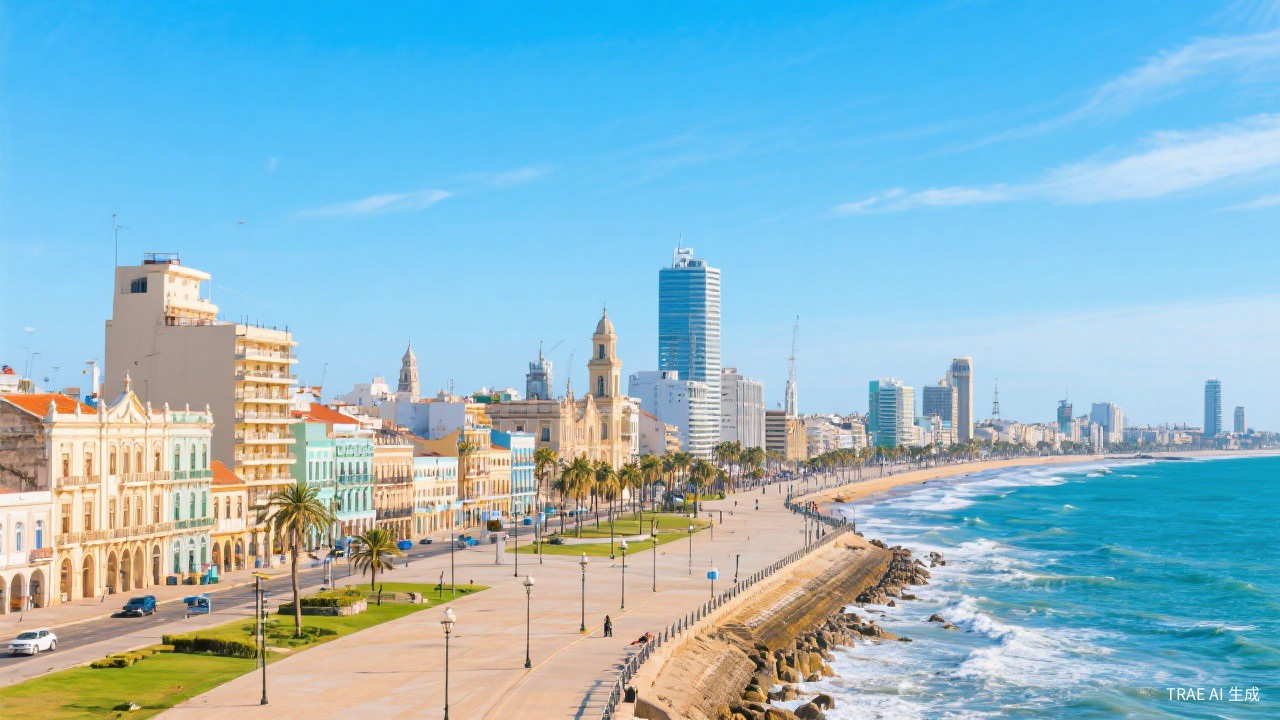
The Real Uruguay
Uruguay is the second-smallest country in South America (after Suriname), with a population of just 3.5 million. It sits on the Atlantic coast between Brazil and Argentina, and it often gets overlooked by travelers heading to its larger neighbors. That is part of its appeal—Uruguay offers excellent beaches, historic towns, good wine, and a relaxed pace without the crowds found in Rio or Buenos Aires.
Montevideo, the capital, is a laid-back city with a long waterfront promenade (the Rambla), a colonial old town (Ciudad Vieja), and a growing restaurant and arts scene. Colonia del Sacramento, a 2.5-hour trip west, is a UNESCO World Heritage site with cobblestone streets and Portuguese colonial buildings dating to the 17th century. The ferry from Buenos Aires to Colonia takes just one hour, making it a popular day trip.
Punta del Este, 2 hours east of Montevideo, is South America's most famous beach resort. The Atlantic beaches have white sand and good surf. Further east, Cabo Polonio is a remote fishing village reachable only by 4x4 vehicles, with sea lions, shifting sand dunes, and no electricity—a deliberate contrast to Punta del Este's development.
Best Time to Go
Summer (December to March) is the beach season. Temperatures start at 22-30°C, and the coastal towns fill with Uruguayans and Argentines on vacation. January and February are the busiest months.
Autumn (March to May) and spring (September to November) offer mild temperatures (15-22°C) and fewer visitors. The wine regions produce their harvest in March, making it a good time for winery visits.
Winter (June to August) is cool (8-14°C) and quiet. Montevideo and Colonia are still pleasant to explore, but beach towns are largely shuttered. This is the cheapest time to visit.
Getting There and Around
Montevideo's Carrasco International Airport (MVD) has direct flights from Buenos Aires (50 minutes), Sao Paulo (2.5 hours), Miami (9 hours), Madrid (11 hours), and a few other cities.
The ferry from Buenos Aires to Colonia del Sacramento takes one hour (Buquebus or Colonia Express) and costs $30-60 one way. From Colonia, buses to Montevideo take 2.5 hours.
Uruguay has a good bus system. Buses from Montevideo to Punta del Este take 2 hours (UYU 300-400). Taxis within Montevideo cost UYU 200-400 for short rides. Renting a car is useful for exploring the coast and wine regions (UYU 1,500-2,500 per day).
Where to Stay
Montevideo (Ciudad Vieja or Pocitos) offers the most options. Ciudad Vieja has boutique hotels in historic buildings ($40-100 per night). Pocitos, a residential neighborhood with a beach, has modern hotels ($60-150 per night).
Colonia del Sacramento has small hotels and guesthouses in the historic district ($40-100 per night). Staying overnight is more rewarding than a day trip.
Punta del Este has beachfront hotels and apartments ranging from $80-400 per night in summer. Prices drop dramatically outside the high season.
Must-See Attractions
Ciudad Vieja (Montevideo)
Montevideo’s old city contains the Plaza de la Independencia, the Solis Theatre (the oldest opera house in South America), and the Mercado del Puerto, an iron-framed market building from 1868 where restaurants serve grilled meats and seafood. The pedestrian streets Sarandi and Bacacay are lined with shops and cafes. The waterfront Rambla starts here and extends 22 kilometers along the coast.
Cost: Free to explore | Hours: Always open (markets 10 AM-10 PM)
Colonia del Sacramento
This UNESCO World Heritage site was founded by the Portuguese in 1680 and changed hands between Portugal and Spain several times. The Barrio Historico contains cobblestone streets, colonial buildings, and ruins including the lighthouse and the convent of San Francisco. The riverside promenade offers sunset views over the Rio de la Plata. Allow 3-4 hours.
Admission: Free to explore (lighthouse UYU 50) | Open: Always open (museums 11 AM-5 PM)
Punta del Este
South America’s most famous beach resort stretches along a peninsula separating the Rio de la Plata from the Atlantic Ocean. Playa Mansa (calm bay side) is better for swimming; Playa Brava (Atlantic side) has surf and the iconic "Los Dedos" (fingers) sculpture. The marina, the port market, and the nightlife on Gorlero Avenue are the main attractions.
Cost: Free (beach access) | Times: Always open (shops 10 AM-10 PM)
Cabo Polonio
This remote fishing village on the Atlantic coast has no paved roads, no electricity, and no running water in most buildings. It is reachable only by a 4x4 truck ride (UYU 400-500 round trip) through sand dunes from the highway. A colony of sea lions inhabits the offshore islands. Accommodation is basic (hostels and cabins, UYU 500-1,500 per night).
Cost: 4x4 transport UYU 400-500 | Open: Day trips or overnight stays
Wine Region (Canelones and Maldonado)
Uruguay produces excellent wine, particularly Tannat, a red grape that has become the country’s signature variety. The wine regions of Canelones (near Montevideo) and Maldonado (near Punta del Este) have dozens of bodegas open for tours and tastings. Bodega Bouza, Bodega Juanico, and Bodega Garzon are among the best-known. Tours and tastings cost UYU 300-800 ($8-20).
Tickets: Tastings UYU 300-800 | Open: Varies by bodega, generally 10 AM-5 PM
Food and Drink
Asado (Uruguayan Barbecue) — Uruguayans consume more beef per capita than any other country, and the asado is the national cooking method. Various cuts of beef, chorizo, and morcilla (blood sausage) are grilled over wood coals. Mercado del Puerto in Montevideo is the classic place to try it. A full asado costs UYU 600-1,200 ($15-30).
Chivito — Uruguay’s signature sandwich: a thin steak, ham, bacon, cheese, lettuce, tomato, and a fried egg on a bun. It is a heavy, satisfying meal. Try it at El Mejillon del Puerto in Mercado del Puerto. Budget UYU 300-500 ($8-13).
Empanadas Uruguyas — Smaller and more delicate than their Argentine counterparts, Uruguayan empanadas are baked and filled with beef, chicken, cheese, or ham. They are sold at bakeries and market stalls throughout the country. Budget UYU 50-80 ($1-2) each.
Dulce de Leche — This caramelized milk spread is a staple in Uruguay. It is eaten on bread, toast, crackers, or straight from the jar. Uruguay produces some of the best dulce de leche in the world. A jar costs UYU 100-200 ($3-5).
Practical Tips
• Take the ferry from Buenos Aires to Colonia if you are traveling between Argentina and Uruguay. It is faster and more pleasant than flying.
Visit Cabo Polonio for at least one night. A day trip does not give you enough time to experience the village without electricity at sunset.
Try Tannat wine. This red grape is Uruguay’s signature variety and is rarely found outside the country.
• Use Uruguayan pesos. While some places accept US dollars, the exchange rate is unfavorable.
• Rent a car for exploring the coast. The beaches and towns between Montevideo and the Brazilian border are spread out.
Traveler's Tip
Spend a night in Colonia del Sacramento instead of doing a day trip from Buenos Aires. After the last ferry leaves, the old town empties out, the restaurants light candles on their tables, and you can walk the cobblestone streets in near-solitude. The sunset from the lighthouse is one of the best in South America.