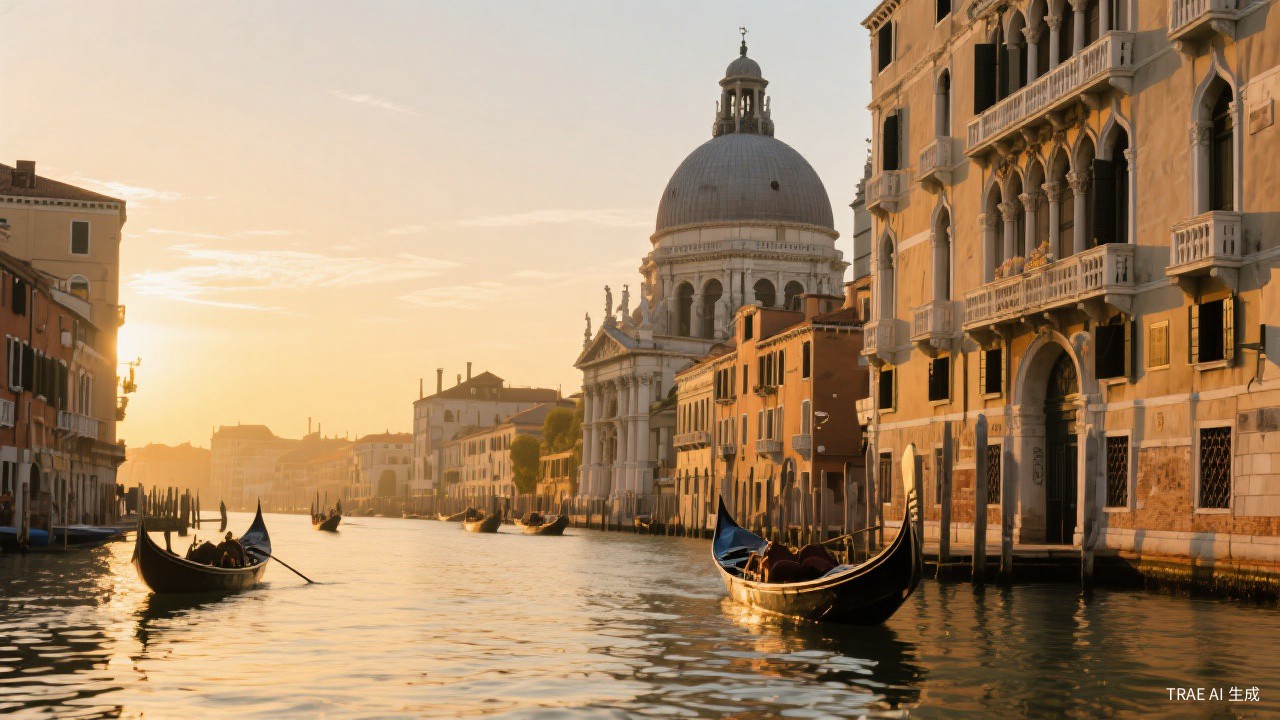
Venice exists in a category all its own. Built on 118 small islands connected by over 400 bridges, this floating city has no cars—only boats and footsteps. The absence of traffic noise creates an almost dreamlike atmosphere, where the only sounds are church bells, lapping water, and the occasional passing vaporetto. It's a place where getting lost is part of the experience, and every wrong turn leads to another hidden square or centuries-old church.
The architecture tells stories of Venice's golden age as a maritime republic. St. Mark's Basilica gleams with gold mosaics stolen from Constantinople, while the Doge's Palace displays the wealth and power of the Venetian Empire. But the real magic is in the details: the way light reflects off canals at sunset, the marble palaces slowly sinking into the lagoon, the masked faces during Carnival when the city transforms into a living theater.
Venice faces an uncertain future. Rising sea levels, mass tourism, and depopulation threaten its existence. The resident population has dropped from 175,000 in 1951 to under 50,000 today. Visiting now means experiencing a UNESCO World Heritage site that may not exist in its current form for future generations. This fragility makes every visit feel precious and urgent.
Acqua Alta & Carnival
Venice is a year-round destination, but each season has trade-offs. Spring (April to June) and fall (September to October) offer the best balance of pleasant weather and manageable crowds. Temperatures start at 15-25°C, perfect for walking. May and June are ideal for photography with soft light and blooming flowers on balconies.
Summer (July to August) brings heat (30°C+), humidity, and peak crowds. Cruise ships disgorge thousands of day-trippers, making St. Mark's Square nearly impassable by midday. Hotel prices double. If you must visit in summer, explore early morning and evening, and seek out neighborhoods like Cannaregio and Dorsoduro.
Winter (November to February) sees fewer tourists and lower prices, but also acqua alta (high water) flooding. The city takes on a mysterious, melancholic beauty in fog and rain. Carnival in February brings elaborate costumes and parties but also massive crowds. Book 6+ months ahead for Carnival dates.
Vaporetto & Walking
Venice Marco Polo Airport (VCE) is on the mainland, about 12km from the city. The Alilaguna water bus (€15, 60-90 minutes) connects the airport to various stops in Venice. The more affordable option is the bus to Piazzale Roma (€8, 30 minutes), then walking or vaporetto to your hotel. Water taxis cost €100-130 but are fast and scenic.
Within Venice, walking is the primary mode of transport. The city is surprisingly walkable—end to end takes about an hour. But bridges with steps make it challenging for those with mobility issues or heavy luggage. For longer distances, the vaporetto (water bus) system covers all major routes. A single ticket costs €9.50, but a 24-hour pass (€25) or 72-hour pass (€65) offers better value.
Gondolas are touristy but iconic. A 30-minute ride costs €90 during the day (€110 after 7 PM) for up to 5 people. Negotiate the route and duration before boarding. Traghettos (public gondolas) cross the Grand Canal at certain points for just €2—a budget way to experience a gondola ride.
San Marco vs Cannaregio
San Marco puts you in the heart of the action, steps from St. Mark's Square and the Doge's Palace. Expect higher prices and more noise, but unbeatable convenience. Hotels here start at €150-500+ per night. The narrow streets can be crowded all day.
Cannaregio offers a more local feel with excellent restaurants and the Jewish Ghetto. It's quieter at night and still walkable to major sights. Hotels and B&Bs cost €100-250/night. Dorsoduro is the university district with art galleries, the Peggy Guggenheim Collection, and a younger vibe. It's across the Accademia Bridge from San Marco but feels worlds away.
Giudecca is an island across the canal from San Marco, offering views of the city skyline at lower prices. The Hilton Molino Stucky is a landmark property here. Murano and Burano are famous for glass and lace, respectively, but staying there means commuting to the main sights. For budget travelers, hostels and guesthouses on the mainland near Mestre offer the lowest prices (€40-80/night) but sacrifice the Venice experience.
Canals, Churches & Islands
St. Mark's Basilica
This Byzantine masterpiece dates from the 11th century and houses the remains of St. Mark, smuggled from Alexandria in a barrel of pork. The interior glitters with 8,000 square meters of gold mosaics. The Pala d'Oro altarpiece contains 1,900 gems. Dress modestly (no shorts or bare shoulders) and don't take flash photos. Book timed entry online to skip the line.
Cost: €5 (museum extra) | Open: 9:30 AM-5 PM (closes earlier Sunday)
Doge's Palace
The seat of Venetian government for nearly 1,000 years, this Gothic palace showcases the wealth and sophistication of the Venetian Republic. Highlights include the Great Council Hall, the Bridge of Sighs (where prisoners got their last glimpse of Venice), and the prison cells. The Secret Itineraries tour (€25) takes you to hidden rooms and torture chambers.
Admission: €25 | Times: 8:30 AM-7 PM
Grand Canal
Venice's main thoroughfare winds 3.8km through the city in an S-shape. The best views are from vaporetto #1, which slowly traverses the entire canal. Palaces from the 12th-18th centuries line both sides, showcasing Gothic, Renaissance, and Baroque architecture. The Rialto Bridge and Bridge of Sighs span the canal at key points.
Admission: Vaporetto €9.50 | Times: Always viewable
Rialto Bridge
The oldest and most famous of Venice's four bridges across the Grand Canal, the current stone bridge was completed in 1591. Shops line both sides of the central walkway. The best photo spot is from the Rialto Market side at sunrise. The nearby market (open mornings except Sunday) sells fresh fish and produce—a glimpse of local life.
Tickets: Free | Open: Always open
Peggy Guggenheim Collection
Housed in Peggy Guggenheim's former home on the Grand Canal, this museum features one of the world's best collections of modern art. Works by Picasso, Pollock, Magritte, and Dalí fill the rooms. The sculpture garden is a peaceful retreat. The museum is in Dorsoduro, away from the main tourist crowds.
Entry: €16 | Open: 10 AM-6 PM (closed Tuesdays)
Burano Island
This fishing island is famous for its brightly painted houses and handmade lace. Legend says the colors helped fishermen find their homes in fog. The leaning bell tower makes a distinctive landmark. Take vaporetto #12 from Fondamente Nove (40 minutes). It's quieter than Murano and more photogenic. The lace museum explains the island's tradition.
Tickets: Vaporetto €9.50 | Open: Always open
Cicchetti & Spritz
Cicchetti — These small snacks are Venice's answer to tapas—served at bàcari (wine bars) throughout the city. Try baccalà mantecato (creamed cod), sarde in saor (sweet and sour sardines), and various crostini. Al Mercà and Cantina Do Mori are excellent spots. Budget €2-4 per piece with wine (ombra) at €2-3.
Risotto al Nero di Seppia — This black risotto gets its color and rich flavor from cuttlefish ink. It's a Venetian specialty found at most seafood restaurants. The ink stains your teeth temporarily but the taste is worth it. Try it at Trattoria alla Madonna near the Rialto. Expect €18-25.
Fegato alla Veneziana — Venetian-style liver is cooked with onions until sweet and tender. It's a traditional dish that divides opinions—if you like liver, it's excellent. Most traditional trattorias serve it. A main course costs €15-22.
Bigoli in Salsa — Thick whole-wheat pasta served with an anchovy and onion sauce. This simple but flavorful dish is a Venetian classic. It dates from when Venice was a maritime power and salted fish was common. Find it at traditional osterias for €12-16.
Tiramisù — This famous dessert was invented in the Veneto region. Layers of mascarpone, espresso-soaked ladyfingers, and cocoa create a perfect ending to a meal. Try it at I Tre Mercanti or any good restaurant. €6-9 per portion.
Tourist Tax & Crowds
• Stay overnight if possible. Day-trippers leave by 6 PM, and the city transforms into a peaceful, magical place.
• Get lost intentionally. The best discoveries happen when you wander without a map.
• Carry your luggage over bridges—no wheels on stairs. Pack light or use a backpack.
Check the acqua alta forecast. High tides can flood streets, especially in winter. Raised walkways (passerelle) are set up, but boots help.
Avoid restaurants with menus in 5 languages and waiters outside urging you in. Walk a few blocks away for better food at lower prices.
Traveler's Tip
Wake up before dawn at least once. Venice at 6 AM is silent, misty, and magical.