The Real Vientiane
Vientiane is the smallest and most relaxed capital in Southeast Asia, a city where French colonial villas sit next to gilded Buddhist temples and where the pace of life slows to a comfortable stroll along the Mekong River. The Laotian capital has none of the traffic or intensity of Bangkok or Hanoi. Instead, tree-lined boulevards, quiet cafes, and a handful of well-maintained temples define the experience. Pha That Luang, a 45-meter golden stupa covered in 500 kilograms of gold leaf, is the country's most important religious monument and the symbol of Laos.
The Mekong River forms the border between Laos and Thailand here, and the riverfront promenade comes alive each evening with joggers, food vendors, and families enjoying the sunset. The night market along the river sells handmade textiles, wood carvings, and Lao coffee. Vientiane's food scene reflects its history—French baguettes are sold alongside papaya salad and Lao-style grilled chicken. The city's cafes serve some of the best coffee in Asia, grown in the Bolaven Plateau of southern Laos and brewed strong with condensed milk.
Two to three days is enough for Vientiane. Day one: Pha That Luang in the morning, Patuxai Monument in the afternoon, and the night market in the evening. Day two: Buddha Park (Xieng Khuan) 25 kilometers south of the city, then the COPE Visitor Centre to learn about the impact of unexploded ordnance from the Vietnam War era. Day three: explore the morning market (Talat Sao), visit Wat Si Saket and Haw Pha Kaew, and enjoy a slow French-Lao lunch.
Best Time to Go
November to February is the cool, dry season, with temperatures between 18 and 30 degrees Celsius and minimal rainfall. This is peak season, with the That Luang Festival in November drawing pilgrims from across Laos. The weather is ideal for exploring temples and walking along the Mekong. December and January mornings can be cool enough for a light jacket.
March to May is the hot season, with temperatures reaching 38 degrees and smoke from agricultural burning reducing air quality. June to October is the rainy season, with afternoon downpours that cool things off. The Mekong is at its highest in September. Hotel prices drop during the rainy season, and the countryside turns vividly green.
Getting There and Around
Wattay International Airport (VTE) is 6 kilometers from the city center, with direct flights from Bangkok (1.5 hours), Hanoi (1.5 hours), Siem Reap (1 hour), and Kunming. A taxi from the airport costs LAK 60,000 to 80,000 (about USD 6 to 8). The Thai-Lao Friendship Bridge, 20 kilometers south of the city, connects to Nong Khai in Thailand. A visa on arrival is available for most nationalities at the bridge and at the airport (USD 20 to 30).
Vientiane is compact enough to explore on foot or by bicycle. Tuk-tuks charge LAK 20,000 to 50,000 for trips within the city. The local bus system is limited but functional—route 14 connects the city center to the Friendship Bridge for LAK 8,000. Renting a bicycle costs LAK 20,000 to 40,000 per day and is the best way to explore the riverfront and temple areas. Taxis are scarce; use tuk-tuks or the Loca ride-hailing app.
Where to Stay
The area around the Mekong riverfront and Nam Phu Fountain is the most convenient base, with hotels like the Settha Palace (USD 120 to 200 per night), a colonial-era property with a pool and garden, and mid-range options like the Ansara Hotel (USD 60 to 100). The riverfront location means you can walk to the night market and several restaurants. The French colonial architecture in this area adds character.
For budget travelers, guesthouses near the morning market (Talat Sao) offer rooms from USD 15 to 30. The Mixay area, east of the city center, has several well-reviewed hostels with dorm beds from USD 8 to 12. The area around That Luang is quieter and has a few mid-range hotels, but you will need tuk-tuks to reach restaurants and the riverfront.
Must-See Attractions
Pha That Luang
Laos's most sacred monument is a 45-meter golden stupa believed to contain a relic of the Buddha. The current structure dates from 1566, rebuilt after a Thai invasion destroyed the original. The stupa is covered in 500 kilograms of gold leaf and surrounded by smaller stupas, pavilions, and a cloister wall with Buddhist reliefs. The grounds are peaceful in the early morning before tour groups arrive.
Cost: LAK 10,000 | Times: Daily 8 AM-noon, 1-4 PM
Patuxai Monument
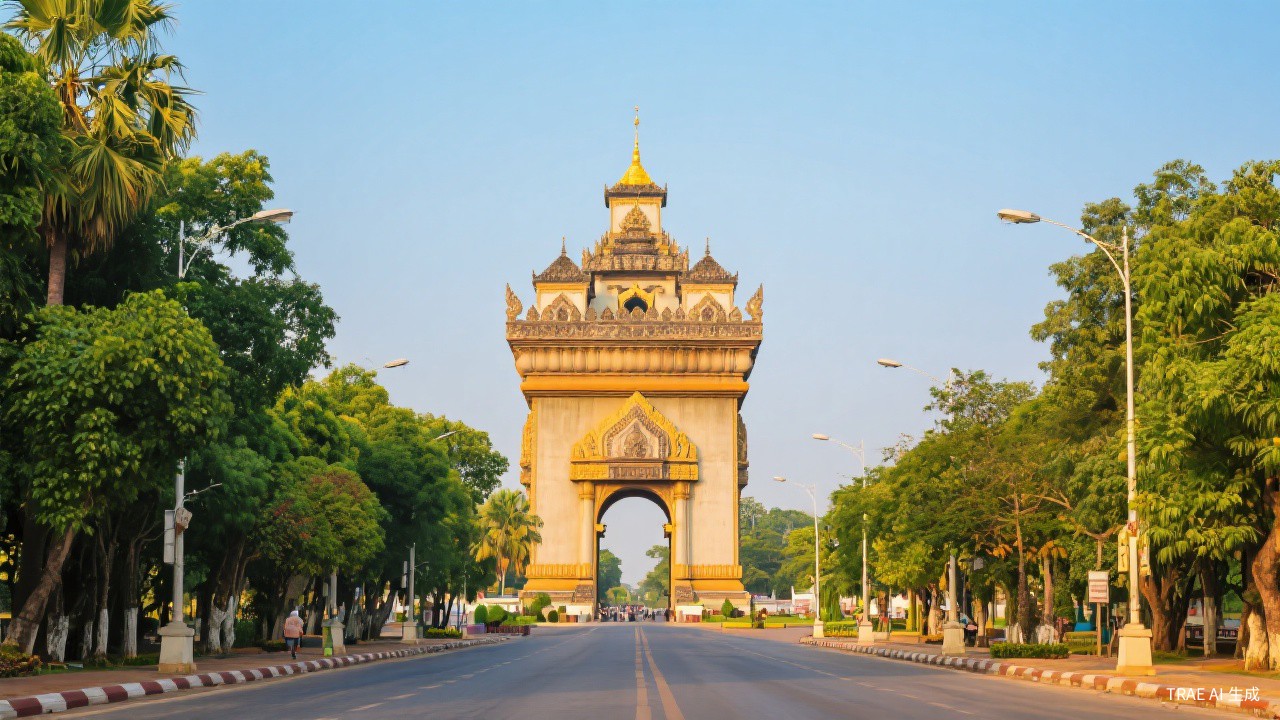
Often called the "Arc de Triomphe of Vientiane," this concrete monument was built in the 1960s with cement donated by the United States (originally intended for an airport runway). The top floor offers views over the city in all directions. The interior contains Buddhist and Hindu reliefs and a small market selling souvenirs. The monument sits at the end of Lane Xang Avenue, Vientiane's grandest boulevard.
Cost: LAK 10,000 | Open: Daily 8 AM-5 PM
Buddha Park (Xieng Khuan)
Located 25 kilometers south of the city, this park contains over 200 concrete Buddha and Hindu sculptures created in 1958 by Luang Pu Bunleua Sulilat, a mystic priest-shaman. The centerpiece is a massive reclining Buddha 40 meters long. A three-story structure shaped like a pumpkin represents the Buddhist realms of hell, earth, and heaven—climb through the mouth of a demon to enter.
Tickets: LAK 15,000 | Open: Daily 8 AM-5 PM
Wat Si Saket
The oldest surviving temple in Vientiane, built in 1818 by King Anouvong in the Siamese style. The temple is famous for its cloister wall containing over 2,000 small Buddha images made of wood, stone, and bronze. The interior of the sim (ordination hall) houses a large seated Buddha. The temple survived the Thai sack of Vientiane in 1828 because its Siamese-style architecture reminded the invaders of their own temples.
Tickets: LAK 10,000 | Times: Daily 8 AM-noon, 1-4 PM
COPE Visitor Centre
The Cooperative Orthotic and Prosthetic Enterprise (COPE) runs this free museum documenting the impact of unexploded ordnance (UXO) from the Vietnam War era. Between 1964 and 1973, the US dropped more than 2 million tons of bombs on Laos, making it the most heavily bombed country per capita in history. The center explains how UXO continues to injure civilians today and shows the prosthetic limbs provided to survivors. It is an essential and sobering stop.
Cost: Free (donations welcome) | Times: Mon-Sat 9 AM-6 PM
Food and Drink
Tam mak hoong (green papaya salad) and sticky rice — Khao Jao Pad, near Nam Phu Fountain. LAK 25,000-40,000.
French-Lao baguette sandwich with pate and pickled vegetables — Banneton Cafe, Rue Francois Ngin. LAK 35,000-50,000.
Lao-style grilled chicken (ping gai) with jaew dipping sauce — Kua Lao Restaurant, Setthathirath Road. LAK 45,000-70,000.
Lao coffee with condensed milk — Joma Bakery Cafe, Rue Setthathirath. LAK 20,000-35,000.
Practical Tips
• The Lao kip is a cash economy—carry small bills, as change is often hard to come by.
• Lao temples require modest dress—long pants or below-knee skirts and covered shoulders. Sarongs are usually available at the entrance if needed. Remove shoes before entering any temple building. Women should not touch monks or their robes.
• Tuk-tuk prices are not standardized—agree on a fare before getting in.
• The That Luang Festival in November fills the city—book accommodation well ahead.
• VISA on arrival at the airport costs USD 20 to 30—bring exact change and a passport photo.
Traveler's Tip
Wake up at 5:30 AM and walk to the Mekong riverfront near Fa Ngum Road. Buy a strong Lao coffee from a street vendor (LAK 10,000) and sit on the stone steps as the sun rises over Thailand on the opposite bank. Fishermen cast nets from long-tail boats, monks in saffron robes walk the promenade collecting alms, and the city wakes up in near silence. This is Vientiane at its best—slow, warm, and completely unhurried.