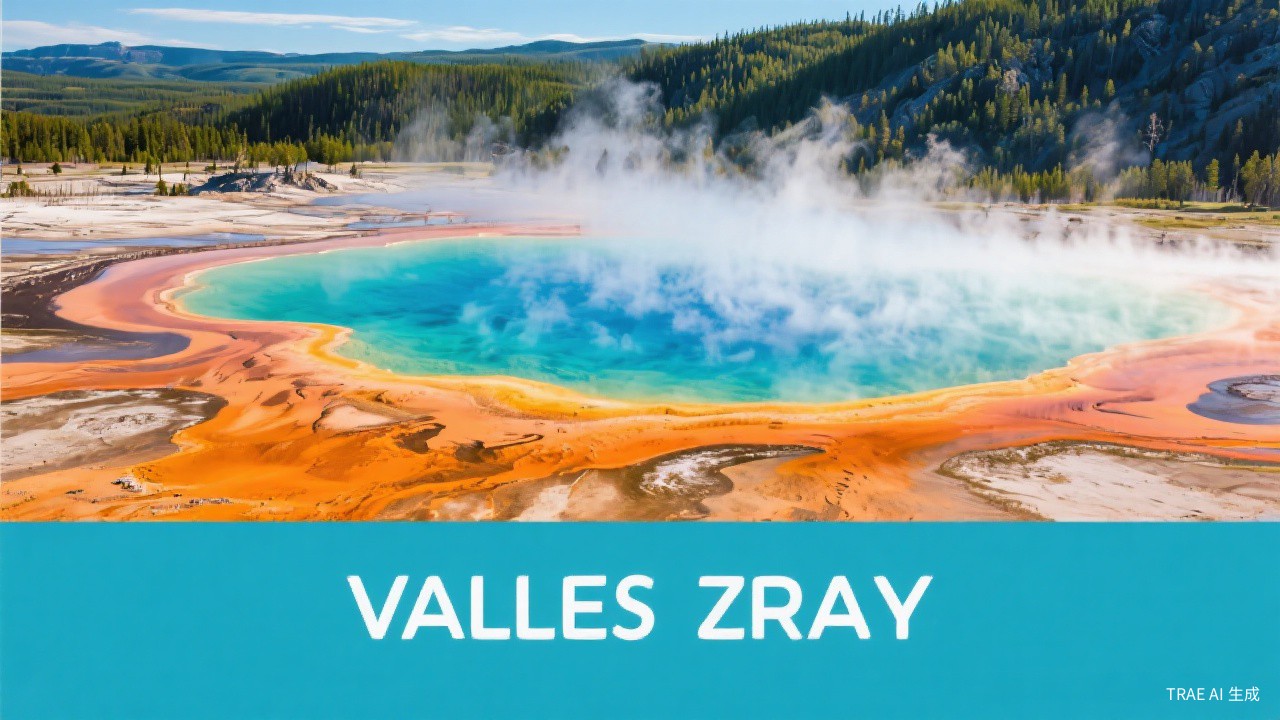
The Real Yellowstone
Yellowstone National Park, established in 1872, was the first national park in the world. It sits on top of a massive volcanic hotspot, and the results are visible everywhere: over half the world's active geysers, including Old Faithful; the Grand Prismatic Spring, the largest hot spring in the United States and one of the most colorful natural features on Earth; and bubbling mud pots, hissing steam vents, and travertine terraces that look like the surface of another planet.
But Yellowstone is not just geothermal features. The park is one of the best wildlife viewing areas in North America. The Lamar Valley, in the northeast corner, is often called "America's Serengeti" for its abundance of large mammals: bison, elk, pronghorn, bighorn sheep, and gray wolves, which were reintroduced to the park in 1995. Grizzly bears are frequently spotted in the Hayden Valley and around Yellowstone Lake.
Yellowstone Lake, at 2,357 meters elevation, is the largest high-elevation lake in North America. The Grand Canyon of the Yellowstone, carved by the Yellowstone River, contains two waterfalls—the Lower Falls (94 meters) and the Upper Falls (33 meters)—that are among the most photographed features in the park. The park's 2.2 million acres cover a Scenery that ranges from dense forest to open meadow to alpine tundra.
Best Time to Go
Summer (June to September) is the only practical time to visit most of the park. All roads, campgrounds, and lodges are open. Temperatures start at 5-25°C, with cool nights even in midsummer. July and August are the busiest months—expect crowds at major attractions.
May and September offer fewer visitors and cooler temperatures. Some roads and facilities may not be fully open in May. September brings elk rutting season and fall colors.
Winter (October to April) is a different experience. Only the road from the North Entrance (Gardiner) to the Northeast Entrance (Cooke City) remains open to cars. Most other roads are closed. Winter visitors access the interior by snowcoach or snowmobile. Cross-country skiing and snowshoeing are popular. Temperatures drop to -20°C or lower.
Getting There and Around
The park has five entrances. The West Entrance (West Yellowstone, Montana) is the most popular, with the closest airport service. The North Entrance (Gardiner, Montana) is the only entrance open to cars year-round. The South Entrance connects to Grand Teton National Park and Jackson, Wyoming.
The nearest commercial airports are Bozeman (BZN), 90 minutes from the North Entrance; Jackson Hole (JAC), 1 hour from the South Entrance; and Cody (COD), 1 hour from the East Entrance. West Yellowstone has a small airport with seasonal service.
Inside the park, driving is the primary way to get around. The Grand Loop Road is a 230-kilometer figure-eight that connects all major attractions. Allow 2-3 hours to travel from one side of the park to the other. No public transit is available within the park. Traffic and wildlife jams are common in summer.
Where to Stay
Old Faithful Area has the most lodging options, including the Old Faithful Inn (a historic log hotel, $200-500 per night) and the Old Faithful Snow Lodge ($150-300). This area is convenient for the Upper Geyser Basin but is far from the northern attractions.
Canyon Village, near the Grand Canyon of the Yellowstone, has a lodge ($150-300) and campground. It is centrally located for both the northern and southern sections of the park.
Mammoth Hot Springs, near the North Entrance, has a hotel ($130-250) and is the park headquarters. It is the best base for the Lamar Valley. Lake Yellowstone Hotel ($200-400) and Grant Village ($130-250) are near Yellowstone Lake. Cabins and campgrounds are available throughout the park ($30-100).
Must-See Attractions
Old Faithful Geyser
The most famous geyser in the world erupts approximately every 60-90 minutes, shooting water 30-55 meters high for 1.5-5 minutes. The visitor center posts predicted eruption times. The viewing area has benches and boardwalks. The Upper Geyser Basin surrounding Old Faithful contains over 150 geysers, including Castle Geyser, Grand Geyser, and Riverside Geyser. Allow 2-3 hours to explore the basin.
Cost: Free (park entry $35/vehicle, 7 days) | Times: Always open (visitor center 9 AM-6 PM, seasonal)
Grand Prismatic Spring
The largest hot spring in the United States and the third-largest in the world, Grand Prismatic Spring is 112 meters across and 50 meters deep. The water’s vivid blue center is surrounded by bands of yellow, orange, green, and brown created by thermophilic bacteria. The Midway Geyser Basin boardwalk provides close-up views. For the best overview, hike the Fairy Falls Trail to the Grand Prismatic Overlook (1.6 km round trip).
Entry: Free (included in park entry) | Open: Always open
Lamar Valley
Often called "America’s Serengeti," the Lamar Valley in the northeast corner of the park is the best place for wildlife viewing in Yellowstone. Bison herds roam the valley floor, elk graze in the meadows, pronghorn are common, and gray wolves are frequently spotted—especially at dawn and dusk. Pullouts along the Lamar Valley Road allow safe viewing. Bring binoculars or a spotting scope. The valley is most productive in early morning and late evening.
Cost: Free (included in park entry) | Open: Always open (best dawn and dusk)
Grand Canyon of the Yellowstone
The Yellowstone River has carved a 30-kilometer canyon through volcanic rock, creating two spectacular waterfalls. The Lower Falls (94 meters) is the most dramatic and is viewed from Artist Point on the South Rim and from the Brink of the Lower Falls Trail on the North Rim. The Uncle Tom’s Trail descends 328 steps to the base of the Lower Falls. The canyon walls are streaked with yellow, orange, and pink—the colors that gave the park its name.
Cost: Free (included in park entry) | Hours: Always open (trails seasonal)
Mammoth Hot Springs
These travertine terraces on the north side of the park are formed by hot water rising through limestone and depositing calcium carbonate. The result is a series of white and orange terraced pools that look like inside-out stalactites. The Lower Terrace boardwalks are accessible and offer close-up views. The Upper Terrace Drive is a one-way road with additional viewpoints. The terraces change from year to year as new formations emerge and old ones dry up.
Entry: Free (included in park entry) | Open: Always open (seasonal)
Food and Drink
Huckleberry Ice Cream — Huckleberries grow wild in the Greater Yellowstone ecosystem and are made into ice cream sold throughout the park. The huckleberry shake at the Mammoth Hot Springs dining room is a classic treat. A scoop or shake costs $4-8.
Yellowstone Lake Trout — Yellowstone Lake is home to native cutthroat trout and introduced lake trout. Fishing is permitted with a park fishing license ($40 for the season). Several lodges serve trout for dinner. A trout dinner costs $20-35.
Buffalo Burger — Bison (buffalo) burgers are a park staple, made from bison meat that is leaner and slightly sweeter than beef. Try one at the Canyon Lodge dining room or the Old Faithful Inn dining room. A burger costs $14-20.
Campfire Dining — Several park lodges offer cookout experiences where meals are prepared over open fires. The Roosevelt Lodge Old West Cookout involves a horse-drawn wagon ride to a campsite where steak and beans are served. The experience costs $60-80 per person and requires reservations.
Practical Tips
• Arrive at major attractions before 9 AM or after 5 PM to avoid the worst crowds. Old Faithful, Grand Prismatic Spring, and the Grand Canyon are mobbed between 10 AM and 4 PM.
• Carry bear spray and know how to use it. Grizzly bears are common in the park, especially in the Hayden and Lamar Valleys. Spray is available for rent at visitor centers.
• Fill your gas tank when you can. Gas stations are few and far between inside the park, and prices are high.
Bring layers and rain gear. Summer weather is unpredictable—temperatures can drop 15°C in minutes when a storm rolls in.
• Stay on boardwalks in thermal areas. The ground near hot springs and geysers can be thin and unstable. People have died by stepping off marked paths.
Traveler's Tip
Travel the Lamar Valley at dawn on your first full day in the park. Pull over at the first turnout with a view, turn off your engine, and sit quietly with binoculars. Within 30 minutes, you are almost certain to see bison, elk, and possibly wolves or bears in the morning light. It sets the tone for everything that follows.