Traveling with food allergies adds a layer of complexity to an already challenging activity. While other travelers worry about finding good restaurants, you worry about finding safe ones. The stakes are higher—a wrong meal can mean anything from discomfort to emergency. Yet thousands of people with food allergies travel successfully every year.
The key is preparation and communication. With proper planning, you can eat safely in most destinations. The strategies that work at home—reading labels, asking questions, carrying medication—apply abroad with some adaptations for language and cultural differences.
This guide covers how to travel safely with food allergies, from pre-trip preparation to handling emergencies on the road.
Navigating Food Allergies Abroad
Language barriers complicate communication. Explaining allergies in a foreign language requires precise translation. "Allergy" might not translate directly, or might be understood differently. "No nuts" might be interpreted as "no visible nuts" rather than "no nut products." These misunderstandings can be dangerous.
Ingredient awareness varies by culture. In some countries, food allergies are well understood and accommodations are common. In others, the concept is unfamiliar. A chef might not realize that cooking with the same utensils cross-contaminates food. Cultural awareness of allergies affects how seriously your requests are taken.
Emergency care differs by destination. Access to epinephrine, English-speaking doctors, and quality medical facilities varies widely. Knowing where to go in an emergency and having the means to get there is essential preparation.
Pre-Trip Preparation
Research your destination's food culture. Understand what local dishes typically contain your allergens. In Southeast Asia, peanut sauce is common; in Italy, wheat is everywhere. Knowing what to avoid helps you identify safe options and recognize risky situations.
Learn key phrases in the local language. "I am allergic to [allergen]" and "Does this contain [allergen]?" are essential. "I need a doctor" and "Where is the hospital?" are emergency necessities. Write these phrases down or save them on your phone. Carry a printed card with your allergies listed in the local language.
Pack sufficient medication. Bring more epinephrine auto-injectors than you think you need. Pack antihistamines as backup. Keep medication in your carry-on, never in checked luggage. Bring a copy of your prescription and a letter from your doctor explaining your condition and medication needs.
Communication Strategies
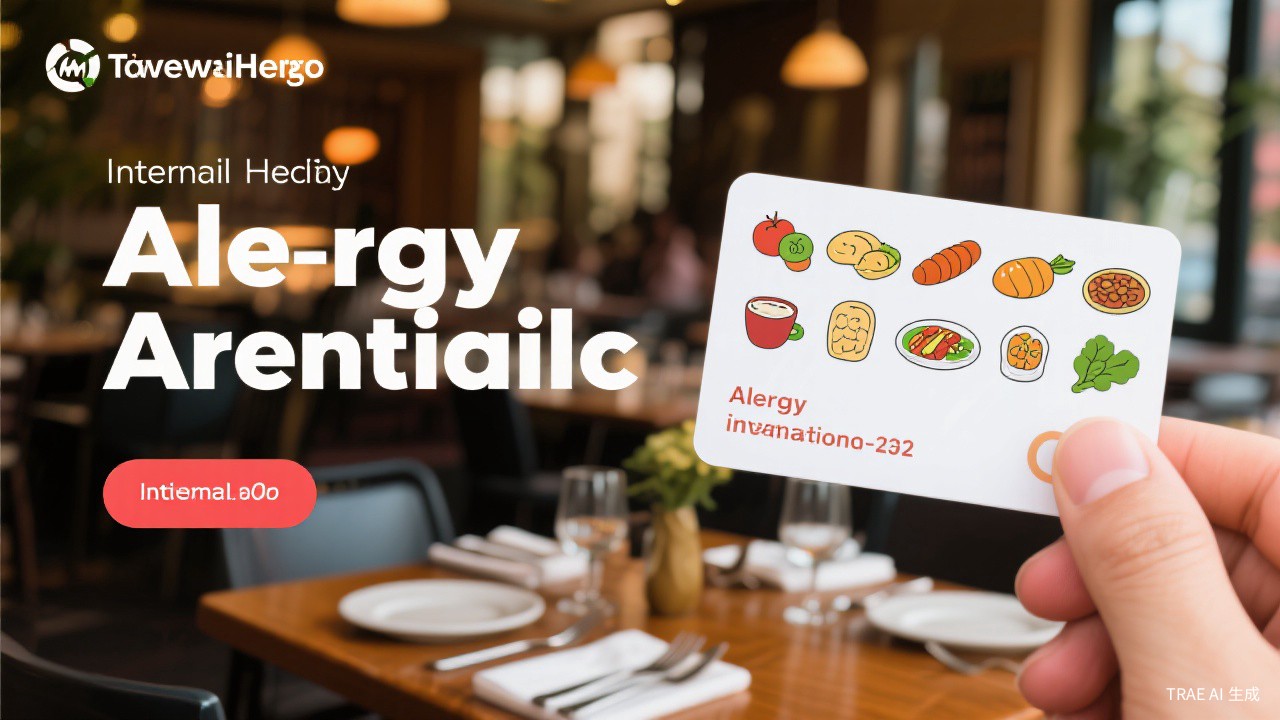
Use translation cards. Organizations like Equal Eats and Select Wisely sell cards that explain allergies in multiple languages. These cards are more reliable than your pronunciation and can be shown directly to restaurant staff. They explain both the allergy and cross-contamination risks.
Be specific about severity. In some cultures, saying you are "allergic" might be interpreted as a preference or mild intolerance. Make clear that exposure causes a serious medical emergency. Use phrases like "life-threatening" or "I could die" if necessary to convey seriousness.
Ask about preparation, not just ingredients. A dish might not contain your allergen as an ingredient but could be prepared on the same grill or with the same utensils as allergen-containing foods. Ask about kitchen practices if cross-contamination is a concern.
Safe Food Choices While Traveling
Stick to simple preparations. Grilled meats, steamed vegetables, and plain rice are easier to verify than complex sauces and mixed dishes. The fewer ingredients, the less chance of hidden allergens. This approach limits culinary adventure but maximizes safety.
Shop at grocery stores. Pre-packaged foods have ingredient lists you can translate with an app. This is safer than restaurant food where ingredients might not be fully disclosed. Many countries have allergy labeling requirements similar to those in the US and EU.
Consider accommodations with kitchens. Cooking your own meals gives you complete control over ingredients. This is especially valuable in destinations where restaurant communication is difficult or allergy awareness is low.
Airline and Transportation Considerations
Notify airlines in advance. Most airlines can accommodate food allergies with advance notice. Some will create allergen-free meals; others will allow you to pre-board to wipe down your seating area. Policies vary by airline, so research before booking.
Bring your own food. Airline meals might be labeled allergen-free but cross-contamination can occur in catering facilities. For severe allergies, packing your own food is safest. Check airline policies on bringing food through security and on board.
Keep medication accessible. Never pack epinephrine in checked luggage. Keep it with you at all times during flights. Flight attendants should know where your medication is located in case you cannot access it during a reaction.
Emergency Preparation
Know the emergency numbers. 911 is not universal. In Europe, 112 works in most countries. Research the emergency number for your destination and save it in your phone. Know how to ask for an ambulance in the local language.
Identify hospitals before you need them. Research which hospitals in your destination have emergency departments and English-speaking staff. Know how to get there from your accommodation. Save addresses and directions offline.
Carry emergency information. A medical alert bracelet or necklace identifies your allergies if you cannot communicate. A card in your wallet with your allergies, medications, and emergency contacts helps first responders. Keep this information with you always.
Eating Safely Abroad
Plan thoroughly but do not let fear prevent travel. Many people with severe allergies travel successfully. The risks are real but manageable with preparation. The world is too interesting to stay home.
Build in extra time for meals. Finding safe food takes longer than simply walking into any restaurant. Research restaurants in advance. Allow time for communication with staff. Rushing leads to mistakes.
Trust your instincts. If a restaurant seems unsure about your allergy or dismissive of your concerns, leave. There is always another place to eat. Your safety is more important than politeness or convenience.
Traveler's Tip
Carry a chef card in the local language listing your allergies. Show it at every restaurant. A printed card is clearer than verbal explanation and removes the risk of miscommunication.