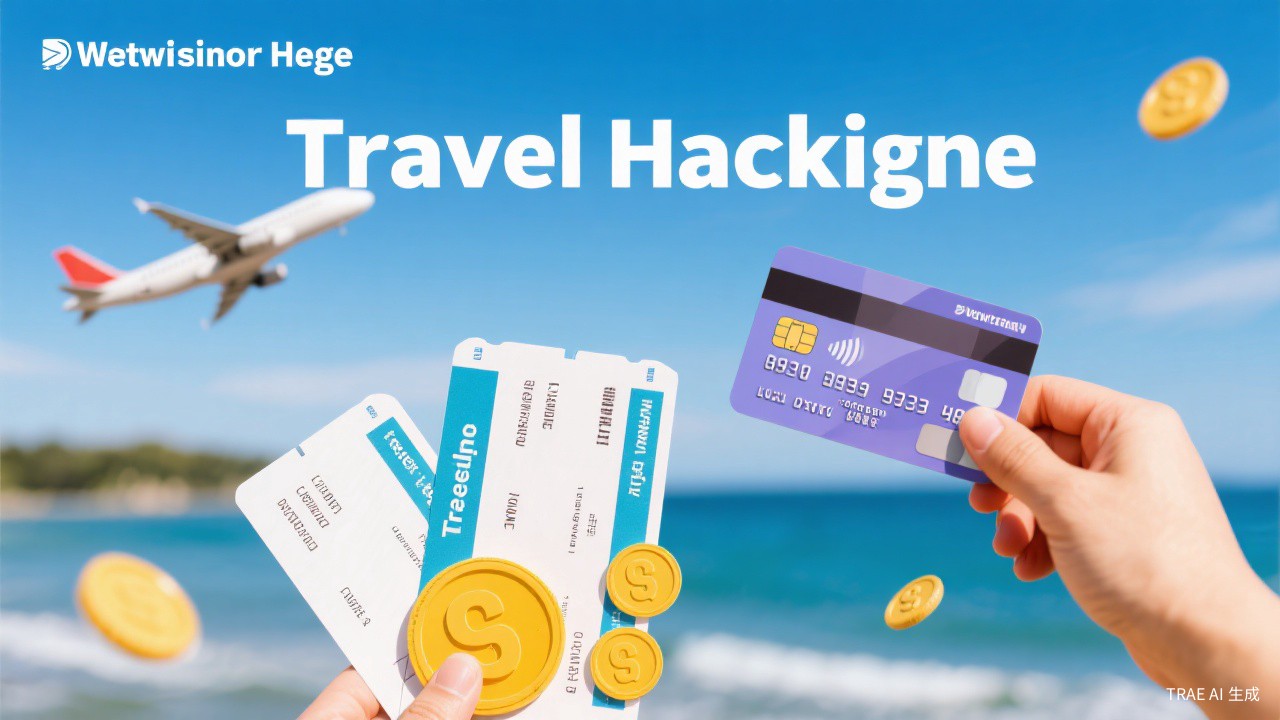
Travel hacking sounds like something illicit, but it simply means maximizing the value you get from travel rewards programs. By understanding how points and miles work, you can travel more comfortably and more frequently for less money. The strategies start at simple—signing up for the right credit card—to complex—manufacturing spending and booking complex award itineraries.
The travel hacking world has its own language and culture. Terms like "churning," "MS," and "sweet spot" have specific meanings. Online communities share deals and strategies. While some approaches require significant effort, even basic strategies can save thousands of dollars annually on travel.
This guide covers travel hacking fundamentals, from choosing the right credit cards to redeeming points for maximum value.
Smart Travel Strategies
Free travel is the obvious benefit. A family that pays for flights with points instead of cash saves thousands. Business class tickets that cost $5,000 can be had for 100,000 miles worth perhaps $1,000 in credit card spending. The math is compelling.
Beyond free flights, travel hacking provides status and perks. Elite status with airlines and hotels comes from flying and staying frequently—or from credit cards that confer status. Lounge access, free breakfast, and room upgrades improve travel experiences without additional cost.
The hobby can be intellectually engaging. Finding award availability, optimizing point transfers, and constructing complex itineraries is like solving puzzles. Many people enjoy the game as much as the rewards.
Credit Card Fundamentals
Sign-up bonuses are the fastest way to earn points. Most travel cards offer bonuses worth 50,000-100,000 points after meeting minimum spending requirements (typically $3,000-5,000 in 3 months). These bonuses are worth $500-1,500 or more in travel. Focus on cards with bonuses that match your travel goals.
Transferable points are most valuable. American Express Membership Rewards, Chase Ultimate Rewards, and Capital One Miles transfer to multiple airline and hotel partners. This flexibility lets you book with whatever program has availability. Cards that earn transferable points are more valuable than cards tied to a single airline or hotel.
Annual fees are worth it for the right cards. A $95 annual fee might seem steep, but if the card provides a free night certificate worth $200, you come out ahead. Premium cards with $500+ fees can be worth it if you use the benefits: lounge access, credits, and status that you would otherwise pay for.
Airline Miles Strategies
Learn to value miles. A mile is not worth a fixed amount—it depends on how you use it. A domestic economy ticket might give you 1 cent per mile. An international business class ticket might give 3-5 cents per mile. Understanding these values helps you decide when to use miles versus cash.
Book award tickets early or late. Airlines release some award seats 11-12 months out and additional seats close to departure. The middle period often has limited availability. If you do not find what you want, keep checking.
Consider partner airlines. United miles can book flights on Star Alliance partners like Lufthansa and ANA. American miles book on Oneworld partners like British Airways and Qatar. Partner flights often provide better value than the airline's own flights.
Hotel Points Strategies
Hotel points are generally easier to use than airline miles. Availability is rarely an issue except at peak times. The value per point is lower than airline miles, but the flexibility makes them useful.
Free night certificates from credit cards provide excellent value. Many hotel cards include an annual free night certificate valid at properties that might cost $200-400 per night. This benefit alone often justifies the annual fee.
Fifth night free is a common benefit. With many hotel programs, booking four nights with points gets you the fifth free. This effectively gives you 20% more value when staying longer.
Advanced Strategies
Manufactured spending involves buying items that can be converted back to cash, thereby meeting credit card spending requirements without actual spending. This is complex, carries risks, and is beyond beginner travel hacking. Research thoroughly before attempting.
Point transfers require timing. Some transfer bonuses give you extra miles when moving points to airline partners. Wait for these bonuses if you are not in a hurry. Some programs allow transfers back, but most do not—transfer only what you will use.
Award routing rules can be exploited. Some programs allow stopovers and open jaws on award tickets. A flight from New York to Tokyo might allow a free stopover in Hawaii. Understanding these rules creates extra value.
Credit Card Churning Explained
Credit card churning involves opening cards for sign-up bonuses, meeting minimum spending requirements, then closing or keeping cards based on ongoing value. This strategy can generate significant points but requires organization and discipline.
Track your applications carefully. Note the date, card, minimum spend, and deadline for each application. Missing a minimum spend deadline means losing the bonus. Spreadsheets or apps help manage multiple cards.
Be aware of application rules. Chase's 5/24 rule denies applications if you have opened five cards in 24 months. American Express limits bonuses to once per lifetime per card. Know these rules before applying.
Maximizing Everyday Spending
Use the right card for each purchase. Some cards offer bonus categories for groceries, dining, or travel. Others provide flat rates on everything. Matching cards to spending maximizes points earned on purchases you would make anyway.
Pay attention to limited-time offers. Many cards offer increased bonus categories or special promotions periodically. Activate these offers when available. They can significantly boost points earnings during promotional periods.
Consider authorized user bonuses. Some cards offer points for adding authorized users. Family members can help meet minimum spending requirements while earning additional bonuses. Coordinate with your household.
Travel Hacks That Work
Start simple. Do not try advanced strategies until you understand the basics. One good credit card, used well, provides more value than a complex scheme you do not fully understand.
Pay your balances in full. Travel hacking only works if you are not paying interest. Carrying balances negates any rewards earned. If you cannot pay in full, do not pursue travel hacking.
Track everything. Use spreadsheets or apps to monitor your credit card applications, spending requirements, point balances, and award bookings. Organization prevents missed deadlines and forgotten points.
Traveler's Tip
Pick one airline alliance and one hotel chain. Concentrating your spending earns status faster than spreading it across multiple programs. Status benefits—lounge access, free upgrades, late checkout—are worth more than small point earnings elsewhere.